
Last Updated on October 24, 2026 by Umar Farooq
Can mold grow on plastic? Yes: mould rarely eats the plastic itself, but the dust, soap film and grime that settle on it are enough, as long as the surface stays damp. The same goes for glass, glazed tile and metal, which is why a shower curtain can go speckled while the bare tub beside it looks fine.
Plastic is not mouldproof, it is just a poor meal. Give it a film and a few damp days, and it becomes a perfectly good bench to eat on.

Plastic is the bench, not the meal
Mould needs two things from a surface: something organic to feed on, and water. EPA says mould will not grow without moisture, and that controlling moisture is the key to controlling it. Clean, dry plastic offers neither.
What changes the picture is what lands on the plastic. NDSU Extension says soap scum and skin cells collect on surfaces in a shower and are food for mold and mildew. Dust, kitchen grease and food crumbs do the same job in a cupboard or a bin. It is a layer so thin you cannot see it, until the dark dots arrive.
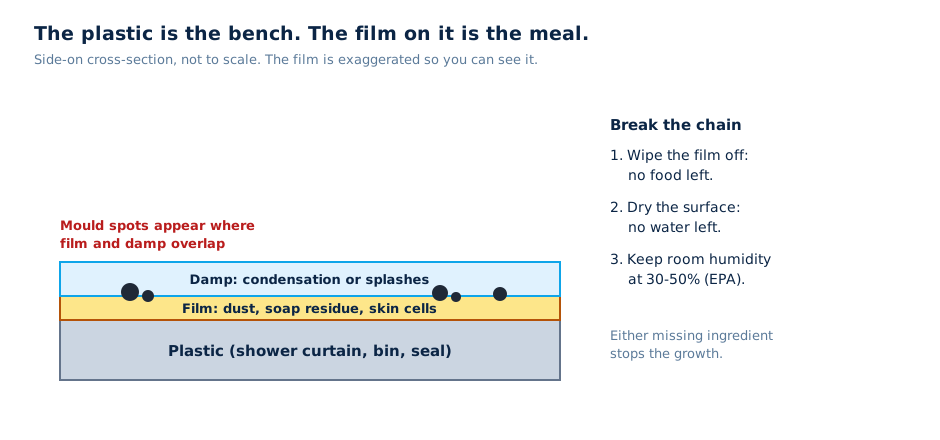
Some plastics trade sources say additives such as plasticisers can also feed mould. I have not seen that in an extension or EPA source, so I treat it as a possible extra. The film is the reason, and it is the part you can change.
What counts as food on a hard surface?
Nearly anything organic that a household makes. By surface (my own reading, not a survey), the material barely matters; the film and the dampness do.
| Surface | What is usually feeding it | Where you tend to see it |
|---|---|---|
| Plastic (curtains, bins, seals) | Soap residue, dust, food residue | Lower hems, folds, lids, gasket grooves |
| Glass | Dust and grime stuck in the damp edge | Where glass meets the frame, not the middle |
| Glazed tile and grout | Soap scum, skin cells, dirt in the grout | Corners, grout lines, the lowest row |
| Metal | Dust or grease film, trapped condensation | Joints, rivets, undersides that stay wet |
Grout is the odd one out: it is porous, so it holds moisture and film, which is why it stains before the glazed tile above it.
Why shower curtains, window seals and storage bins go first
These three have the same recipe: a hard surface, a film that nobody wipes, and water that sits there for hours.
Shower curtains. The hem hangs in the splash zone and clings to itself, so it stays wet. NDSU lists spots on the curtain or shower walls as a possible sign of a mould problem. How to get rid of mold in a bathroom covers the corners, grout and silicone beside it.
Window seals. The rubber or plastic gasket under the glass catches every drop of overnight condensation, and dust sticks to it. The black line you keep wiping is usually here. Mould around windows explains why the water arrives and how to stop it.
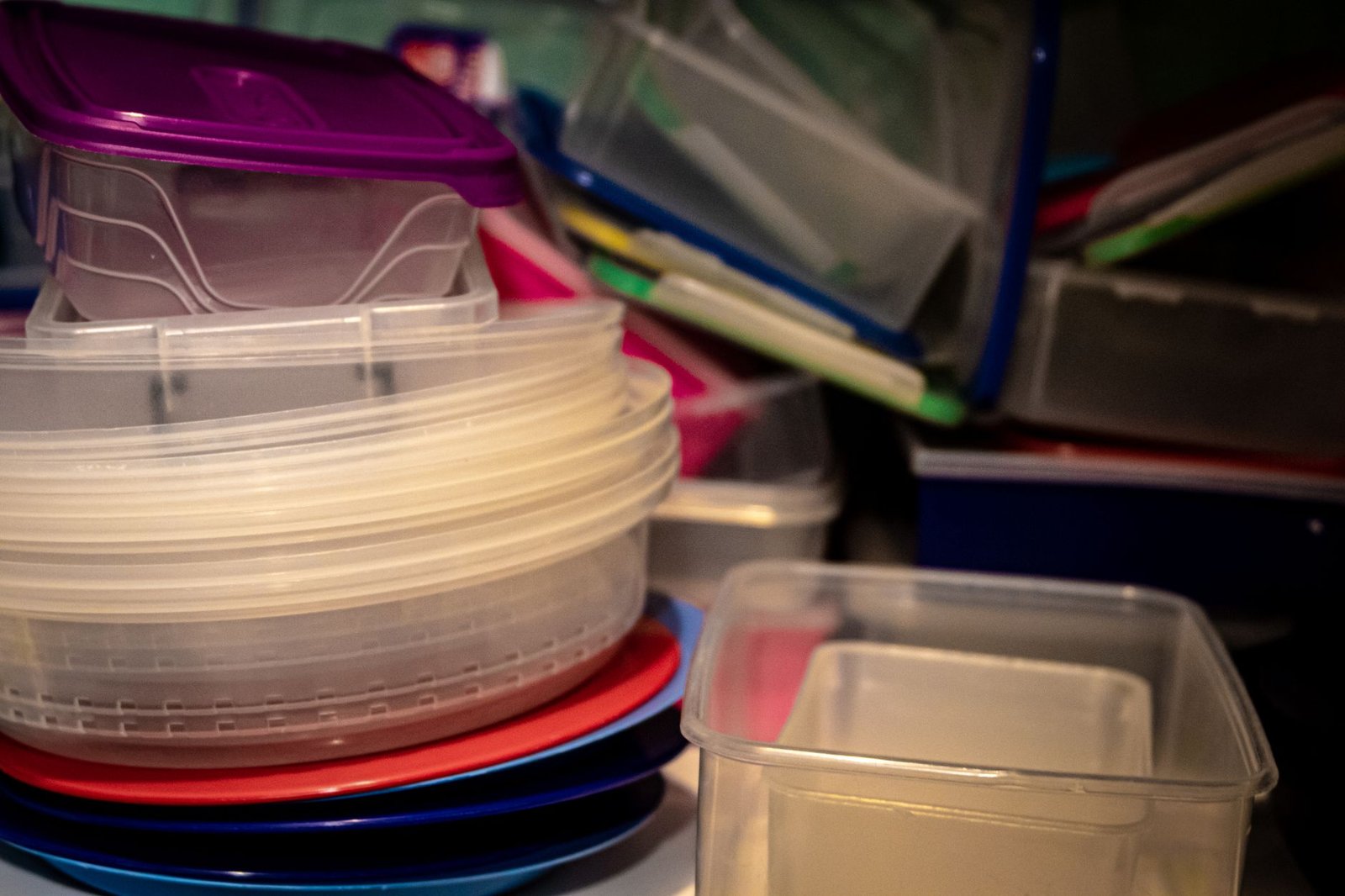
Storage bins and food containers. A lid shuts in damp air and any residue left behind. A bin put away slightly wet or slightly dirty in a cold garage or loft is a small, sealed greenhouse. Preventing mould in a storage unit goes through the bigger version of this problem.
Can mold grow on plastic? Four ways to keep it from starting
My one firm opinion: a wiped, dry surface beats any antimicrobial spray or coating you could buy. A coating treats a surface that is still being fed and wetted. Taking away either food or water does more, and costs nothing.
- Wipe the film off regularly. A cloth with detergent and water on shower walls, curtain hems, window gaskets and the insides of bins. The aim is to remove the food, not to disinfect.
- Dry the surface after it gets wet. Shake out the shower curtain and spread it flat, wipe the window seal in the morning, and let containers dry fully before the lid goes on.
- Run the extractor fan during and for a few minutes after showers. That is NDSU’s advice, and it removes the steam before it settles on the curtain.
- Keep room humidity in the range EPA recommends. EPA advises keeping indoor humidity below 60%, ideally 30 to 50%. A cheap hygrometer will tell you where you really are, and what humidity mold grows at explains why the surface can be damper than the room reading.
A dehumidifier helps in a damp bathroom or garage once those habits are in place, because it lowers the humidity that keeps surfaces wet. It will not remove the film, so it does not replace the cloth. The wider approach is in how to prevent mold in the house.
A small patch on plastic: clean it, dry it, and know when to bin it
Ventilate the room, wear gloves, and do not mix cleaning products. Follow the label on anything you use. If you are unsure, or if the item is for food or a baby, replace it rather than gamble.
For mould on a hard, non-porous surface, EPA says to scrub with detergent and water and dry the area completely. That is also where I would start with a plastic curtain liner or a gasket. Fix the damp that fed it first, or it returns in a fortnight.
The part that is my own judgement, not EPA’s: a plastic item that is scratched, cracked, soft or deeply grooved holds film and moisture in places a cloth cannot reach, and a cheap curtain liner or lunchbox costs less than the effort. Bin it. EPA’s 10 square feet guideline for do-it-yourself cleanup applies to areas of a home, such as a wall, not to items you can simply replace.
Dry, clean plastic rarely grows anything: remove the film and the water
So, can mold grow on plastic? Only with a film and damp together. The takeaway is not “plastic grows mould”. It is that mould needs a film and damp together, and in a home you can nearly always take one of them away. Wipe it, dry it, ventilate, and keep the room in EPA’s range.
If it keeps returning in the same place, look for a water source, not a better plastic. Visible growth takes days to weeks in measured studies, so a surface that dries daily rarely gets there.
FAQ
Can mold grow on plastic containers?
Yes, if food residue or grease is left on them and they are stored damp with the lid on. Wash them with detergent, dry them completely, and store them with the lids off or loosely on. Replace any that are scratched or cracked.
Can mold grow on glass?
Not on clean glass, but it can grow on dust and grime, especially at the damp edge where glass meets a frame. Metal is similar: a dust or grease film plus trapped condensation is enough. Wipe condensation off each morning.
Why does my shower curtain keep going black?
Soap residue and skin cells build up on the hem, and the curtain stays wet because it clings to itself. Spread it flat after each shower, wash or replace it when it is stained, and run the extractor fan.
Is mould on plastic different from mould on walls?
The mould is the same kind of organism, but plastic does not absorb water, so the growth stays on the surface. That makes it easier to clean than mould on plasterboard, as long as the plastic is smooth and intact.

