
Last Updated on October 24, 2026 by Umar Farooq
Does mold die when it dries out? Not reliably: drying stops it growing, but the mould stays on the surface, and it can start again the next time the material gets wet. A dry patch is a paused problem, not a solved one, which is why so many “cleared up” walls look fine in March and furry again by June.
I spell it “mould” below because I’m British. Same organism, same stubbornness.
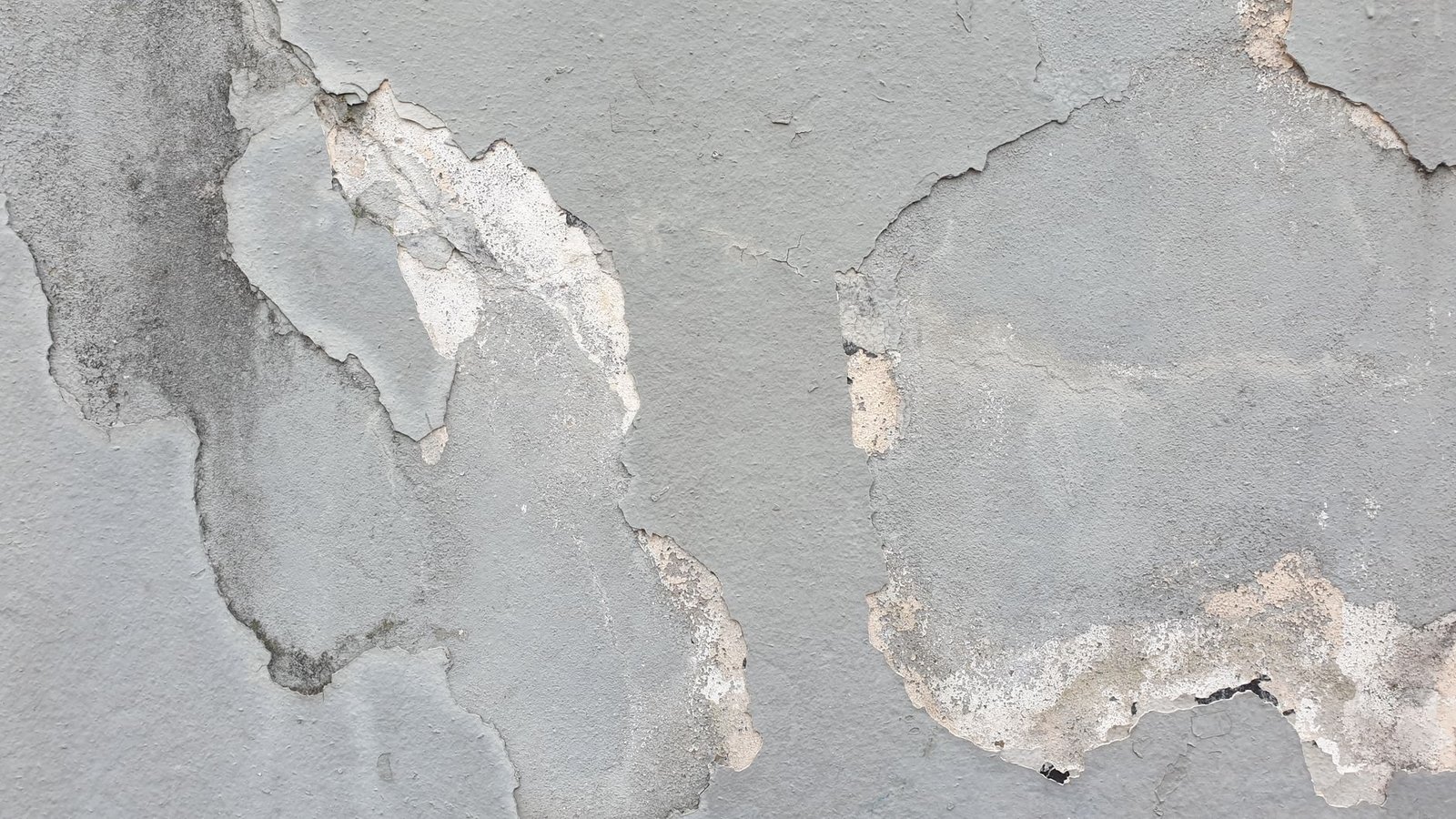
Dry mould is paused, and I’d treat it as still there
Mould needs moisture to grow. Take the water away and growth stops. That much is uncontroversial, and it is the reason the EPA’s brief guide to mould and moisture tells you to dry water-damaged areas and items within 24-48 hours, and says the key to mould control is moisture control.
Stopped is not the same as dead. Remediation companies describing dried mould generally call it dormant, and say it can restart when moisture returns. I have not found a primary source (the EPA included) that gives a figure for how long dried mould stays able to restart, so I won’t give you one. The practical rule is simpler: if the damp could come back, assume the mould can too.
My view, and I’ll defend it: drying should be step one of mould control, never the last step. It buys you time to clean, and that is all it buys.
Three things a dry patch still leaves behind
This is where the number in the title comes from. After the wall dries, you are left with:
- The mould itself. The patch is still on the surface, now dry rather than damp. The EPA says it can grow on or fill the spaces of porous materials, so on plasterboard or wood, removing it entirely may be hard or impossible.
- The staining. The EPA’s cleanup guidance warns that mould may cause staining and cosmetic damage. A dried patch can sit there as a grey or black mark whether or not anything is active under it.
- The reason it grew. A leak, a cold wall collecting condensation or a room with no extraction does not go away because the wall happened to dry this week. It is the real cause and the likeliest route back.
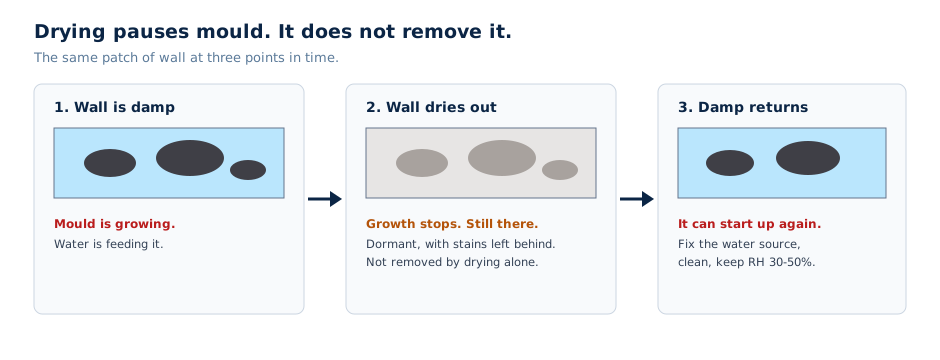
Does mold die when it dries out, or only below a certain humidity?
Competitor pages like to name a humidity “at which mould dies”. I would not trust a magic number. What I can source is the other side of it: the EPA advises keeping indoor humidity below 60 percent, ideally 30-50 percent, to avoid conditions mould likes. That is a prevention band, not a kill threshold. What indoor humidity should be goes through the numbers and where they come from.
Drying out a room is not the same as drying out the wall. Air can read 45% while a cold corner behind a wardrobe stays wet, and that corner is where it comes back.
What to do once it has dried
Disturbing dry mould can put dust into the air, so do not dry-brush or sweep it. Wear gloves and eye protection, ventilate, and never mix bleach with ammonia-based cleaners. If the area is bigger than about 10 square feet (roughly 1 square metre), or followed a major water event, the EPA points you to its remediation guidance instead of a DIY job.
For a small, hard-surfaced patch the EPA’s method is plain: scrub mould off hard surfaces with detergent and water, and dry completely. In order:
- Fix the water first. Repair the leak, clear the blocked gutter, or sort out the condensation. Nothing below lasts if you skip this.
- Clean it off with detergent and water, using a damp cloth rather than a dry brush. My step-by-step is in how to get mould off walls.
- Dry it completely and keep the room dry afterwards.
- Don’t paint over it. The EPA says paint applied over mouldy surfaces is likely to peel, so clean and dry first.
- Replace what you can’t clean. Porous items such as ceiling tiles and carpet may have to go, according to the EPA.
Wondering about a spray? Whether alcohol kills mould is its own question, and the short version is that the cloth and the detergent do most of the work.
Keep the room dry so it has nothing to restart on
Mould regrowing is usually a humidity or leak story, not a cleaning-product story. Put a cheap hygrometer in the room, aim for the 30-50% band, and treat any reading that sits above 60% as a prompt to act. A dehumidifier helps with the humidity side, as the longer answer on dehumidifiers and mould explains, but it does not fix a leak.
Don’t assume a wet patch means instant mould either. Visible growth in measured studies takes days to weeks, and how long mould takes to grow covers the detail. That gives you a window to dry things properly, if you use it.
Dry stops it growing, but only clean, dry and fixed makes it stay gone
So, does mold die when it dries out? Not in any way you should rely on. It goes dormant, leaves its mark, and waits for the next soaking. Fix the water, clean what you can reach, dry it fully, and hold the room under 60% humidity. Do that and the patch has nothing to restart on.
FAQ
Can dormant mold come back to life?
Yes, it can resume growing if the material gets damp again. Sources describing dormancy are mostly remediation companies, so I’d treat the exact timescales as unproven. The sensible response is to assume it can and remove the moisture.
Does mold die if you let it dry out completely?
Not reliably. Drying stops growth but the mould is still on the surface and may leave stains. Cleaning it off, as the EPA advises, is what removes it.
How long can mold stay dormant?
I could not find a reliable figure from a primary source, so I won’t invent one. Competing pages claim months or years, but they do not cite anything I could verify.
Should I remove dry mold?
Yes, if it is a small area you can clean safely: use detergent and water on hard surfaces and avoid dry brushing. For anything above about 10 square feet, follow the EPA’s remediation guidance instead.
Will mold grow back after it dries and I clean it?
Only if moisture returns. Cleaning removes the mould, but the EPA says moisture control is the key, so fix the leak or condensation and keep humidity down.

