
Last Updated on October 24, 2026 by Umar Farooq
Mould around windows grows where condensation keeps a frame, seal or sill damp for days, so the lasting fix is to stop the water, not to scrub the stain. I have watched people re-clean the same black line along a window seal every month for years, and never once touch the thing feeding it.
Mould needs a damp surface to hold on to, and a window hands it one on every cold morning.
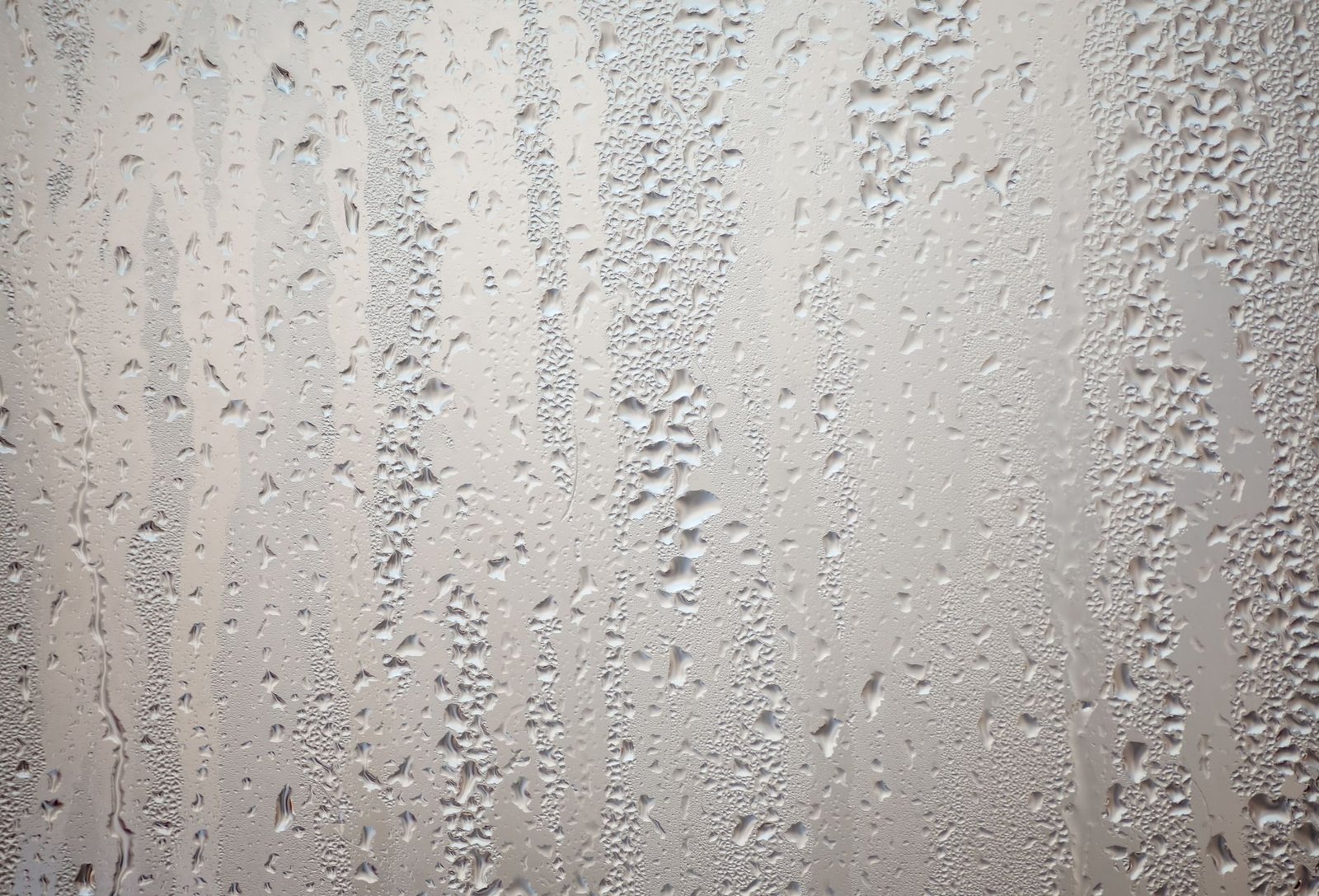
Why the window gets mould before the wall does
A window is usually the coldest surface in a room. Warm indoor air carries water vapour; when it touches something colder than its dew point, the vapour drops out as liquid. EPA says condensation can be a sign of high humidity, and that controlling moisture is how you control mould.
The numbers are not exotic. By my own Magnus-formula arithmetic (rounded), a room at 20°C / 68°F and 50% relative humidity starts wetting any surface below about 9°C / 48°F. At 70% it is about 14°C / 57°F. A winter window pane can easily sit in that range, and a wall usually does not. How condensation forms on glass is covered in its own guide, so I will not repeat it here.
The part that matters for mould is time. A film of water that clears by lunchtime does little. Water that runs down the glass and sits in a seal or corner every single night is what lets mould settle in.
Four spots to check first

Look in this order, because it is the order the water travels:
- The bottom seal of the glass. The gasket or silicone strip catches everything that runs off the pane. Black speckling here is the classic first sign.
- The lower corners of the frame. Two edges meet, water collects in the joint, and it dries last.
- The sill. Anything the frame does not hold ends up here, especially behind pots and curtains where there is no airflow.
- The plaster beside the frame. The reveal is often colder than the rest of the wall, and curtains shut off its warm air at night.
Where the mould sits is my own reading of how water pools, not a measured survey. If it is only on the first two, the glass is dripping. If it is mainly on the plaster, the cold is coming through the wall around the frame, and that is a bigger conversation than wiping.
What feeds it in the first place
Every cold-morning pane starts with moisture made indoors: breathing in a closed bedroom, showers, cooking without lids, and washing dried on radiators. The wet washing is the one I would look at first, because it puts a lot of water in the air in one room. Drying clothes indoors without mould goes through how to do it without feeding the glass.
Tight rooms make it worse, not the window itself. A draughty old window hides the problem by letting damp air leak out; a well-sealed one shows it. EPA’s guidance is to keep indoor humidity below 60%, ideally 30% to 50%, and a cheap hygrometer on the sill tells you where you really are. Nobody publishes a reliable “litres per household per day” figure, so I will not invent one: measure instead.
My one firm opinion: anti-mould sprays and paints are the last thing to buy, not the first. They treat a surface that is still being wetted every night. Wiping the water off for free does more than any product that has to sit on top of a wet frame.
Wipe the glass first, then deal with the air
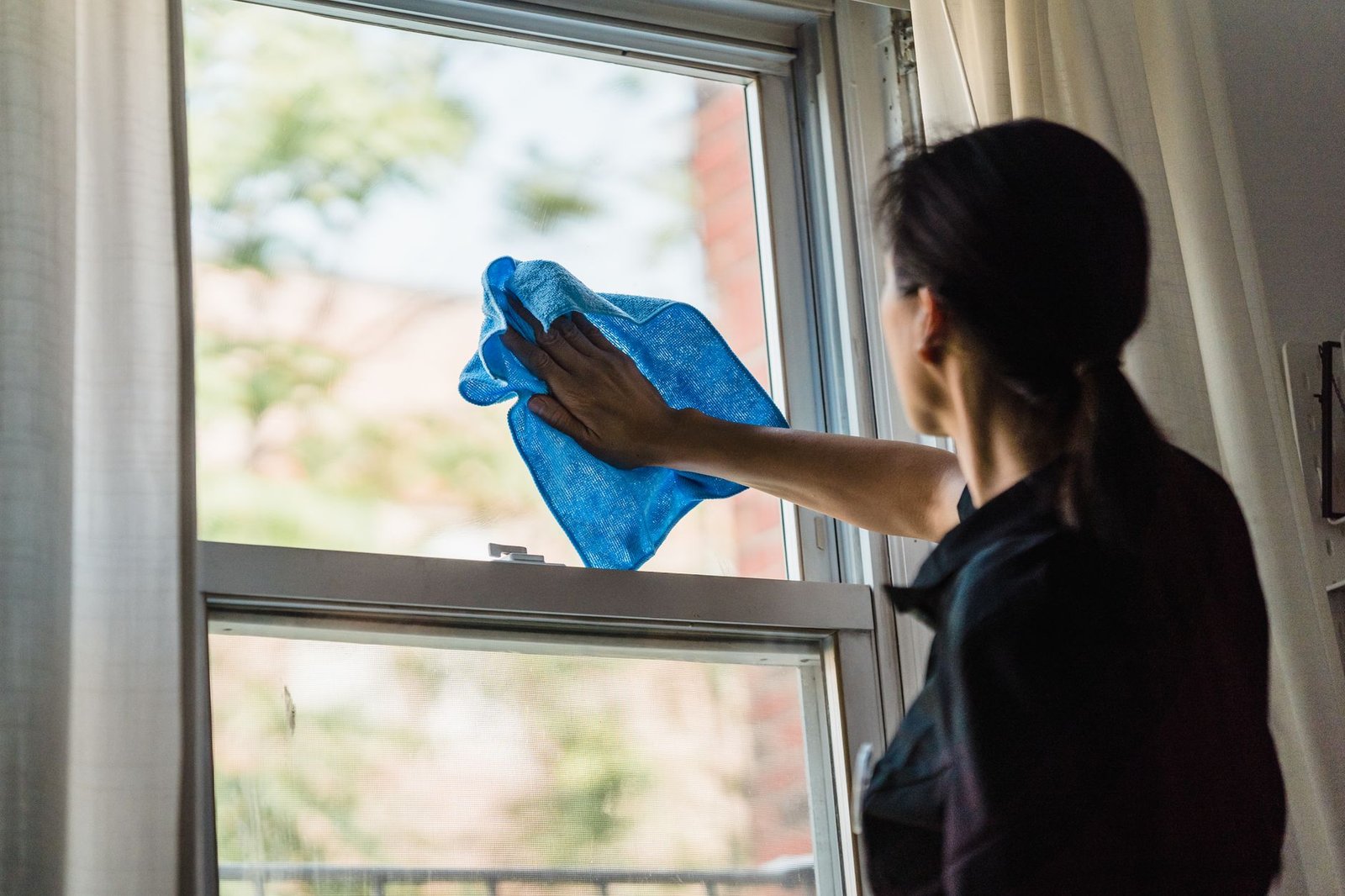
Prevention is boring and cheap, in this order:
- Wipe the pane, seal and sill each morning with a wrung-out microfibre cloth, and dry the cloth after.
- Run the extractor during showers and cooking, and for a while afterwards, then close the door so the steam leaves rather than spreads.
- Open the curtains and blinds by day so room air reaches the glass and the reveal.
- Keep a little background heat on in cold rooms. A warmer pane stays above the dew point.
- Use trickle vents if the frame has them, and keep them clear of paint and dust.
If the hygrometer still reads above 50% after all that, a dehumidifier is a reasonable next step. It lowers the dew point so the glass stays dry; what size dehumidifier you need depends on the room, not the window. The full run-down of window fixes, with the order to try them, is in how to stop condensation on windows.
Cleaning what is already there, kept short
Ventilate the room, wear gloves and keep the cleaning area small. Do not mix cleaning products with each other, and follow the label on anything you do use. If you are unsure, stop and ask a professional before you start.
For a small patch on a hard, non-porous surface (glazed frames, uPVC, glass), EPA says to scrub with detergent and water and dry the area completely. That is where I start, and it is where most people can stop. Fix the water problem first, or the mould returns.
Two limits worth knowing, both from the same EPA page and my own judgement:
- Under about 10 square feet (roughly 1 square metre) is the size EPA says you can usually handle yourself. Larger, or with a lot of water damage, needs different guidance.
- Absorbent or porous materials can lodge mould in their gaps. Unsealed timber and soft plaster behave that way, and black staining in old silicone sealant often does not come out. Recutting the sealant is cheaper than a fifth round of scrubbing, but that is my judgement, not a tested result.
When it is more than a window problem
Wipe the glass for two weeks and keep humidity near 50%. If mould returns on the plaster around the frame, or the frame timber feels soft, the water may be coming from outside, through a failed seal or a leak. Water between the panes is a failed sealed unit, which has its own guide. Mould does not care which water it uses, so check which one you have before you buy a cleaner.
Keep the glass dry and the frame stays clean
Mould around windows is a condensation record. Wipe the water each morning, lift the room’s humidity out of the danger zone, and clean the small patch once. If the frame stays dry, there is nothing left for it to grow on. If it comes back anyway, that is useful information: you have a bigger water problem than a window.
FAQ
What causes mould around windows?
Condensation. Warm, damp indoor air meets cold glass and frames, water forms and runs onto the seals and sills, and mould grows where that water stays. Closed bedrooms, showers and indoor drying supply the moisture.
Why do I get mould around double glazing windows?
Double glazing makes the room-side glass warmer than single glazing, but the frame, seal and plaster beside it can still be cold. If the room humidity is high, water still forms there. If the pane is misted between the glass layers, the sealed unit has failed.
Will a dehumidifier stop mould around windows?
It helps when the room humidity is the problem, because drier air needs a colder surface before it condenses. It will not help if the room is already at a normal level and the frame is simply cold. A dehumidifier lowers the moisture; it does not clean mould that is already there.
How do I stop mould coming back on window seals?
Keep the seal dry. Wipe the condensation each morning, ventilate during showers and cooking, and keep the room warm enough that the glass is not far below room temperature. If black staining sits in old silicone, resealing is usually more reliable than scrubbing.
How often should I wipe condensation off my windows?
Every morning that the glass is wet. It takes a minute, and it removes the water before it reaches the seal and sill.

