
Last Updated on October 24, 2026 by Umar Farooq
What humidity is too low in a house? Anything that stays below about 30% relative humidity (RH), because that is the bottom of the 30-50% range the EPA and ENERGY STAR both give as healthy for a building. A dip under 30% on one frosty morning means very little; a house that sits there for weeks is the one to deal with.
I get more mail about damp than about dryness, so it is worth saying plainly that the dry end is a real problem too. It is just a slower, quieter one, and it tends to arrive with the central heating.

What humidity is too low in a house? Under 30%, and for how long
Two authorities give the same floor. The EPA’s brief guide to mould and moisture says to keep indoor humidity below 60%, ideally between 30 and 50%. ENERGY STAR says the optimum for a building is generally 30% to 50%, and in a cold climate during the heating season 30% to 40%, to prevent window condensation.
Neither page names a hard line below which the house is “damaged”, and I will not invent one. What I can do is read the two together:
| Reading (RH) | What it means |
|---|---|
| Above 60% | Too high: the damp end. See is 60% humidity too high in a house |
| 40-50% | Comfortable middle of the published range |
| 30-40% | Fine, and the sensible winter band when windows run wet |
| Under 30% | Below the published range: too low if it persists |
The word that matters is persists. Timber and plaster respond to weeks of conditions, not to one cold snap. A single morning at 28% is a note in the diary. A fortnight at 25% is a finding.
Why winter heating pushes a house under 30%
Cold outdoor air holds very little water vapour. Bring it indoors and warm it, and the same amount of moisture now fills a much smaller fraction of what the warmer air could hold, so the RH figure falls. That is physics rather than a fault, and it is why the same house reads 50% in September and 28% in January without anyone doing anything.
Add a leaky building that swaps its air often, and the effect gets stronger, because you keep replacing indoor air with dry outdoor air. My own judgement, not a measurement: a draughty old house in a hard frost is the likeliest place to find a genuinely low reading. A tight modern one tends to hold on to the moisture its occupants produce. For the other side of the winter story, where the target actually has to drop because cold glass starts to bead, read the ideal home humidity level in winter.
What dry air does to timber and floors
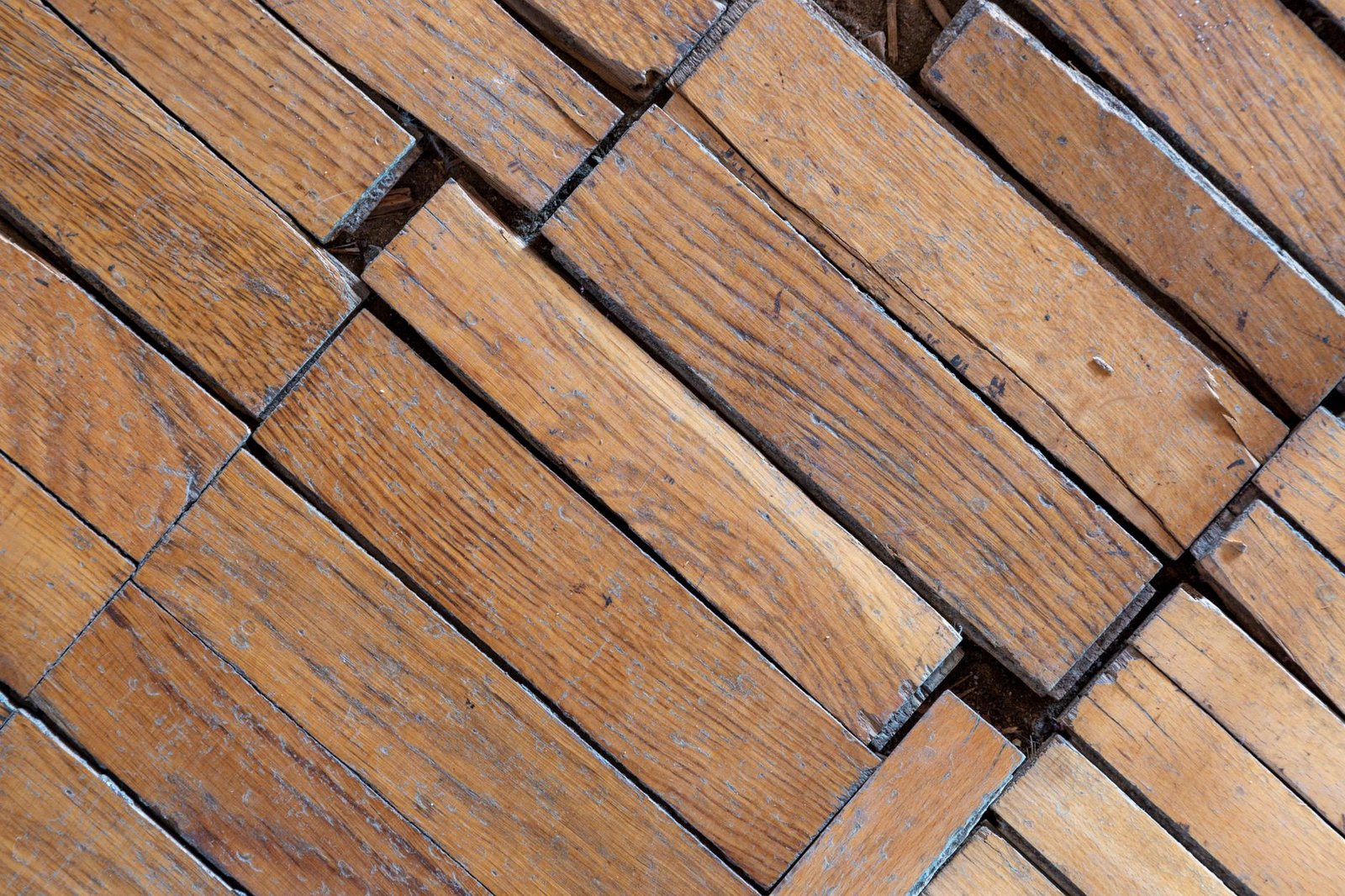
Wood is the one effect I can source properly. The US Forest Products Laboratory’s Wood Handbook explains that wood swells as it gains moisture and shrinks as it loses it, and that this “can result in warping, checking, and splitting of the wood”, with consequences such as “gaps in flooring”. It also says moisture exchange between wood and air depends on the air’s RH and temperature, so a heated, dry room pulls water out of every floorboard, door and chair leg in it.
In practice that shows up as:
- Gaps opening between floorboards or parquet blocks, usually widest at the end of winter and partly closing again in summer.
- Doors and drawers that rattle or loosen because the timber around them has shrunk slightly.
- Joints in furniture that work loose.
Those are slow signs, so they are poor evidence on their own: a floor can gap for other reasons. If you have a guitar, a piano or veneered antiques, they are more sensitive than a floor, and I cover that in can a dehumidifier damage wood.
You will also find lists online that add static shocks, cracking paint and plaster, and effects on electronics. I have no building-research page open that quantifies those, so I will only say that static and fine hairline cracks are the things people commonly report in dry winter houses, and that they are clues to check with a meter rather than proof.
Confirm it with a hygrometer, not a feeling
Dry skin, a scratchy throat and cling-film clothes are easy to blame on humidity and just as easy to blame on something else. I am not going to tell you what a symptom means medically; if it persists, ask a doctor. The cheap, boring test is a hygrometer.
- Put it in the middle of the room at about chest height, away from radiators, windows, kitchens and bathrooms.
- Leave it for at least an hour so it settles.
- Read it morning and evening for a week during cold weather and write the numbers down.
- Check the cheap sensor against a second one if you can. Small units can be several points out, which matters more near the 30% line than anywhere else. How humidity is measured covers the accuracy caveats.
If the week’s readings sit under 30% in the rooms you use, the house is too dry by the published range. If they hover at 33-38% and your windows are dry, that is a perfectly healthy winter house and you can stop worrying.
What to do about a dry house, in the order I would try it
Do not fix dry air by putting a bowl of water on a radiator or running a humidifier against a cold external wall. Add moisture in small steps and watch the hygrometer, because damp walls are a worse problem than dry air.
- Check any dehumidifier first. If you run one, a target set low, or a continuous mode that ignores the humidistat, is the commonest self-inflicted cause. Raise the target to 45-50%, or switch it off for the winter. The full diagnosis is in can a dehumidifier make the air too dry.
- Look at ventilation, but only if the house is over-ventilated. Constantly open trickle vents, a bathroom fan left running, or visible draughts replace humid indoor air with dry outdoor air. Closing a vent in a house that is already damp is the wrong trade. I would only cut ventilation where the readings are low and there is no condensation or mould.
- Stop treating laundry as a humidifier. Drying clothes indoors does add moisture, but it dumps a lot of water in one room at once and is a classic route to condensation on cold walls. It is not a plan.
- Decide whether to add moisture deliberately. A humidifier raises RH, and some owners want one for floors, instruments or comfort. It is a decision for you, and the trade-off is real: pushing above about 35-40% in a hard frost can bring back wet windows. If you go that way, set a target inside the 30-40% heating-season band and let the hygrometer, not the machine, decide when to stop.
A reading under 30% is too low only if it stays there
Under about 30% RH for weeks, in rooms you actually live in, is the line where I would act: check your own dehumidifier and ventilation first, then decide on a humidifier with a hygrometer in hand. A dip for a few mornings in a frost needs nothing, and chasing a higher number against cold windows trades a dry house for a damp one.
FAQ
Is 30% humidity too low in a house?
It is the bottom edge of the 30-50% range the EPA and ENERGY STAR publish, so 30% is borderline rather than clearly wrong. In winter, ENERGY STAR even gives 30-40% as the target in cold climates. Persistent readings below it are the ones to act on.
Is 20% humidity too low?
Yes. It is well under the published 30% floor. Check the hygrometer against a second one, then follow the order in this article before reaching for a humidifier.
Is 40% or 50% humidity too low for a house?
No. Both sit inside the 30-50% range and are comfortably in the middle of it. If anything, 40% is a good winter number, because it leaves room before cold windows start to bead.
Why is the humidity in my house so low in winter?
Cold outdoor air carries little moisture, and heating it indoors lowers its RH. Draughts that keep replacing indoor air with outside air make it worse. The same house is usually far higher in summer.
Can low humidity damage a house?
Over weeks and months, dry air shrinks timber, and the Wood Handbook lists warping, checking, splitting and gaps in flooring as results of wood losing moisture. Brief dips do no harm. See what a dehumidifier does to wood for the detail.

