
Last Updated on October 25, 2026 by Umar Farooq
Why do two hygrometers show different readings? Usually because neither is perfectly accurate, and because they are not measuring quite the same air at quite the same temperature. A gap of two or three points is normal, and a gap of ten is a puzzle worth about an evening of your time.
I have never met two cheap hygrometers that agreed to the decimal, and I have stopped expecting them to. The useful question is not “which one is lying” but “is this gap tolerance, position, or a unit that has gone off”.
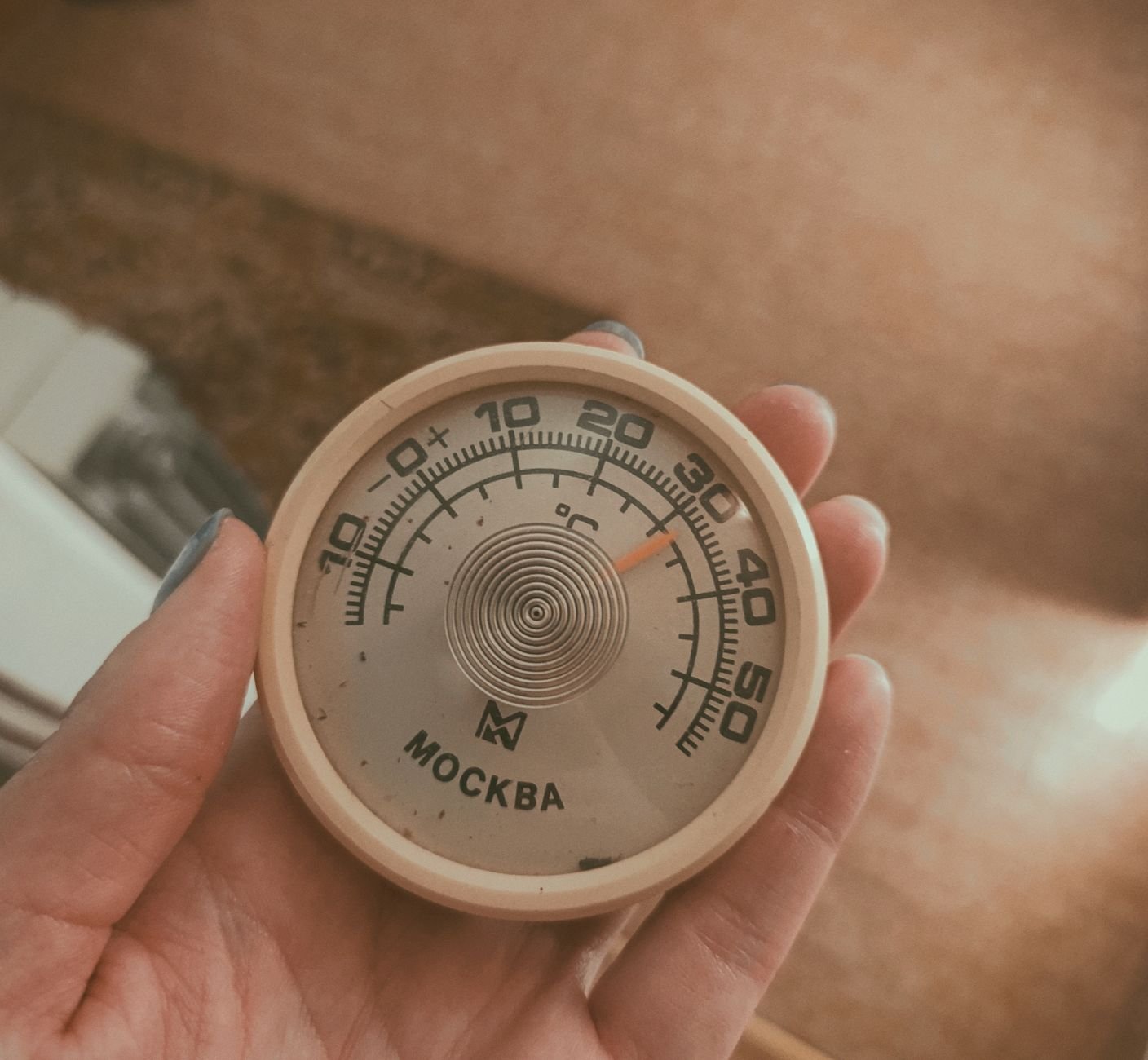
Why do two hygrometers show different readings? Start with tolerance
Every humidity sensor has an error margin, and two units each within their margin can still differ from each other. The UK’s National Physical Laboratory says there is no “typical uncertainty” for humidity measurement, but very broadly ideal conditions might reach plus or minus 2 to 3 %rh, and difficult ones plus or minus 5 to 10 %rh or worse.
Do the sum, which is my arithmetic rather than a published rule: if each unit may be 3 points out in opposite directions, they can sit 6 points apart and both be doing their job. A well-made sensor chip does better. Sensirion’s SHT3x datasheet quotes a typical accuracy of 1.5 %rh for its best grade. But I cannot tell you which chip is inside a £10 unit, so I assume the worse end.
There are three quieter contributors:
- Drift. The NPL notes hygrometers drift with use and with ageing. Sensirion’s datasheet gives under 0.25 %rh a year as typical for that chip, but warns that contaminated air (solvents, adhesives, outgassing tapes) can push it higher. A bathroom or kitchen is not a clean-room.
- Display rounding. One shows 54, the other 55.4 rounded to 55. That is not a disagreement.
- A fixed offset. One unit simply reads a few points high or low, every time. That one is findable, and the salt test in the calibration guide is how.
Heat near the sensor pushes one reading down
Relative humidity is a ratio, and it falls when air warms even though no water has left. The NPL’s figure is that at 50 %rh, a rise of 1°C (1.8°F) lowers the reading by about 3 %rh. So a hygrometer on a shelf above a radiator, behind a television, or in a patch of afternoon sun will read lower than one across the room.

The same effect works in reverse. The NPL warns that measuring at a cold spot, such as a cold outside wall or a windowsill, over-estimates the typical humidity of the room even when the water vapour is spread evenly. A unit stuck to a cold wall and a unit on a bookcase will therefore disagree, and the wall one is the one telling you about the wall.
Height matters for the same reason: warm air collects near the ceiling and a floor-level sensor sits in the cooler layer. I have not measured how large that gap is in an ordinary house, so I will only say it exists. How the number shifts through the day is covered in how humidity is measured.
Thermal lag: the unit you just carried in is not ready
A hygrometer moved from a cold hall to a warm lounge, or unboxed from a cold porch, is still at its old temperature. Its sensor is reading the room’s air at the wrong temperature, and the number slides for a while. The NPL’s advice is to let the instrument reach the temperature of the location and allow time for the reading to stabilise. A Japanese instrument maker, CHINO, tells users to observe the device for several hours after moving it, since a unit that has not adjusted to its surroundings is a cause of large errors.
Moisture is the other half. A sensor that has been wet, from steam, a spilt drink or condensation, reads wrong until it dries, and the NPL says not to expose sensors to condensation unless they are rated for it. CHINO suggests about half a day of ventilating the element for some of its products. Treat that as the scale of the wait, not a rule for your unit.
There is a slower version too. Sensirion’s datasheet says long exposure to high humidity can temporarily offset the reading, for example about 3 %rh high after 60 hours above 80 %rh, and that the sensor then recovers slowly by itself. If one unit lives in a steamy bathroom or cellar and the other does not, expect this to show up.
How to compare two hygrometers fairly in five steps
Nothing here is risky, but keep both units away from sprays and cooking steam while you test. These steps are my own method, built from the NPL advice to compare against another hygrometer and to take repeated readings.
- Put them side by side on the same shelf, a few centimetres apart, at the same height, display facing out.
- Move them away from heat and water. Not near a radiator, window, vent, kettle or bathroom door. About 1 m (3 ft) clear is my rule of thumb.
- Wait. Leave them for several hours, longer if either came from another room. Do not judge anything in the first half hour.
- Read both at the same times over a day, morning and evening. Write the gap down each time. A steady gap is an offset. A gap that wanders is placement, airflow or a sluggish unit.
- Swap them and repeat. If the gap follows the unit to the new spot, the unit is the cause. If it stays with the spot, the spot is.
Step five is the one the competing guides skip, and it is the cheapest way I know to separate a bad position from a bad hygrometer.
Which one do you believe?
Once they are side by side, there are three outcomes. Within two or three points of each other, believe both and use the average. A steady gap of four to six, call it tolerance, choose one unit as your reference and stick to it. Ten or more points apart, one is probably faulty and the pair cannot say which, so reach for the salt.
The salt test holds air at about 75 %rh, so the unit nearer to 75 is the more trustworthy at that point. It checks one point only, so a unit that passes can still be off at 40%. Once you have a reference, compare it with the healthy humidity range for a home, and the odd few points will rarely change what you do.
When the disagreement does not matter
If both units sit well inside the same band, and you only want to know whether to run the dehumidifier, a five-point gap changes nothing. A reading of 52 against 57 says “comfortable” either way. A reading of 62 against 67 says “too damp” either way.
The gap matters near a decision line, such as the 60% mark the EPA advises staying below, or when you set a dehumidifier target. There, pick one reference unit and tune against it, as the settings guide suggests for the machine’s own display. Consistency beats correctness here: a hygrometer that is 4 points low every day still shows you the climb from 45 to 62.
Pick a reference unit, and trust its trend over its decimals
Two hygrometers will rarely agree exactly, and they do not need to. If they are side by side and within a few points, enjoy the redundancy. If they are far apart, the swap test tells you whether to blame the spot or the unit, and a night with salt tells you which unit to keep. Why do two hygrometers show different readings? Mostly tolerance, temperature and impatience, and you can fix two of those for free.
FAQ
How much difference between two hygrometers is normal?
Two or three points is normal, and up to about six can still be within tolerance if each unit errs in opposite directions. The NPL’s broad figure for good conditions is plus or minus 2 to 3 %rh per instrument. Beyond ten points, suspect placement or a faulty unit.
Which hygrometer should I trust when they disagree?
Test them side by side, then swap their positions. If the gap follows a unit, run a salt test and trust the one closer to 75% in the bag. If the gap stays with the spot, neither unit need be faulty.
How long should a hygrometer sit before I trust the reading?
At least several hours after moving it between rooms, and longer if it was cold or wet. CHINO recommends several hours of observation, and the NPL advises waiting for the reading to stabilise.
Can a hygrometer go out of calibration?
Yes. The NPL says hygrometers can drift through use and ageing, and suggests recalibrating relative humidity instruments every 6 to 12 months for serious work. For a home unit, a salt test once a year is a sensible habit.
Does a dehumidifier reading differ from a separate hygrometer?
Often, yes, because the machine’s sensor sits inside the unit, in air the machine has altered. Treat its display as its own control signal, and use a hygrometer in the room as the check.

