
Last Updated on October 24, 2026 by Umar Farooq
Is 60 humidity too high in a house? It is right at the edge: the EPA says to keep indoor humidity below 60%, ideally 30-50%, so a reading of 60% is the ceiling rather than a target, and it is too high if it stays there. A single afternoon at 60% after a wet day is a blip; the same number every evening for a month is a problem with a name.
Most pages on this question either panic or shrug. The honest answer has three parts, how long, how cold the walls are, and what you do next, and none of them fits in a headline.
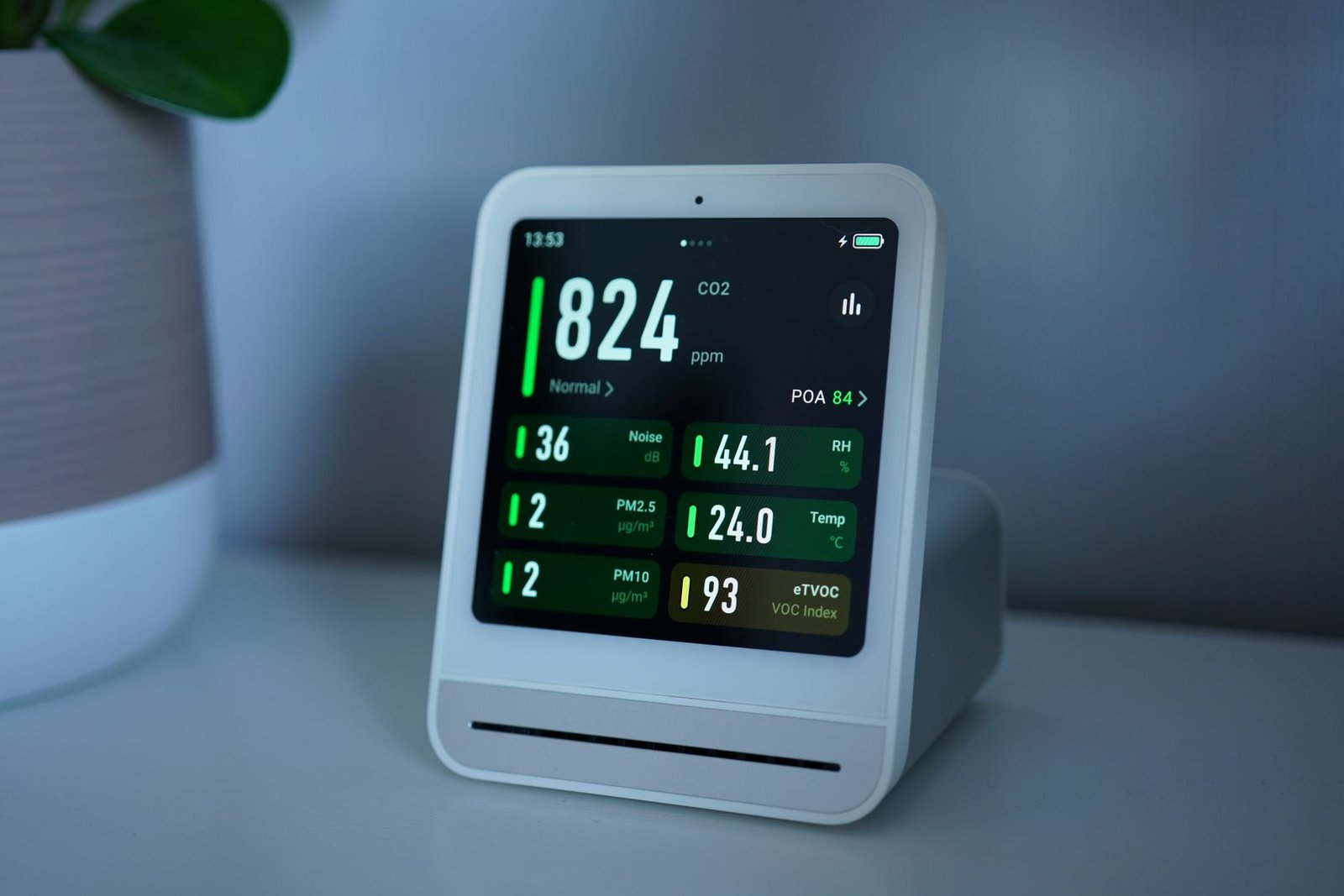
Is 60 humidity too high in a house? Only if it stays
The EPA’s Brief Guide to Mold, Moisture and Your Home puts it in one line: “If possible, keep indoor humidity below 60 percent (ideally between 30 and 50 percent) relative humidity.” Note the “if possible”. It is advice about where to live, not a switch that flips at 60.01.
Building Science Corporation is blunter. Its report on relative humidity says interior humidity “should never rise above 60 percent in any event”, and separately puts the critical level for biological activity on building surfaces at 70 percent. The gap between those two numbers is the whole story, and I have written it up in what humidity mould grows at, so I will not repeat the surface-versus-room argument here.
My one strong opinion: 60% is a number to log, not a number to fear, until it appears on the second or third day running. Cheap hygrometers are only roughly accurate, so a lone 60 tells you less than a week of readings does.
What 60% does to the coldest wall in the room
Relative humidity is a ratio, so the same air reads higher the colder it gets. Any surface colder than the air’s dew point collects water. Using the standard dew point formula (my arithmetic, not a measurement of a real house), 60% is a lot closer to wet than 50%:
| Room temperature | Dew point at 50% | Dew point at 60% |
|---|---|---|
| 18°C (64°F) | 7.4°C (45°F) | 10.1°C (50°F) |
| 20°C (68°F) | 9.3°C (49°F) | 12.0°C (54°F) |
| 22°C (72°F) | 11.1°C (52°F) | 13.9°C (57°F) |
In a 20°C room at 60%, anything below 12°C collects water. A single-glazed window in January, an outside-facing wall corner or a cold water pipe is easily that cold. This is why the same 60% that is harmless in a warm July living room means streaming windows in a winter bedroom. The EPA lists condensation as a sign of high humidity and suggests insulating cold surfaces such as water pipes.
How long can a house sit at 60% before it matters?
Nobody can give you an honest number of hours, and anyone who does is guessing. Here is what is actually known.
The EPA’s famous “24-48 hours” is a deadline for drying wet materials after a flood or leak. It is not a timer for mould at 60% humidity, and I have unpicked the confusion in how long mould takes to grow. Building Science Corporation’s report gives no duration either; it ties interior mould to the heating season, when walls are cold, and the 60% cap to summer comfort.
What I can say from the mechanism: growth needs a surface that stays near 70% humidity, a food source (dust, paint, paper) and time. An evening of 60% air passing over warm walls does not meet that. A fortnight of it against a cold wall could. Where the line sits depends on that wall, and I will not pretend to a precise figure.
If you already see mould covering more than about 10 square feet (roughly 1 square metre), the EPA treats it as a larger cleanup job. Fix the water source first, and do not rely on lowering humidity to remove growth that is already there.
Three checks to run before you buy anything
- Read it at the right time. Place a hygrometer at chest height, away from windows, radiators and the bathroom door, and read it in the evening and first thing in the morning. How humidity is measured covers placement and a quick accuracy test.
- Touch the coldest surface. Check outside-facing walls, window corners and the wall behind a wardrobe. Misted glass in the morning or a cold, clammy patch means the surface is wetter than the room reading suggests.
- Compare the weather. If 60% only turns up on muggy days and drops overnight, it is the climate. If it holds through dry spells too, you have a source inside the house: drying laundry, a missing extractor fan or a damp wall.
Two of three failing is my threshold for acting. One failing check is worth watching.
Bring 60% down: source first, then the air
Cut the moisture going in before you spend money pulling it out. Vent the kitchen and bathroom outside, stop drying washing on radiators, and pull furniture off cold walls. The full sequence, with what each step is worth, is in how to lower humidity in a house.
If it still sits at 60% after that, a dehumidifier is the right tool, and in a hot, muggy climate, where 60% is the normal outdoor weather in summer, it may be the only one that works. Size matters: one that is too small runs all season without ever reaching 50%, so use what size dehumidifier you need before buying.
What I would skip is chasing 40% in winter. Aim for about 50%, accept the odd 55%, and put the effort where the condensation actually is.
Sixty is the edge: shrug at one day, act on a week
So, is 60 humidity too high in a house? On its own, for a day, no. Held for weeks, in a house with cold walls, yes, and that is the case where you should find the source and bring the air back toward 50%. The number that matters is not on the hygrometer but on the coldest wall.
FAQ
Is 60 percent humidity bad for a house?
It is not automatically bad, but it is the top of the EPA’s recommended range, so there is no margin left. If it is a regular reading, particularly in cool weather, treat it as a sign to reduce moisture.
Is 60 percent humidity too high for sleeping?
It is higher than the 30-50% range most guidance recommends for a bedroom, and bedrooms are often cold at the walls. I have not seen a firm sleep threshold from a primary source, so use the 50% target and check the walls instead.
Is 65 percent humidity too high in a house?
Yes, it is above the EPA’s 60% ceiling, and a surface only a few degrees cooler than the room is close to the 70% level at which Building Science Corporation sees biological activity on surfaces. Act on it.
Is 60 percent humidity OK in summer?
It is borderline. Building Science Corporation says interior humidity should never exceed 60% in summer, so use air conditioning or a dehumidifier if you are regularly above it.
How do I lower humidity from 60 to 50 percent?
Remove the moisture sources first: ventilate cooking and showers, dry laundry outside or in a vented room, and fix leaks. If that is not enough, a correctly sized dehumidifier in a central, open space does the rest.

