
Last Updated on October 24, 2026 by Umar Farooq
Can a dehumidifier damage wood? Not at a sensible setting: the damage comes from running one so hard that the room sits below about 30% relative humidity for weeks, which makes wood shrink, gap and sometimes crack. In a normal house the machine switches itself off long before that, and damp is by far the bigger threat to timber.
I would rather you worried about the hygrometer than the dehumidifier. The machine is only a way of removing water from air, and wood trades water with that air all day long. The harm, when there is any, comes from how far and how fast the air moves.
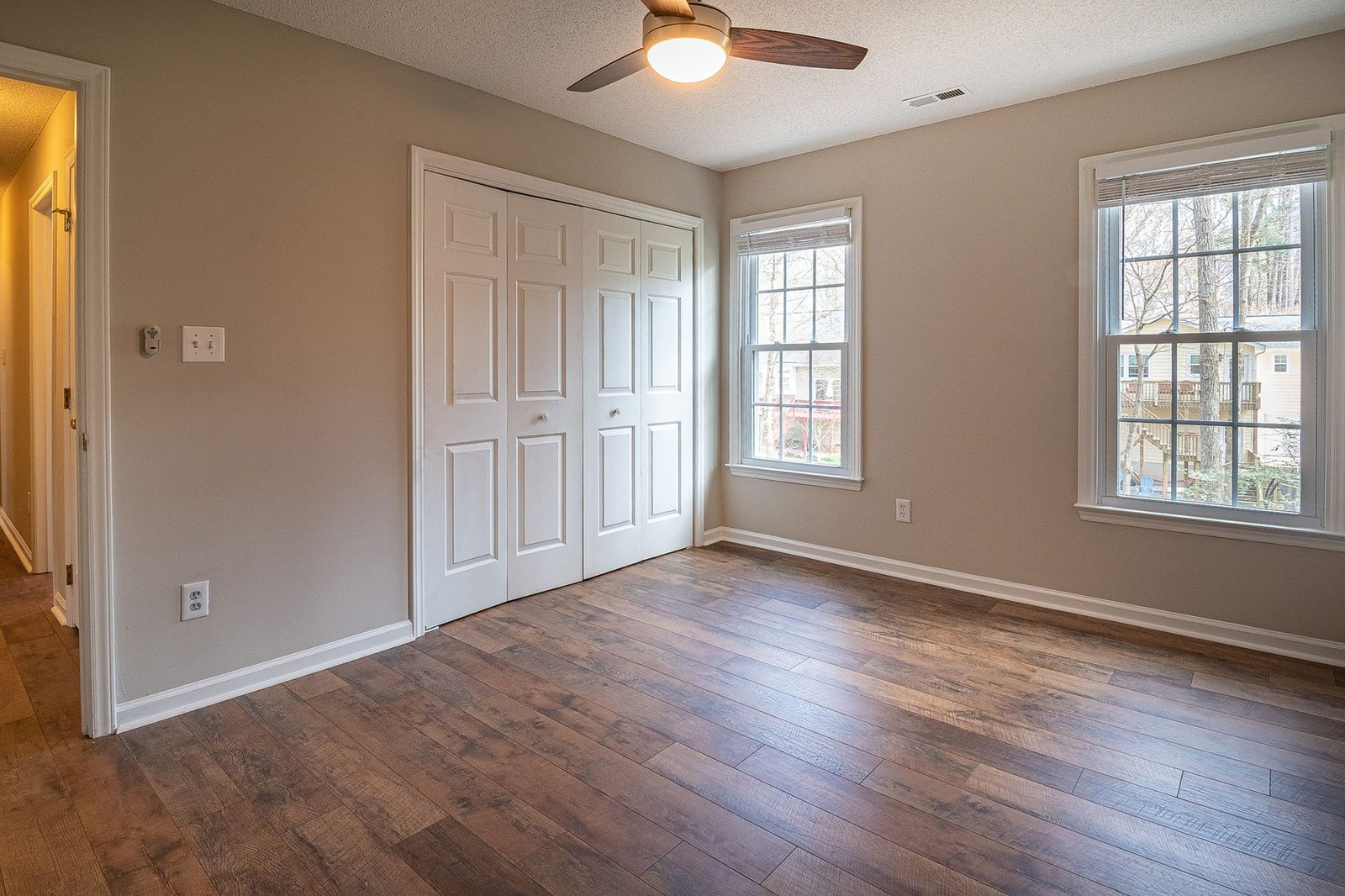
What wood does when the air around it dries out
Wood is never really dry. It holds water in its cell walls, and that water level follows the room’s relative humidity. The US Forest Products Laboratory’s Wood Handbook says wood is dimensionally stable while its moisture content stays above about 30% (the fibre saturation point). Below that, which is where every piece of furniture and flooring in your house lives, it changes size as it gains or loses water. The Handbook lists the consequences plainly: warping, checking and splitting, and “gaps in flooring”.
It does not shrink evenly either. Per the same chapter, wood shrinks most along the growth rings, about half as much across them, and only slightly along the grain. That mismatch is why a board cups or a panel splits rather than just getting a bit smaller.

The Handbook’s equilibrium table makes the scale concrete. In a 21 °C (70 °F) room, wood settles at about 6.2% moisture at 30% humidity and about 9.4% at 50%. Drop to 20% humidity and it heads for 4.6%. Nothing dramatic happens at any single reading, which is why people miss it: the damage is the slow loss of a few percent of moisture, repeated every winter.
Can a dehumidifier damage wood floors and furniture? Only past a point
Here is where I part company with the scare-stories. A domestic dehumidifier is not a kiln. It pulls moisture until the humidistat’s target is reached, then stops. Set to 50% in a house sitting at 65%, it will bring the room down to 50% and idle, and 50% is bang in the middle of the range wood likes.
The real risks are narrower than “dehumidifiers dry out wood”:
- Running it in a room that is already dry. Heated winter air can sit at 30% without any help from you. Add a dehumidifier on a low setting and you push a marginal room into the danger zone.
- Setting the target far below the guidance. Chasing 35% “to be safe” is how a damp-proofing exercise turns into a shrinkage problem.
- Ignoring the reading. No hygrometer means no idea. Everything else here follows from having one.
If your floor already has gaps and the dehumidifier has been running for a month, that is worth acting on. If the gaps appeared after the first cold snap and close up in summer, that is ordinary seasonal movement and the machine is not the culprit. For the wider question of whether a machine can over-dry a room, see can a dehumidifier make the air too dry.
The safe range for timber is 30% to 50% humidity
Two authorities agree on the number. The National Wood Flooring Association’s installation guidelines say that, as a general rule for solid wood flooring, the interior should stay within 30% to 50% relative humidity and 60 to 80 °F (about 16 to 27 °C), with geographic exceptions. They add that flooring makers’ own requirements come first, and that you should maintain a consistent environment throughout the year to minimise floor movement. The EPA’s brief guide to mould and moisture gives the same 30 to 50% as the ideal, with 60% as the ceiling.
Read that as a band with two edges. Above it you invite mould and swelling; below it you invite shrinkage. A dehumidifier only protects you from the top edge, so it needs a leash for the bottom one. My own working rule, which is judgement rather than a published figure: set 50%, check weekly, and if the hygrometer ever sits under 35% in winter, switch the machine off. The full reasoning on target numbers is in what should indoor humidity be.
The NWFA even recommends a humidifier through the dry months and a dehumidifier through the humid months to stop wood gaining or losing moisture. In other words, they treat a dehumidifier as part of the solution.
Drying wet wood after a leak: slow and measured wins
This is the situation where a dehumidifier genuinely can cause trouble, and the one most guides skip. After a leak or flood, a floor or subfloor is wet, and the instinct is to blast it dry.
The EPA says to dry water-damaged areas and items within 24 to 48 hours to prevent mould growth, so you cannot dawdle. But the NWFA also notes that wetted wood panels can tolerate short-term wetting and then shrink as they dry, and that the wood must reach an adequate moisture content before flooring goes over it. Drying too hard, too fast, is how a flooded floor ends up cupped or gapped.
My approach: get air moving and the dehumidifier running straight away, then borrow or buy a pin moisture meter and follow the readings down rather than the clock. Stop when the wood matches an undamaged piece of the same timber elsewhere in the house, not when the room hits some low humidity figure. For mould on wood that has already stayed wet, see how to remove black mold from wood, and fix the water source first.
Instruments, antiques and veneered furniture need a gentler hand

Solid oak floorboards are forgiving compared with the things people actually worry about. Anything glued, veneered, thin or old is more sensitive, because different layers and joints move at different rates. Guitars, violins and pianos, antique chests and veneered tables are the usual suspects.
I have not found one authoritative humidity figure for all of them, and I would be inventing one if I gave you a number. What I can say is that the maker’s guidance beats mine. Check the manual or the manufacturer’s care page for the instrument, and keep the room inside the 30 to 50% band as a starting point. A small case humidifier or humidity pack is a better answer for a single guitar than running a whole-room unit gently all winter.
Where one house has both a damp problem and precious wood, a humidifier and dehumidifier combo is worth a look, because it can hold a target from either side rather than only pulling humidity down.
Five habits that keep wood safe around a dehumidifier
- Buy a hygrometer. A basic digital one is cheap, and every other habit depends on it.
- Set the target at 50%, not lower. The dehumidifier settings guide explains why lower is never faster.
- Check it in winter. That is when heated air is already dry and the machine has least work to do.
- Keep wood away from the outlet. Do not point warm, dry exhaust air at a piece of furniture for hours.
- Never aim for the lowest number. If the reading is in range, the machine has done its job.
If you want a quick sanity check, note the reading every morning for a week. A steady 40 to 50% means you can stop thinking about it.
A dehumidifier is only hard on wood when nobody is watching the hygrometer
So, can a dehumidifier damage wood? Technically yes, practically rarely. Over-drying is a risk you control with a 50% target and a cheap gauge. Damp, meanwhile, rots, swells and grows mould on wood with no help at all from you, and a correctly set dehumidifier is what prevents it. Keep the room between 30 and 50%, dry wet wood steadily rather than aggressively, and leave instruments and antiques to their makers’ instructions.
FAQ
Can a dehumidifier damage hardwood floors?
Only if it leaves the room below about 30% humidity for long periods, which can open gaps between boards. At a 50% target it is far more likely to protect the floor from cupping and mould than to harm it. Follow your flooring manufacturer’s range if it is narrower.
What humidity is bad for wood furniture?
Long stretches below about 30% risk shrinkage and cracking, and long stretches above about 60% risk swelling and mould. The comfortable middle is 30 to 50%, which is what the EPA and the National Wood Flooring Association both give.
Will a dehumidifier dry out wood?
It dries the air, and wood then follows the air. In a damp room that brings wood back towards a healthy moisture level. In an already dry room, running one on a low target can push wood below it.
Is it bad to run a dehumidifier in a room with wood floors?
No, provided the hygrometer stays within the 30 to 50% range. It is a good idea in damp basements and after leaks. Switch it off in dry winter weather if the reading falls below about 35%.
Can a dehumidifier crack a piano or guitar?
Very low humidity is a known problem for wooden instruments, so a whole-room dehumidifier at a low setting is a poor choice for them. Check the maker’s guidance and use a local humidity control in the case or room rather than guessing.

