
Last Updated on October 24, 2026 by Umar Farooq
How to get rid of mould in bedroom patches smaller than about 10 square feet (a 3 ft by 3 ft / 1 m by 1 m area): scrub the growth off with detergent and water, dry the surface completely, then fix the moisture that fed it, because cleaning alone will not keep it away. The order matters more than the product.
The scrubbing takes twenty minutes. What decides whether you are back in the same corner in March is what you do with the wardrobe, the window and the door.
Why does mould start in the bedroom before anywhere else?
Mould needs a damp surface and time. Bedrooms supply both, for four stacking reasons.
Overnight breath. People breathe out water vapour all night, and you are in the room with the door shut for seven or eight hours. I have no measurement of how much a sleeper adds, but the vapour has nowhere to go until you open a window.
Cold external walls. Bedrooms are often the room with the heating off or low, and they usually have an outside wall. Air at 20°C / 68°F and 50% relative humidity meets a wall at 12°C / 54°F and the humidity right at the surface climbs to about 84%. That figure is my own arithmetic from the example temperatures, not a measurement of your wall, and the room reading on a hygrometer will still say 50%.
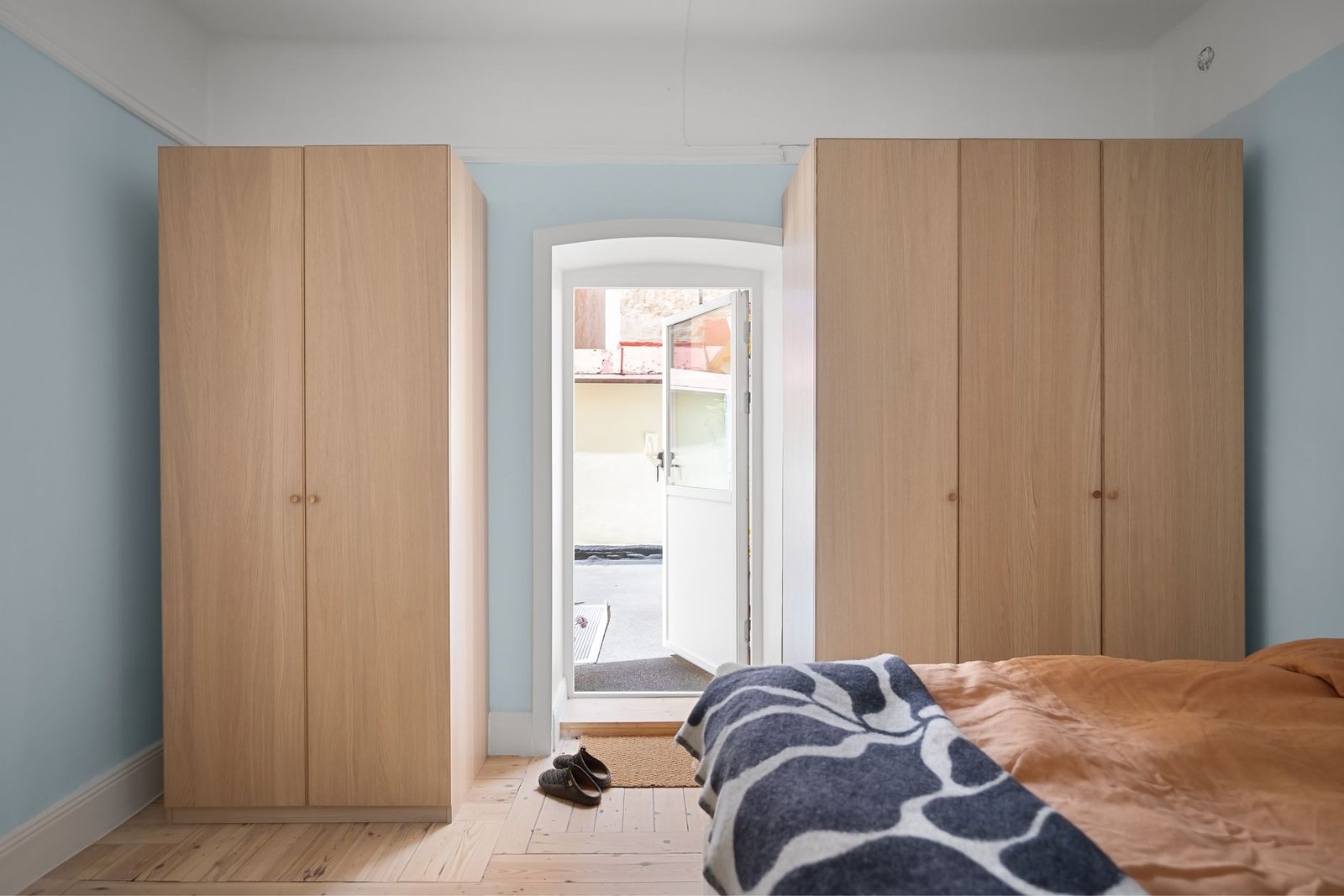
Furniture against the wall. A wardrobe or headboard flush with an outside wall stops room air reaching the surface behind it. The EPA lists the surface of walls behind furniture as a place where condensation forms and mould can hide.
Closed doors. A shut door seals in the moisture you breathe out. In many homes it also keeps the bedroom colder than the rest of the house, which means more cold surface for that moisture to land on.

Read the room before you scrub: one hygrometer, two readings
A hygrometer (the EPA puts them at $10 to $50) answers “is this room damp?” better than guessing. Put it on the bedside table and read it as you get into bed and again as you wake.
The EPA’s guidance is to keep indoor humidity below 60%, ideally 30 to 50%. A waking reading above that is your cause, and scrubbing will not beat it. If it is fine but mould sits in one corner, suspect a cold spot or a leak instead.
Five changes that stop bedroom mould coming back
I would do these first, because they are free.
- Pull wardrobes and beds 5 cm / 2 inches off outside walls. That figure is my rule of thumb, not a tested standard. It lets air move behind the furniture.
- Wipe the window every cold morning. Condensation that sits on the sill and frame is a common starter for mould around bedroom windows. Why it forms and how to stop it is covered here.
- Open a window for a while after you get up. Ten minutes with the door shut behind you clears the night’s moisture without cooling the whole house.
- Keep wet things out of the room. Towels, clothes airers and wet coats add moisture to a room already collecting it.
- Leave the bedroom door ajar when you can, so the room shares air with the rest of the house.

If the reading stays stubbornly high, a dehumidifier is the next step. It will not clean mould off a wall, but it holds humidity down. Whether it suits a condensation problem is worth checking, and a quiet dehumidifier for a bedroom beats one that sounds like a fridge at 3am.
Safe steps for how to get rid of mould in bedroom patches under 10 sq ft
Do not dry-brush, scrape or sand mould, and do not point a fan at it. That puts spores into the air in a room you sleep in. Wear goggles without vent holes, gloves and a mask, and never mix cleaning products: the EPA warns that bleach mixed with ammonia-based cleaners can produce toxic fumes. If the patch is larger than about 10 square feet, is inside a wall, or followed a flood or a leak you cannot find, stop and call a professional. If anyone in the home has health concerns about mould, ask a doctor, not a website.
The EPA says that below about 10 square feet you can usually do the job yourself. Here is the sequence I follow:
- Find the water first. Leak, blocked gutter, failed window seal or condensation. If you cannot name the source, you are only tidying.
- Protect yourself and the room. Open the window, keep the door shut so spores do not travel, and put down a sheet.
- Scrub hard surfaces with detergent and water. That is the EPA’s method for walls, sills and window frames. Use a damp cloth you can throw away and work from the edge inwards.
- Dry it completely. A wet wall will grow it again. Leave the window open and keep the furniture away until the surface is dry to the touch.
- Do not paint over it yet. The EPA says not to paint mouldy surfaces, since paint applied over them is likely to peel. Oxford City Council gives the same advice for untreated mould. Clean, dry, fix the cause, and only then redecorate.
To learn what you are looking at before you start, this visual guide to what black mould looks like separates mould from soot, dust marks and water stains.
Does bleach or vinegar get rid of mould in a bedroom?
Advice differs. Some UK council pages suggest a bleach-based spray or fungicidal wash for small patches, while the EPA’s cleanup page recommends detergent and water and does not mention bleach. The EPA also notes that it is not possible or desirable to sterilise an area, because a background level of spores always remains, and these spores will not grow if the moisture problem has been solved.
My view: the cleaning product is the least important choice in this job. A patch that returns in three weeks was a water failure, not a product failure. Use detergent, follow the label on anything stronger, and put your effort into drying.
Mattress, curtains or carpet: when to throw it away
Hard surfaces can be scrubbed. Soft ones cannot always be saved. The EPA says absorbent or porous materials, such as ceiling tiles and carpet, may have to be thrown away if they become mouldy, because mould can grow into the material and be difficult or impossible to remove completely.
In a bedroom that means carpet and underlay, and in my judgement a mattress with visible growth. Curtains and bedding the care label allows can go through a hot wash. Dry everything before it goes back.
When the mould keeps coming back, look beyond the bedroom habits
If you have moved the furniture, aired the room and kept humidity in range, and the same patch still returns, suspect the wall. A leaking gutter, a roof defect, a cold bridge or a damp path through the wall can keep one patch wet when the rest is dry, and mould that tracks the weather is the usual sign. Condensation on walls and ceilings has a foil patch test that tells surface condensation from damp coming through the wall.
Getting rid of mould in a bedroom is mostly a furniture, window and door job
That is how to get rid of mould in bedroom corners for good: clean the patch the careful way, then change the three things the room was doing wrong: put the wardrobe 5 cm off the wall, wipe the window and let the room breathe. If the waking reading on your hygrometer stays under 60% and the wall stays dry, the mould has nothing left to live on. If it does not, the answer is in the walls, not in a stronger spray.
FAQ
Why do I keep getting mould in my bedroom?
Almost always because the moisture source has not been fixed. Overnight breath, cold outside walls, furniture against them and a closed door all raise humidity at the wall surface.
Is it safe to sleep in a room with mould?
I cannot give medical advice, so ask a doctor if you are concerned. The EPA’s guidance is to clean up the mould and fix the water problem, and not to disturb dry growth in the meantime.
Can I paint over mould in my bedroom?
No. The EPA says not to paint or caulk mouldy surfaces and that paint over them is likely to peel. Clean the patch, dry the wall completely and fix the moisture first.
Does a dehumidifier get rid of mould in a bedroom?
It does not remove existing growth, but it can keep humidity low enough that mould stops spreading. Pair it with a hygrometer and aim for the EPA’s 30 to 50% range.
How do I get rid of mould behind a wardrobe?
Empty it, scrub the wall with detergent and water, dry it fully, then put the wardrobe back 5 cm / 2 inches from the wall. If the patch is bigger than 10 square feet, call a professional.
Does bleach kill mould on a bedroom wall?
The EPA’s cleanup guidance recommends detergent and water and does not mention bleach. If you use it anyway, never mix it with other cleaners, ventilate well and fix the damp.

