
Last Updated on October 26, 2026 by Umar Farooq
Does leaving the shower curtain open cause mold? No: an open curtain does not cause mold, and it usually helps, because mould needs a surface that stays wet and a curtain bunched into one wet heap is the slowest thing in the bathroom to dry. The position of the curtain is a side issue. How long it stays damp is the main one.
I have watched people agonise over open versus closed while the extractor fan sat switched off beside them. Let me save you the argument.
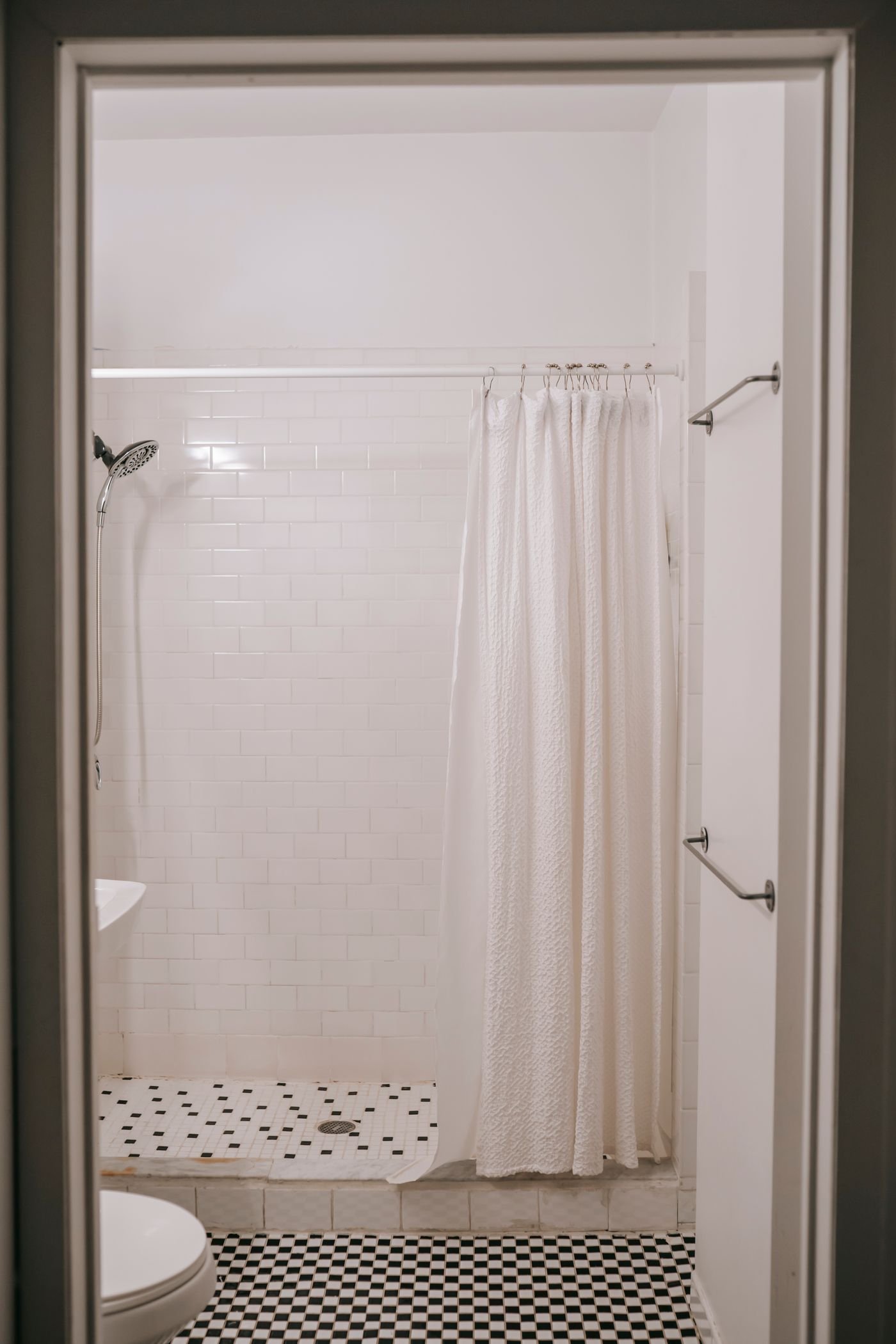
Mould follows the wet, not the curtain’s position
North Dakota State University Extension puts the starting point simply: “Molds grow in moisture”, and it lists soap scum, shower walls, ceramic tile and fibreglass as surfaces where growth can start. A shower curtain is a surface that gets splashed daily and collects a film of soap and skin oils, which is the food. All it lacks is the dry-out that would stop mould using it.
So the real question is not “open or closed?” but “how many hours does this curtain spend wet?” A curtain pulled across and left that way can be fine if it dries. A curtain pushed open that clumps into folds can stay wet for a long time. The position only matters through that one number.
The EPA’s rule of thumb is that water-damaged items should be dried within 24-48 hours. That is a deadline for soaked materials, not a mould timer, and a damp curtain never gets near it. The risk is the repeat: wet again tomorrow, and the day after, with the film still there.
Why a bunched curtain is the real culprit
Think about where the water ends up. Splashes land on the inside face, run down, and collect in the hem, which usually hangs against the tub or tray. If you shove the curtain to one end, the fabric folds onto itself. Two wet faces pressed together have almost no air touching them, so they dry slowly from the outside edge in.
That is my own reasoning from how evaporation works, not a measured result, and I have not timed curtains. But it explains why mould so often starts in the pleats and the bottom hem rather than the middle of a flat panel. If you see the black speckle sitting in the folds, you are looking at the places the air never reached. Why plastic surfaces such as shower curtains go mouldy at all is covered separately.

Spread it flat, whichever way you leave it
Sources disagree on this, and I think that is because both camps are right about different bathrooms. Some cleaning writers say draw the curtain fully closed so it hangs flat; others say leave it open to air out. What they share is the goal: no folded, clinging curtain. My own habit is simple:
- Shake the curtain so the water runs off, then pull it out along the rail until it hangs flat, not in pleats.
- If it clings to your tub or tray, let the hem hang inside the tub, so drips go down the plughole.
- If the bathroom has a fan, leave it running while the curtain dries.
- If you use a fabric curtain, treat it more strictly: fabric holds water, so it is the one most likely to stay damp.
If your curtain keeps blowing inward and sticking to you, a couple of weights or magnets in the hem are cheaper than any other fix, and nothing about them affects mould directly. They just keep the sheet flat.
The fan and the door do more than the curtain
This is where I would spend effort first. The EPA tells you to run the bathroom fan or open the window when showering, and NDSU adds that bathrooms are more likely to grow mould if exhaust fans are not used during and after showers. Steam is the thing wetting the curtain’s far side and the ceiling and the walls; the curtain is only one of the victims.
A curtain drying in saturated air will not dry no matter how it is hung. That is why the order matters: how long to run a bathroom extractor fan first, then whether the bathroom door should be open or closed after a shower, then the curtain. If the bathroom still feels wet hours later, the cause is probably bigger than the curtain: why a bathroom stays damp all day lists the usual suspects.
Never mix bleach with vinegar, ammonia or other cleaners when cleaning mould from a curtain or anywhere else. The fumes are dangerous. Use detergent and water, and ventilate the room.
What to do with a curtain that is already speckled
A little surface mould on a plastic or vinyl curtain is a cleaning job. The EPA’s advice for small patches on hard surfaces is to scrub with detergent and water and dry completely, and the same applies here. Many curtains and liners can go through a machine wash, but check the care label, because heat damages some plastics.
If the staining is deep in the fabric, or the curtain smells musty again within days of washing, replacing it is the sensible call. Liners are cheap, and the EPA notes that porous materials can be difficult or impossible to clean completely once mould has grown into them. That is a general statement about porous materials, not a rule about curtains specifically, so use judgement. For the corners, grout and sealant beside the curtain, see how to get rid of mold in a bathroom.
Does leaving the shower curtain open cause mold? No, leaving it wet does
An open curtain is not the villain. A curtain that stays wet is. So spread it flat, run the fan, and keep the door policy sensible, and the open-versus-closed debate stops mattering. If mould keeps returning after all that, the problem is almost certainly the room’s moisture, not the curtain.
FAQ
Is it better to leave the shower curtain open or closed?
Whichever leaves it hanging flat and dry fastest. A curtain bunched at one end holds water in its folds, so spreading it out is usually better. Pair either choice with a running fan.
Should you leave the shower curtain open after a shower?
Yes, as long as that means it is spread out and not scrunched up. Leave the fan running too, because the humid air around the curtain is what slows its drying.
Why does my shower curtain keep going black at the bottom?
The hem sits in the splash zone, clings to the tub and stays wet, and soap film gives mould something to feed on. Hang the hem inside the tub, spread the curtain flat, and wash or replace it when marks return.
How often should you wash a shower curtain?
I could not find a measured interval, so go by what you see: wash it when you spot a film, speckling or a musty smell, and more often if the bathroom is poorly ventilated.
Does a shower curtain liner need to be replaced if it has mould?
Not always. Light surface marks on plastic can often be washed off with detergent and water. If it stays stained or smells musty after washing, replacing a cheap liner is quicker than fighting it.

