
Last Updated on October 24, 2026 by Umar Farooq
Mould in wardrobe interiors almost always comes from the same three things: a cold outside wall behind the back panel, air that never moves, and damp clothes put away before they were dry. Fix those and the wardrobe usually stays clean; scrub it and change nothing and the dark speckles come back.
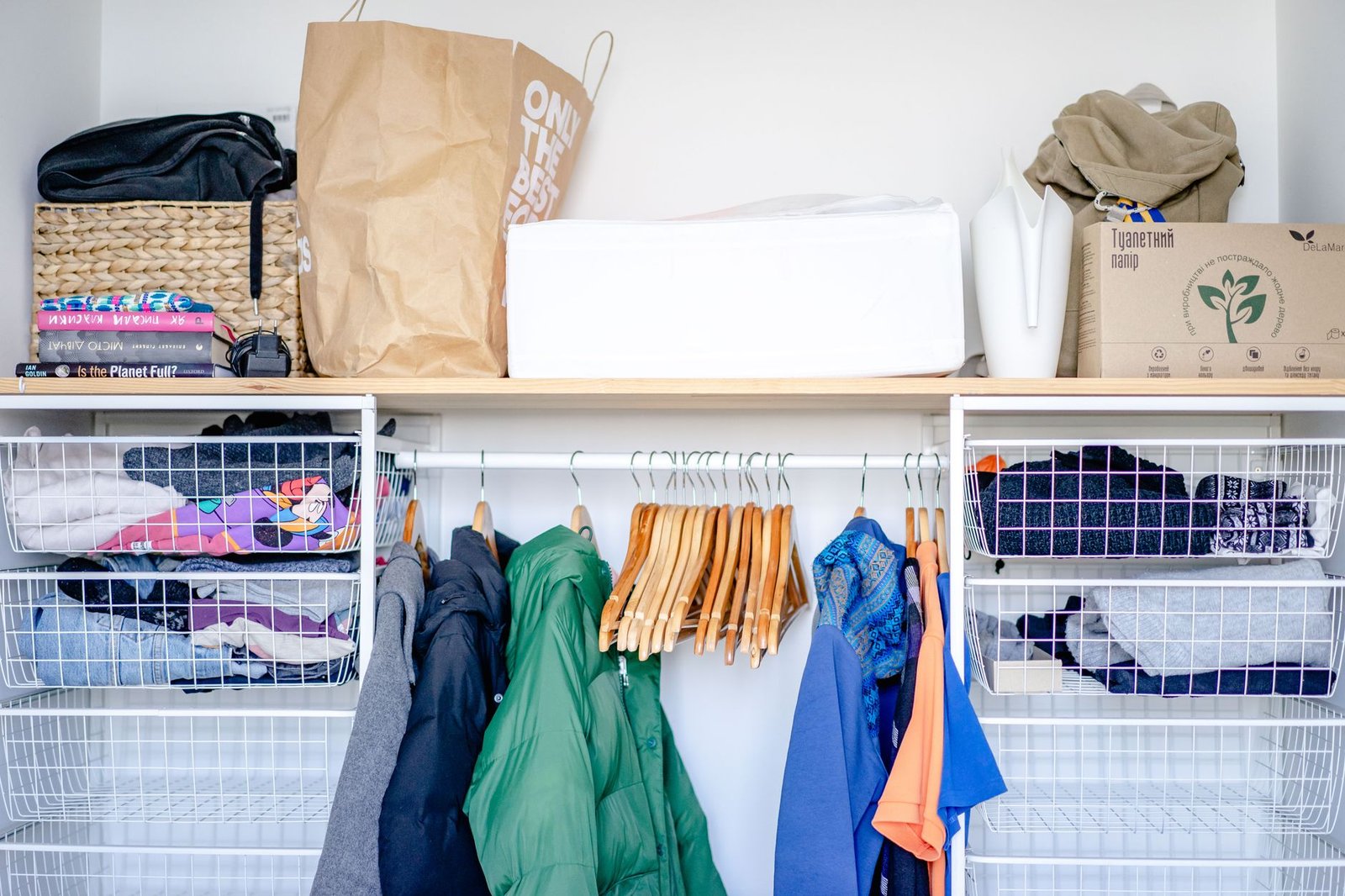
A wardrobe is a box you keep closed on purpose, filled with cotton and wool, standing against the coldest wall in the house. If I wanted to design a mould incubator, I would struggle to improve on it.
Four places a wardrobe traps damp air
Most guides give causes as a flat list of tips. It is more useful to look at the wardrobe as a structure, because the problem sits in specific places.
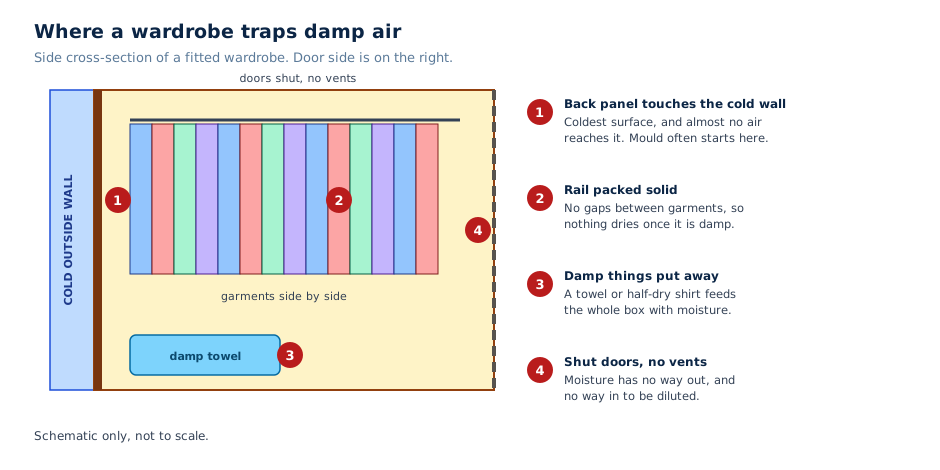
1. The back panel against a cold wall. Warm room air gets in around the doors, carries water vapour, and meets the coldest surface in the box. The UK government’s damp and mould guidance says condensation forms on cold surfaces including areas behind furniture, and advises leaving a gap between furniture and external walls. A fitted wardrobe, with no gap by design, is the worst case. I go into the wall itself in the bedroom guide.
2. A rail packed solid. Garments pressed together turn into one thick, damp-holding block. Nothing circulates, so a slightly humid shirt stays slightly humid.
3. Damp things put away. A towel, a gym top, or a coat that looks dry but is not. I cannot tell you how much water one adds to a closed wardrobe, because it depends on the fabric and the room, but it is the only cause on this list you can fix in ten seconds.
4. Doors shut, no vents. Closed doors stop the moisture getting out. They also stop dry room air getting in to dilute it.
The wall supplies the cold, and you supply the moisture and the stillness. That is why the same wardrobe can be fine one winter and grim the next.
Check mould in wardrobe properly before you blame the wall
Do this with the wardrobe empty, in daylight, with a torch.
Do not dry-brush, shake out or vacuum visible mould, and do not point a fan at it, because that puts spores into the air in a room you sleep in. Wear gloves, a mask and goggles without vent holes. Never mix cleaning products. If anyone in the home has health concerns about mould, ask a doctor rather than a website.
- Look at the back panel and the corners behind the clothes. Dark speckles, a grey bloom or a fuzzy white patch are the usual signs.
- Smell the shelf nearest the wall. A damp, earthy smell with no visible mould still tells you moisture is sitting there.
- Press the panel and the shelf edges. Soft, swollen or crumbling chipboard means water has been there a long time.
- Feel the wall behind it if you can pull the unit away: colder than the rest of the room, or damp to the touch?
- Check the room reading. The EPA advises keeping indoor humidity below 60%, ideally 30 to 50%. A cheap hygrometer left in the bedroom overnight tells you whether the whole room is the problem or only the wardrobe.
If the room reads fine and only the wardrobe is bad, you are looking at the cold wall and the lack of airflow. If the room is high everywhere, the moisture sources in the bedroom come first.
How to clean mould in a wardrobe without spreading it

The EPA says to scrub mould off hard surfaces with detergent and water and dry completely, and that you can usually handle an area under about 10 square feet yourself. Wardrobes mostly fit that.
- Fix the moisture first. Take the damp things out and open the window. If you cannot say where the water came from, you are only tidying.
- Empty the wardrobe and bag the clothes you are unsure about; wash them separately. Rescuing the clothes themselves is covered here.
- Wipe the hard surfaces with detergent and water, then dry them completely, ideally with the doors open for a day.
- Judge the panel honestly. Sealed or laminated surfaces clean up well. The EPA notes that absorbent materials may have to be thrown away if they become mouldy. If the chipboard is swollen and the mould keeps returning, replace the panel rather than clean it a fourth time. That is my judgement from how the material behaves, not a test result.
- Stop and call a professional if the patch is bigger than about 10 square feet, runs into the wall, or follows a leak you cannot find.
I would skip sachets and chemical sprays at this stage. They do nothing about a cold wall or a damp towel.
How to stop mould in a wardrobe coming back
These are free or nearly free, and I would do all of them before spending money.
- Pull a freestanding unit 5 cm / 2 inches off the outside wall. That number is my rule of thumb, not a tested standard. A fitted unit cannot move, so keep the base and back clear of clutter and lean harder on the points below.
- Leave a hand’s width of space on the rail so clothes do not touch. A full rail is the cheapest way to hold moisture in place.
- Never put clothes away damp. Dry them fully first. Drying washing indoors without making things worse is its own problem.
- Open the doors for an hour or two a few times a week, and always after drying clothes in the room.
- Keep the bedroom heating on low rather than off. A warmer wall surface stays further from saturation. That is basic psychrometrics, not a measurement of your house.
- Keep shoes, towels and bags off the wardrobe floor if the base sits against the outside wall.
If the whole room reads above 60% even after that, the fix is room-wide, and a machine in the bedroom does more than anything inside the wardrobe. A quiet dehumidifier for the bedroom is the sensible kind, and it can run with the wardrobe doors left open. For the small-tub route, the dehumidifier for closet guide covers when it is worth it.
The wardrobe is rarely the cause, only the first place you notice it
The cold wall, the shut doors and the damp clothes are what you can change. Leave a gap, leave space on the rail, never store anything damp and keep the room humidity under 60%, and mould in a wardrobe becomes a rare event rather than a seasonal one.
FAQ
Why is there mould in my wardrobe?
Because damp air collects in a closed box with a cold surface. The usual mix is an outside wall behind the wardrobe, clothes packed too tightly for air to move, and clothes or towels stored before they were fully dry.
How do I get rid of mould in a wardrobe?
Remove the damp items, scrub hard surfaces with detergent and water, and dry everything thoroughly with the doors open. Replace porous panels that are swollen or keep growing mould. Fix the moisture source, or it returns.
Can mould in a wardrobe spread to clothes?
It can where clothes are damp and in contact with a mouldy surface. Natural fibres hold moisture longer than synthetics, so cotton and wool tend to go first. Wash affected items separately, or follow the fabric guidance linked above.
Should I leave the wardrobe doors open?
For an hour or two a few times a week, yes, especially after drying clothes in the room. It lets dry room air in. Leaving them open all day in a damp bedroom just spreads the problem into the room.
Does a dehumidifier help with mould in a wardrobe?
If the whole room is humid, yes: lowering the room humidity helps every surface. If only the wardrobe is damp, look at the cold wall and the packed rail first, because a dehumidifier does not remove existing mould.

