
Last Updated on October 24, 2026 by Umar Farooq
What should indoor humidity be? Between 30% and 50% relative humidity, and never above 60%. Inside that band the air is comfortable, timber stays put and mould has nothing to work with; outside it, something in the house starts to suffer.
That is the textbook answer, and it is right, but it hides the useful part. The number you should actually aim for moves with the weather, and the cheapest instrument for finding it is already hanging in your windows.
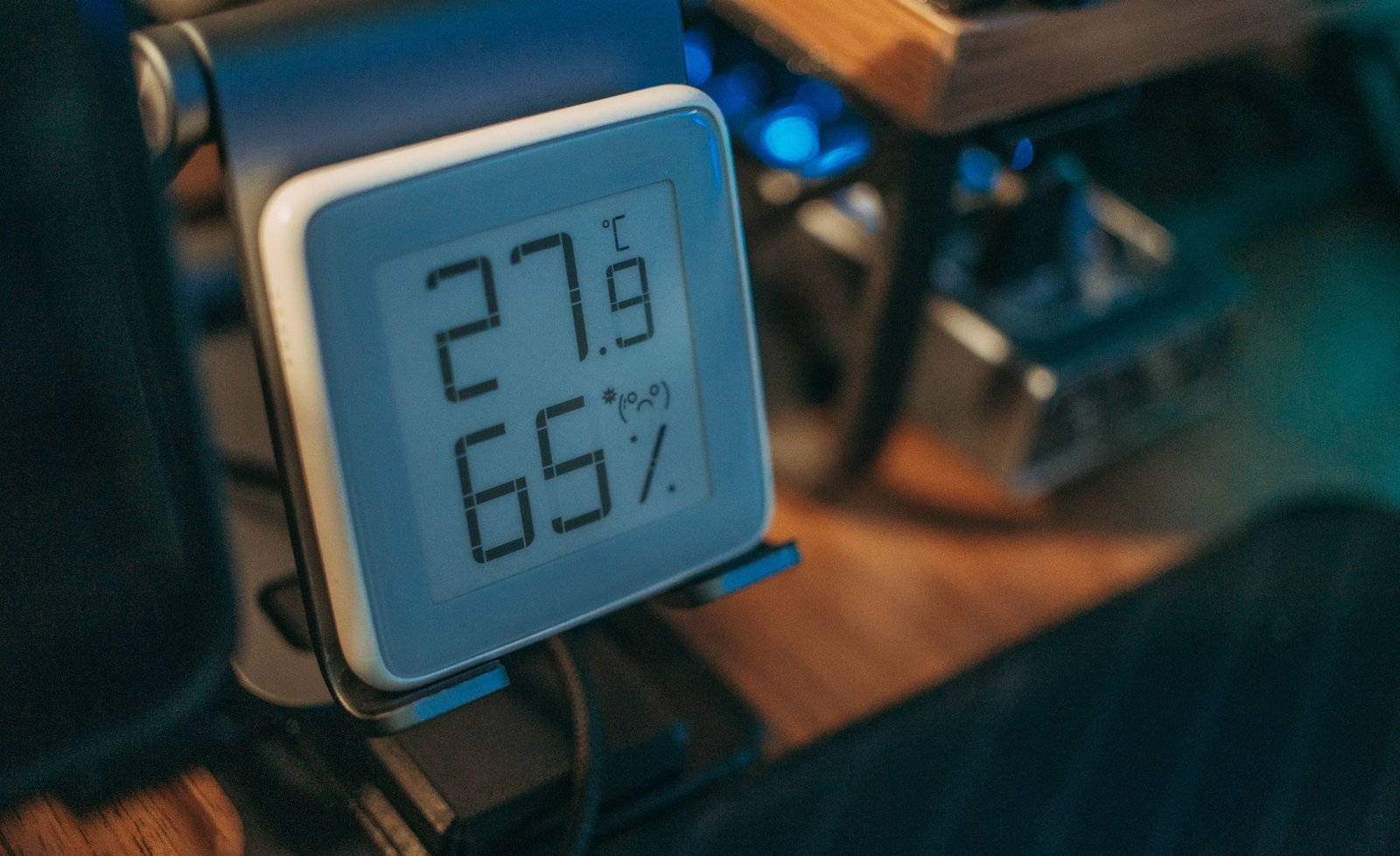
The four bands, and what each one does to a house
Relative humidity (RH) is how much water vapour the air holds as a percentage of the most it could hold at that temperature. It is a moving target, because warm air holds far more than cold. Both the EPA and ENERGY STAR land on the same figures: keep it below 60%, ideally between 30% and 50%.
| Reading | What it means | What to do |
|---|---|---|
| Below 30% | Too dry. Timber and joinery start to shrink and crack, and static and dry throats follow | Add moisture only if it stays here for weeks |
| 30-50% | The target band | Leave it alone |
| 50-60% | Tolerable, but you are at the edge, and condensation can start on cold surfaces | Ventilate, or run a dehumidifier |
| Above 60% | Mould becomes a real risk, and the EPA advises keeping humidity below 60% | Act now, and find the water |
One refinement from Sensitive Choice, the Australian asthma and allergy body: it says mould can grow at any level above 55%, and that dust mites thrive at 70% and over. So the 60% line is a ceiling, not a safe place to live.
Why winter wants a lower number than summer
The band is not one fixed target, and this is the part most guides rush past.
In the heating season, ENERGY STAR suggests 30-40% RH rather than 30-50%, specifically to prevent window condensation. The reason is surface temperature. A pane of glass on a freezing night is much colder than the room, and air touching it is cooled until it cannot hold its water. Fifty per cent in the middle of the room can mean saturated air at the glass. I explain the same mechanism for walls in what humidity a basement should be.
In summer there is no such cold surface, so the upper end of the band is fine. My own working rule is about 45-50% in summer and 35-40% in winter. That is my judgement from reading the sources above, not a measured result, and a house with double glazing and good insulation can sit higher in winter than one with single panes.
Let the windows set your winter number
Here is the check nobody puts in the top ten: your windows will tell you when your number is too high, free of charge.
Look at the glass first thing on a cold morning. Dry glass means your humidity is fine for the weather. A fine film of water along the bottom edge means you are over the limit for that outside temperature, whatever the hygrometer says. Streaming glass, wet frames and black spotting in the corners mean you are well over.
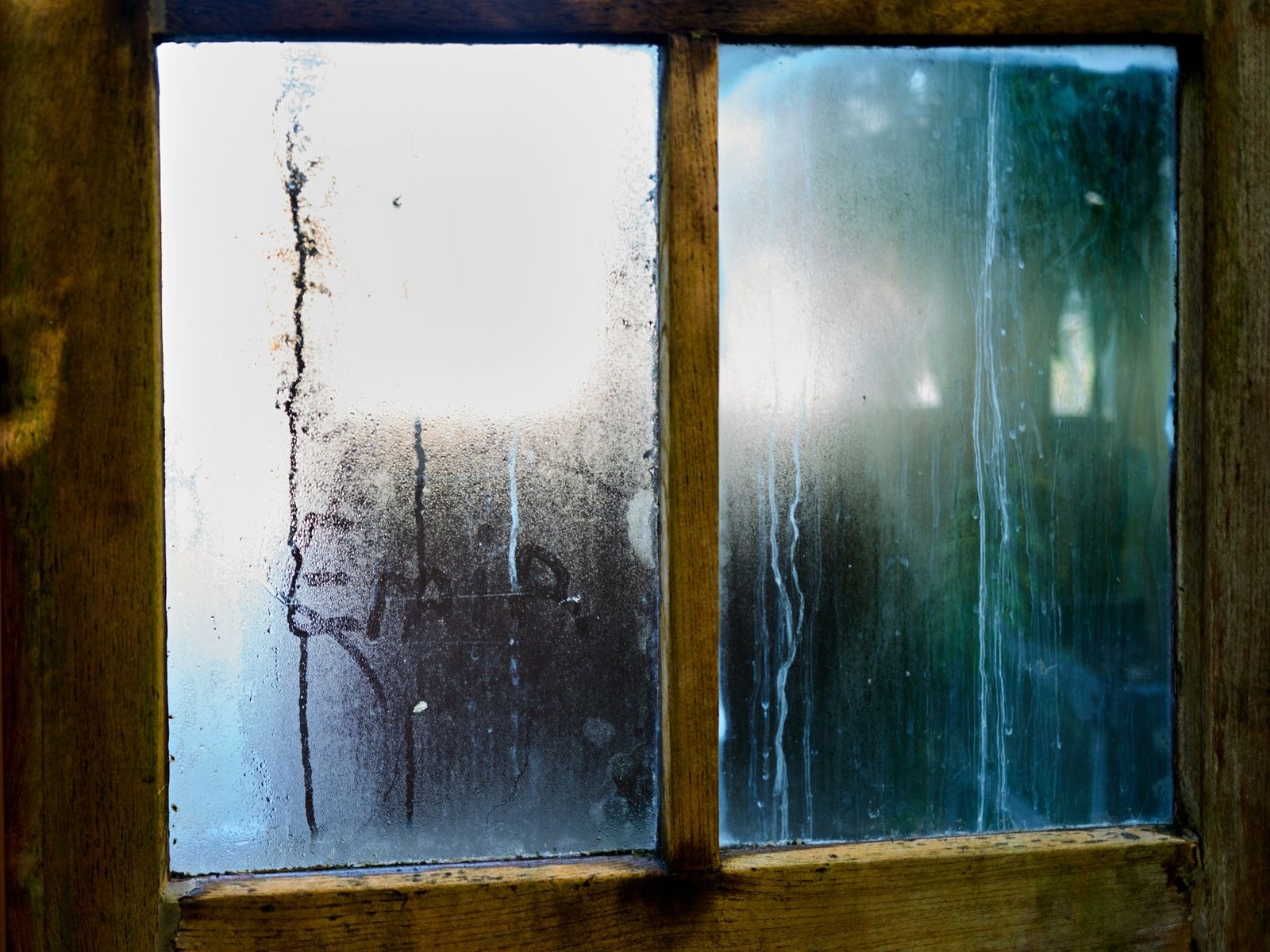
The practical routine is to drop your target by a few points each time the glass beads, until it stays clear. If condensation is the main problem, the condensation guide goes through the fixes in order.
What should indoor humidity be in each room?
Mostly no. The target is for the whole house, and the exceptions are about timing, not targets.
- Bathrooms and kitchens will spike to 80% or more during a shower or a pan of pasta. That is fine if it falls back within an hour or so. A bathroom that stays humid all day is an extraction problem.
- Bedrooms are the same 30-50% band. The room is often damper than the rest of the house at night because of breathing, so check it at 6 am, not 6 pm.
- Basements and cellars hold the same band but have colder walls, so aim for the low end. The basement guide covers it.
- Rooms with a lot of laundry drying are the single biggest source of avoidable damp, and need ventilation or a machine rather than a different target.
Why a cheap hygrometer is only half the answer

A cheap hygrometer is the most useful object in this whole subject. It is also not very accurate. I cannot give you a precise error figure for the cheap models, because makers rarely publish one and I have not tested a batch, but readings several points apart on two units sitting side by side are common.
So use it for trends and gaps, not for decimals. A reading that moves from 45% to 62% across a week means something. A reading of 51% versus 49% means nothing. Put it in the middle of a room, away from the kettle, radiators and the window, and leave it a few hours before trusting it. If you want to sanity-check one, put two side by side and see how far they disagree.
Too dry or too damp: which way to go
Once you know where you are, the fix depends on the direction.
- Too damp (above 50-60%): ventilate when the outside air is drier than the inside, dry laundry outside, use extractor fans, and run a dehumidifier for the remainder. Our dehumidifier settings guide explains why 50% is the usual setting and when to go lower.
- Too dry (below 30%): in practice this happens in cold snaps with the heating on. Drying laundry indoors, a bowl of water or a humidifier all raise it. If you need both functions, the humidifier dehumidifier combo guide is honest about the trade-offs.
Do not fix a damp house by chasing 30%. Driving the number lower than the band wastes electricity and dries out the furniture.
Aim for 40-50%, and drop it when the glass runs wet
If you take one thing from all this, take this: hold the house at 40-50% for most of the year, drop to 35-40% when the weather turns cold and the windows start to bead, and never let it sit above 60%. A hygrometer in the middle of the main living space, checked once a week, is all the equipment you need. That is the honest answer to what should indoor humidity be, in most houses, most of the time.
FAQ
What is normal humidity in a house?
Between 30% and 50% relative humidity is the healthy range quoted by the EPA and ENERGY STAR. Houses often run higher than that after cooking, showering or drying washing, and lower during cold weather with the heating on.
Is 60% humidity too high indoors?
It is at the upper limit. The EPA says to keep indoor humidity below 60%, and mould can establish on a suitable surface at that level, so a house that sits at 60% for days needs ventilation or a dehumidifier.
What humidity should my house be in winter?
About 30-40% in cold weather, according to ENERGY STAR, because warm damp air condenses on cold windows and walls. If your windows are dry in the morning, you are at a good level.
Is 50% humidity too high?
No. 50% is the top of the recommended band and is a perfectly good setting for a dehumidifier. In very cold weather it can be too high for single glazing, which is when windows start to bead.
What is the best humidity for sleeping?
The same 30-50% band as the rest of the house. Check the bedroom in the early morning, since the room is usually at its damp peak after a night of breathing.
How do I know if indoor humidity is too high or too low?
Buy a hygrometer. Without one, condensation on windows, a musty smell and mould spots suggest too high, while static shocks, cracking woodwork and a dry throat suggest too low.
Related guide: How is humidity measured?

