
Last Updated on October 24, 2026 by Umar Farooq
Bathroom door open or closed after a shower? Keep it shut while the extractor fan runs, as long as air can get in under it, then open it once the mirror has cleared. With no fan, open the door and a window instead. The door is not the fix. It decides where the steam goes while the real fix, the fan, does its work.
The internet argues about this as if there were one right answer. There are two, and which one applies depends on a single question: does your bathroom have a fan that sends air outside?
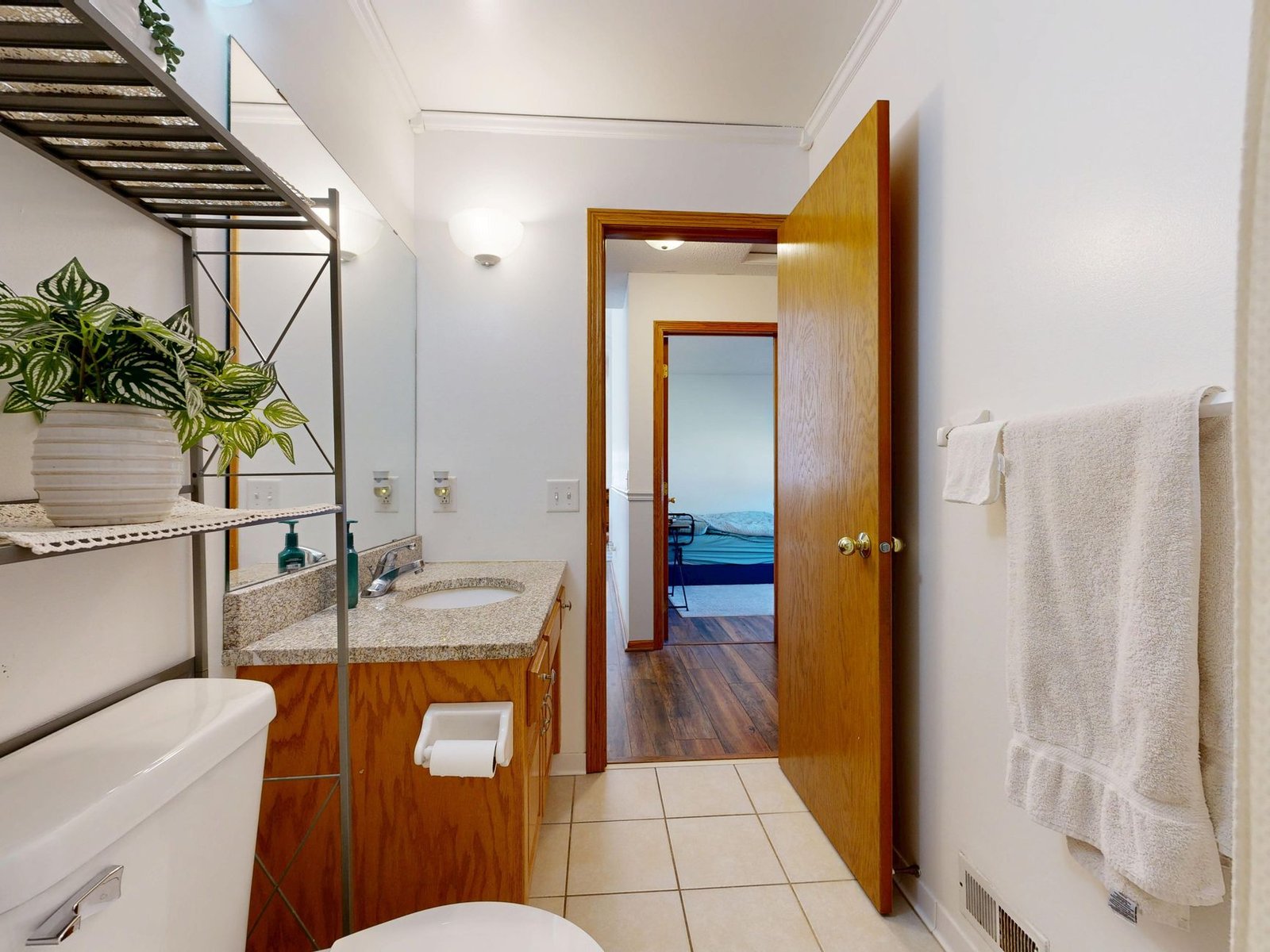
Bathroom door open or closed after a shower: shut it while the fan runs
If you have an extractor fan that vents outside, the door should stay closed while it runs. The reason is simple: a fan removes the air it can reach. Open the door and the steam has two exits, the fan and the doorway, and a good share will take the doorway because it is bigger.
Futura-Sciences, a French science news site, makes the same case: with mechanical ventilation, keep the door mostly closed so the fan extracts the steam directly, and opening it straight away lets the damp air spread into other rooms. It is a news article, not a standard, so treat it as an argument, not proof.
That is the opposite of the advice in some lifestyle pieces, which say to leave the door open so the steam can “escape”. It escapes, certainly. Into the landing, where the walls are colder than the bathroom and the moisture lands on them. My view is that “open” is good advice for a bathroom with no fan and bad advice for one with a working fan, and the pieces that do not mention the fan are answering a different question.
Make sure the fan has air to pull from
A shut door only works if air can come in as the fan takes air out. Seal the room completely and the fan strains against a partial vacuum and moves less.
England’s Approved Document F (2021 edition, which I opened and read; England only) says internal doors should allow air to flow through the dwelling with a free area equivalent to a 10 mm (about 3/8 inch) undercut in a 760 mm wide door. That means 10 mm above the finished floor, or 20 mm above the bare floor if no floor finish is fitted. Its commissioning checklist asks the installer to confirm it.

If your door sits flush on a thick new carpet or a swollen frame, the gap is gone. Measure it with a ruler. If it is clearly under 10 mm, trimming the door bottom is the cheapest ventilation upgrade in the house. Or open the door a few centimetres.
A fan that runs and still leaves the room steamy is a different problem, and the extractor fan not removing steam guide covers it, including this air-supply question.
Why an open door with no extraction moves the problem next door
Steam is warm and carries a lot of water vapour. Warm air holds more moisture than cold air, so when it drifts onto a cold wall or window it drops moisture as condensation. A bathroom is usually the warmest room after a shower. The landing, the spare room and the bedroom are usually colder.
So if you throw the door open the moment you step out, with no fan or a weak one, you are not removing moisture. You are sharing it, with surfaces that are cold enough to collect it. That is how a bathroom that looks fine can end up with black spots on the bedroom ceiling next door. I have no measured figure for how much moves, and it varies with the shower, the weather and the layout.
If the ceiling above the shower is the one that drips, that is bathroom ceiling condensation, and a different fix applies.

No fan? Then the door and the window swap roles
Without extraction, nothing is pulling the steam out, so a shut door just traps it. Here, open is right, but only if something moves the moisture outside, otherwise you are only moving it around.
- A window in the bathroom: open it and shut the door for the first ten minutes or so, so the steam leaves through the window rather than the house. Then open the door to let the rest dry. The ten minutes is my judgement, not a measured figure.
- No window, no fan: open the door and open a window elsewhere in the house on the same floor, so air crosses through. This is the situation where the open door really is the best you have, and it is a reason to ask do I need a bathroom extractor fan instead of living with it.
The Building America bathroom fan guide also says operable windows should not be relied on for consistent bathroom ventilation. In a cold, wet January a window is a poor ventilation plan. It chills the walls that the steam is about to hit.
The order: fan, door, window, wipe
If I had to give a neighbour a routine, it would be these four steps, in this order. The order is my judgement, built from the sources above, and not a published standard.
- Fan on, before the water runs. Then it is already pulling when the steam arrives.
- Door shut, with a gap under it. Check that gap once, and the question is settled for good.
- Window, only if there is no fan. With a fan, keep windows shut until the room has cleared. Without one, use the window as your extraction.
- Wipe the cold surfaces. A squeegee on the glass and a cloth on the window sill removes water that no door position will shift, and takes a minute.
Once the mirror is clear and the walls feel dry, open the door. By then there is little steam left to spread, and an open door lets the room return to the temperature of the house. How long to leave the fan on is covered in how long to run a bathroom extractor fan. The Building America guide suggests an hour after a shower with a timer. I would treat that as the upper end and let the mirror decide.
FAQ
Should the bathroom door be open or closed after a shower?
Closed while an outdoor-venting extractor fan runs, provided there is a gap under the door for air to enter. Open after the room clears, or open straight away if there is no fan and a window or cross-breeze is doing the extracting.
Does leaving the bathroom door open help prevent mould?
Only if the moisture is leaving the house. An open door with no extraction mostly moves steam onto colder rooms, which is where it can condense. Removing the water with a fan, a window or a squeegee is what prevents mould, and the door is a supporting detail. For the mechanism, see bathroom shower mould.
How big should the gap under a bathroom door be?
England’s Approved Document F says internal doors should have a free area equivalent to a 10 mm undercut in a 760 mm door, measured above the finished floor. That figure is for England and does not apply in Scotland, Wales or Northern Ireland, which publish their own guidance.
What if my bathroom has no fan and no window?
Open the door and a window elsewhere on the same floor so that air crosses the house. It is the weakest arrangement, and the fix is to fit a fan.
Is it OK to close the door if the bathroom has no gap under it?
Not while the fan runs, if you can help it. A sealed room starves the fan of air. Open the door a few centimetres, or have the door trimmed.
Shut the door for the fan, then open it once the room has cleared
Bathroom door open or closed after a shower comes down to whether anything is taking the steam outside. If a fan is, shut the door with a gap under it, let the fan work, and open the door once the mirror and walls are clear. If nothing is, open the door and a window and accept that you are moving moisture rather than removing it. A fan is the real answer, and the door is how you help it.

