
Last Updated on October 24, 2026 by Umar Farooq
How to reduce humidity without air conditioning: make less moisture at the source, vent steam straight outside, air the house only when the outdoor air is drier, and add a portable dehumidifier or desiccant for what is left. A fan on its own is not on that list, and I will get to why.
Most no-AC advice reads like a list of things to try when you feel sticky. This is the order I would actually do them in, cheapest and most effective first, with the two popular habits that make a muggy house worse.
Read the dew point before you touch a window
Relative humidity swings with the temperature, so it is a poor guide on a hot day. The US National Weather Service explains that dew point is the better gauge of how muggy it feels: it describes a dew point of 55 or below as dry and comfortable, 55 to 65 as becoming sticky, and 65 or above as oppressive. Those bands are for outdoor comfort, but the same arithmetic tells you whether outdoor air can help dry your house.
Indoors, the target is the one the US EPA gives in its guide to mould and moisture: keep relative humidity below 60 percent, ideally 30 to 50 percent. A cheap hygrometer tells you where you stand. If you want the summer-specific numbers, see ideal indoor humidity in summer.
How to reduce humidity without air conditioning: seven ways, in order
1. Stop the steam where it starts
Showers and cooking put a lot of water into a home on any given day, and none of it needs to travel. The EPA’s advice is blunt: run the bathroom fan or open the window when showering, and use exhaust fans or open windows when cooking and washing up. Put a lid on the pan. Shorter, slightly cooler showers make less steam, which is common sense rather than something I can put a number on.
An extractor only helps if it vents outside, not into the loft, and if you leave it running after you step out. Fifteen to twenty minutes is the usual rule of thumb, though that is a habit, not a measured standard.
2. Dry washing anywhere but the living room
A wet load of washing is a bowl of water you are waiting to evaporate into your house. Hang it outside when the weather allows. When it cannot go out, put it in a room you can close off and vent, such as a bathroom with a working extractor, rather than draped over radiators in the lounge.

3. Air the house at the cool end of the day
Open windows reduce humidity only when the air outside holds less water than the air inside. In a hot spell that is usually early morning, when the night has cooled the air and the dew point has dropped, and often not at midday. Check the outdoor dew point on any weather app and open up when it is clearly below your indoor one. I have worked through the numbers in does opening windows reduce humidity, so I will not repeat the arithmetic here.
4. Close up on humid afternoons
This is the flip side, and the one people skip. If the outdoor dew point is high, every open window brings in more water. Shut windows and blinds against the sun on the hottest, stickiest part of the day, keep doors closed and let the house ride it out. It is dull advice with a good record.
5. Use a fan for comfort, and put it in the right place
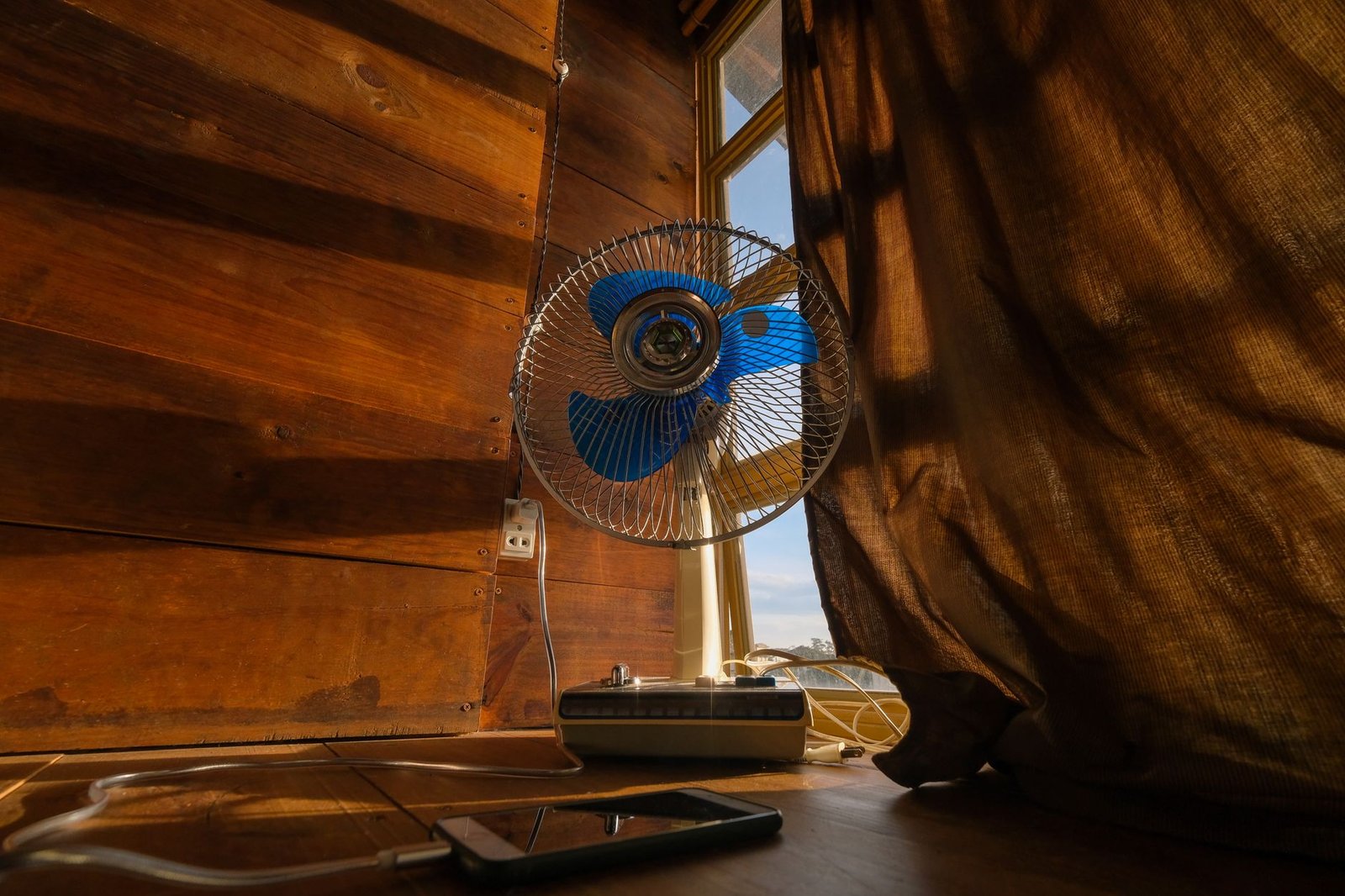
Moving air on skin feels cooler, so a fan genuinely helps you cope. It does not dry the room, which does a fan reduce humidity covers properly. Where it earns a place in a humidity plan is pushing stale damp air out of a window you have decided to open, or helping a damp patch or wet washing dry.
6. Use a desiccant for small, closed spaces
Calcium chloride and silica gel products absorb water from the air. They suit a wardrobe, a cupboard or a caravan, where a small amount of moisture is the whole problem. They will not help a whole living room, and the tubs eventually fill with brine and need replacing. Baking soda, charcoal and rock salt are weaker; I would not rely on them in a humid summer. That is my judgement, not a tested ranking.
7. Add a portable dehumidifier for the rest
When steps 1 to 4 have done what they can and the hygrometer still reads high, a portable dehumidifier is the non-AC way to take water out of the air itself. A compressor model is the usual choice in warm rooms; a desiccant model copes in cooler ones. Energy Star notes that reducing sources of moisture can reduce your need for dehumidification, which is the sensible order. Settings, drain hoses and where to stand it are in dehumidifier in summer.
Two habits that make a muggy house worse
Opening every window at midday. If the outside dew point is above your indoor one, you are importing water. The house feels fresher for ten minutes, then clammier.
Relying on a fan to fix the reading. A fan will move the number around the room and make you feel cooler, but the total water in the air is unchanged. If the hygrometer is the problem, a fan is not the fix.
I would also add a third, softer one: leaving damp towels and wet washing in a closed room overnight. That is simply a slow release into the same air you are breathing.
What about air conditioning itself?
Air conditioning does remove water as a side effect of cooling, which is why it feels drier. The detail, and when it fails, is in does air conditioning remove humidity. The point here is that none of the steps above need it. They work on the cause, not the temperature.
Cut the water first, then move the air, then take out the rest
That is the whole toolkit. Reduce humidity without air conditioning by making less moisture, venting it outside, opening up only when the dew point is lower, and shutting up when it is higher. Then, and only then, buy a machine for what is left. I do not have measurements of how much each step saves in your home; your hygrometer, read over a week, is the only honest judge.
FAQ
How can I lower humidity in my house without AC?
Cut moisture at the source with extractor fans, lids and shorter showers, dry washing outdoors, air the house when the outdoor dew point is lower, and close it up on muggy afternoons. If it is still high, add a portable dehumidifier.
Does a fan reduce humidity in a room?
No. A fan moves air and makes you feel cooler, but it removes no water. It helps push damp air out of an open window and speeds up drying of wet surfaces.
Is it better to open windows or keep them closed in humid weather?
It depends on the outdoor dew point. If it is lower than indoors, open them. If it is higher, keep them shut, because you would be bringing water in.
What absorbs humidity in a room without electricity?
Calcium chloride and silica gel absorbers work in small spaces such as wardrobes. They are not enough for a whole room, and they need emptying or replacing when full.
What humidity level should I aim for in summer?
The EPA advises indoor relative humidity below 60 percent, ideally between 30 and 50 percent.

