
Last Updated on October 25, 2026 by Umar Farooq
Why do towels smell musty in the bathroom? Because they stay damp for too long, in the wettest room of the house, and whatever they have picked up from you and from the washing machine is left in the fibres to go off. The cotton is rarely the problem. The hook is.
I find this one oddly reassuring. A musty towel is nearly always a drying problem wearing a laundry costume, which means you can usually fix it without buying anything.
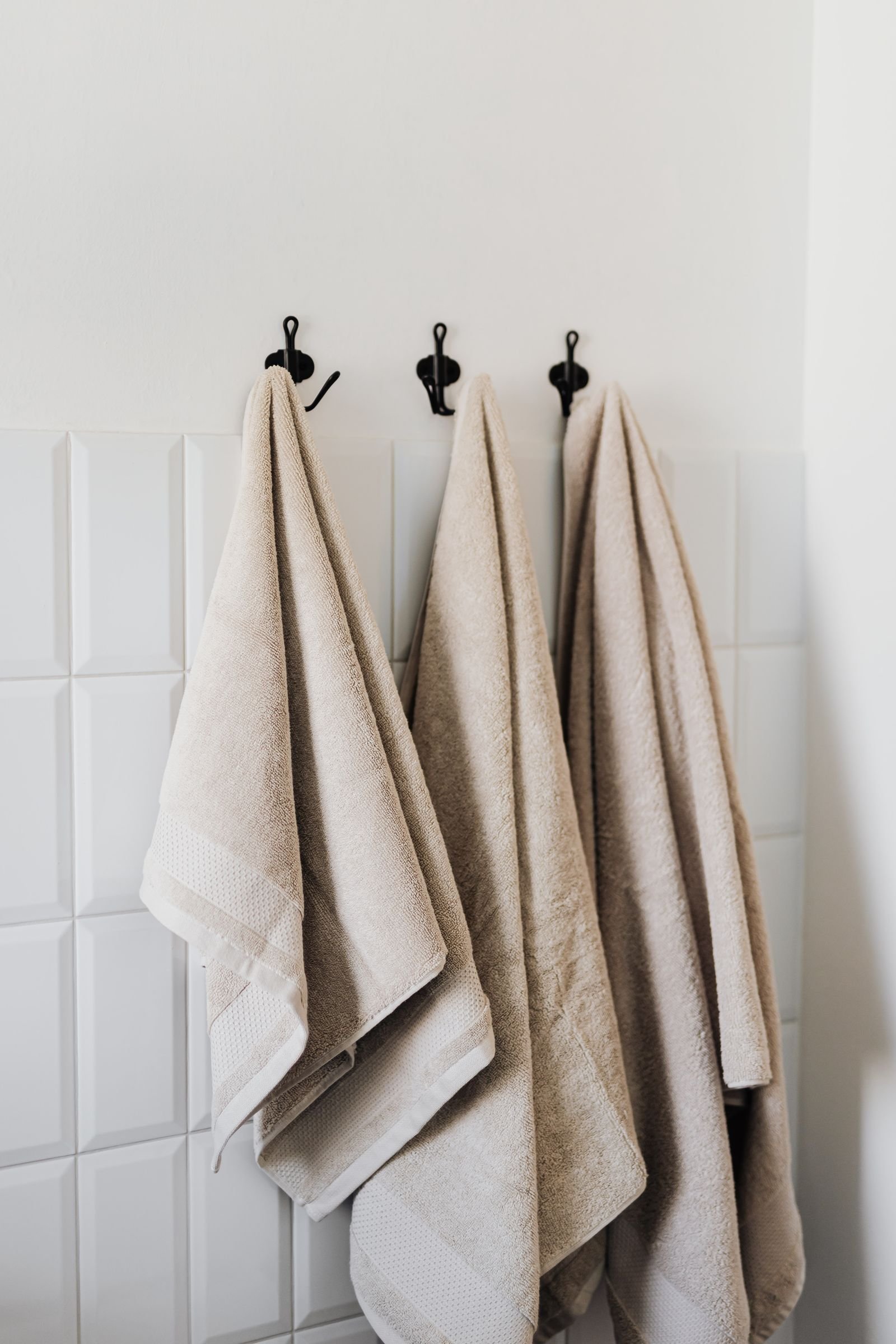
Why do towels smell musty in the bathroom? Four causes, in order of blame
1. The towel never finishes drying between uses. Terry cloth is thick, and a towel is the slowest-drying thing in a bathroom. Tide’s guide to smelly towels puts mildew odour down to warm, damp conditions, such as a bunched-up wet towel. A towel that is still cool and damp at the hem when you reach for it tomorrow is starting from wet.
2. The room is holding the moisture too. After a shower the air in a small bathroom is close to saturated, so a towel hanging there has nowhere to send its water. Run the extractor fan for the length of the shower and the towel is left to dry in whatever steam remains. More on that in the next section.
3. Body soil that was never fully washed out. The same Tide page says body soils left on towels, from use or from a weak wash, break down over time and release a sour, musty smell. A towel is a flannel for your whole body, so it collects a lot.
4. Detergent and softener residue. This is the cause people are least likely to suspect, because it feels like the opposite of dirt. Which? says detergent and fabric softener can, over time, deposit a waxy residue on the cotton fibres, and its answer to whether you should use softener on towels is “No, you shouldn’t.” Its reasoning is that the coating builds up and stops water getting into the fibres. My reading, and it is an inference rather than something that page tests, is that a towel that absorbs badly and dries badly will also hold smells badly.
Notice what is missing from the list: “dirty towel”. A towel can be washed every week and still go musty if it spends the other six days wet.
A bathroom is the worst place to dry a towel
If you are wondering why the same towel smells fine on the airing-cupboard shelf and musty on the bathroom hook, the room is the answer. I have written about why a bathroom stays damp all day, and towels are both a victim and a contributor: they are the largest wet surface in the room after the walls, and they release their water back into the air that is meant to be drying them.
I have not measured the humidity around a towel on a hook, so I will not give you a number. What I can point to is the ventilation research. The Pacific Northwest National Laboratory’s Building America guide recommends leaving a bathroom fan running for one hour after a shower, ideally on a timer, to keep humidity down and discourage condensation and mould. If your fan switches off with the light, your towel spends its first hour of drying in steam. There is a fuller look at how long to run a bathroom extractor fan if yours is slow or weak.
Five fixes, in the order that works
Do these in order. Washing a towel first and then hanging it back in a wet room is how you end up with a clean towel that smells musty again by Thursday.
1. Ventilate before you touch the towels
Run the fan for an hour after showering (a timer or an overrun fan makes this automatic) and leave the bathroom door open if the rest of the house is dry. If the fan does little, crack the window while you sort that out.
2. Hang every towel open, on its own hook or bar
Spread it so air reaches both faces, and keep a hand’s width between towels. Folding a towel in half over a rail halves the surface that can dry, and two towels on one hook dry as one thick one. If you have more towels than hooks, move some to a bar outside the bathroom.

If you need to dry a towel somewhere other than the bathroom, the indoor towel drying guide covers rooms, airers and timings, so I will not repeat it here.
3. Wash on the hottest cycle the label allows
Tide’s instruction is to run a full cycle at the warmest water temperature the fabric care label indicates, and to dry completely before storing. A 30 degree “eco” wash is kind to colours and, I suspect, poor at shifting body soil. Check the label on each towel: dark or printed ones may not take a hot wash, and that is the label’s call, not mine.
4. Use less product, and do not stuff the drum
Which? suggests cutting detergent by up to a third, which fits the residue problem above, and says to skip softener on towels. Leave room in the drum so water can move through the load, because a jammed drum rinses badly, which brings you back to residue. Take the load out as soon as the cycle ends: Tide names a bunched-up wet towel left in the machine drum as a classic cause of the smell.
5. Dry fully, then store
Tumble dry to the care label or hang the towels in moving air, and put them away only once they are dry all the way through, hems included. Tide’s advice is also to hang towels up after each use and never leave wet ones in the hamper. A damp towel in a laundry basket is a warm, closed pocket, which is about as good as it gets for a musty smell.
If a smell persists after a hot wash and a proper dry, the towel may still be holding residue. A vinegar soak followed by a thorough rinse is the method Which? tested, with mixed results: one tester found little difference, another found the towels softer but “not new-towel soft”. Do not pour vinegar straight into the machine, as Which? warns it can corrode rubber and plastic parts. For mould that has grown on fabric rather than just a smell, see mould on fabric, clothes and carpet.
A musty towel is a slow-drying towel with something to eat
That is the whole thing. When you ask why towels smell musty in the bathroom, the honest answer is a short chain: a wet room, a towel that cannot dry in it, and a wash that leaves a little more behind each time. Break it at the first link, with the fan and some spacing, and the hot wash and lighter detergent finish the job. If the same towels still go musty in a bathroom that is dry and well ventilated, look at the washing machine next.
FAQ
How often should you wash bathroom towels?
There is no single official figure that I can point to. As a rule of thumb, every few uses is common advice, but a towel that never dries between uses needs washing sooner than one that does. Let how fast it dries set the pace rather than the calendar.
Why do my towels smell musty straight after washing?
Usually because of what is left in them rather than what was on them: detergent or softener residue, or a load that sat wet in the drum. Wash on the hottest cycle the label allows, use less detergent, skip softener, and take the load out promptly.
Can fabric softener make towels smell musty?
Which? says not to use it on towels, as it builds up a coating that stops water reaching the fibres and leaves them crispy. A coated towel absorbs less and dries slower, so it plausibly smells sooner, though that last link is my inference.
Should I leave the bathroom door open to dry towels?
If the rest of the house is dry, yes, as it lets the humid air out. If the house is already damp, you may be moving the problem, so use the fan and dry the towel in a drier room instead.
Is it safe to use a towel that smells musty?
I cannot give medical advice. What I can say is that the smell tells you the towel has been damp for too long, so wash it as hot as the care label allows and dry it fully before using it again.

