
Last Updated on October 24, 2026 by Umar Farooq
How long do clothes take to dry indoors? Which? measured four to seven hours for a small cotton load on a heated airer, and an unheated airer in a cool room is slower, often a day or more. Nobody has timed your airer in your room, so treat every figure below as a range and not a promise.
I would rather admit that than print a tidy “6 hours” and watch you stand over a damp pair of jeans at midnight.
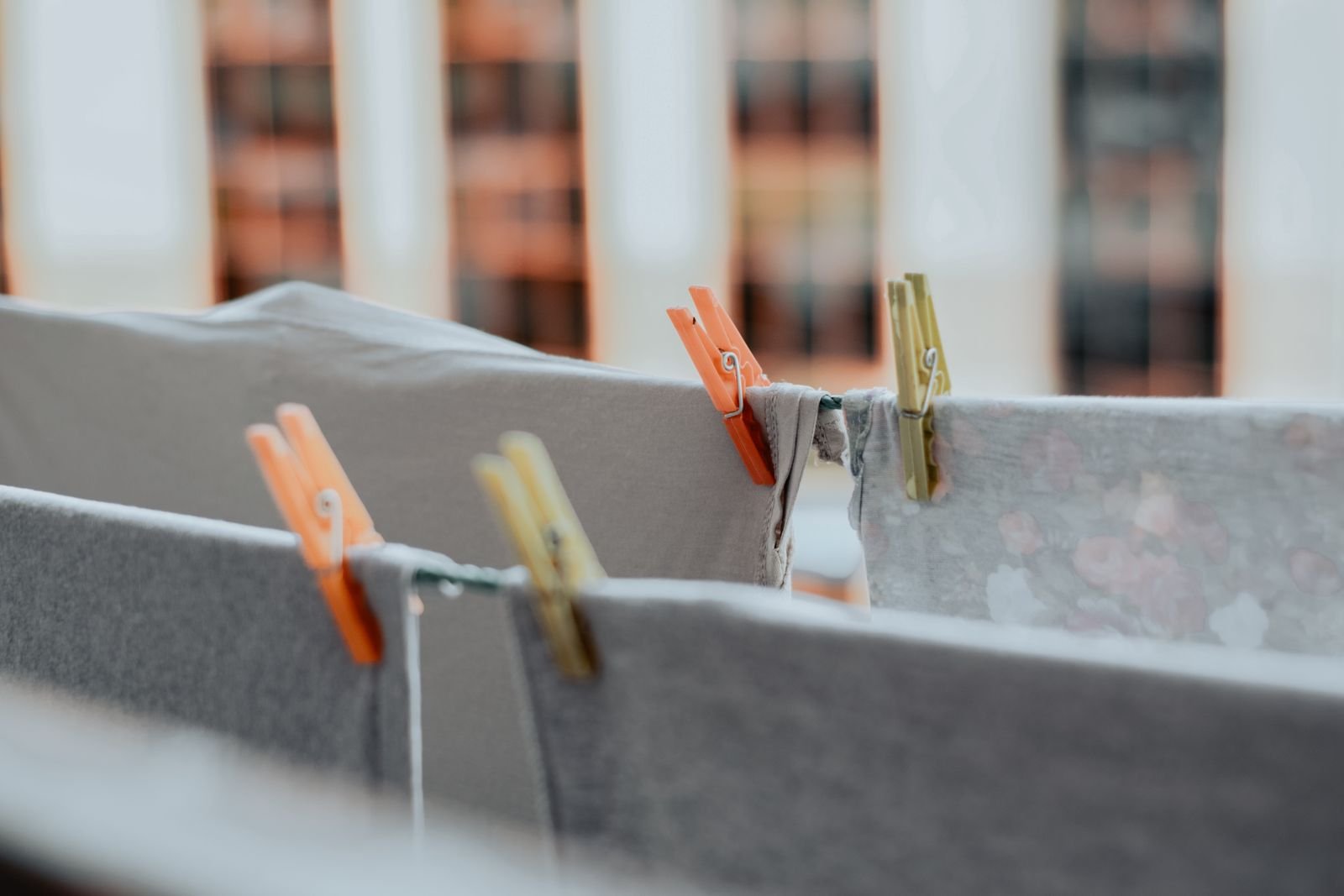
How long do clothes take to dry indoors? The times that have actually been measured
Very few people publish a measured time, so here is what I could open and read.
- Which?, heated airers: around four to seven hours, depending on the model, to dry a small cotton load. Tower models averaged 4 hours 40 minutes and winged models 5 hours 54 minutes. Which? notes it tests with cotton, so other fabrics may differ.
- Which?, general round-up: heated airers typically take four to five hours for a small cotton load, and it says air drying can take “many, many hours” when the weather turns.
- Saga, quoting a cleaning expert: one full day to at least three days with rotation with no heat at all. That is one person’s estimate, not a test, and I would read it as “a long time” more than as a measurement.
Notice what is missing: an unheated airer, in an ordinary living room, with a mixed load. Which? gives no time for it, and I have found no source that does with real measurements. Where I say “slower” below, I mean slower in the direction the physics points, not by a number I can prove.
Six things that stretch or shorten the clock
Drying is water leaving the cloth and the air carrying it away. Anything that slows either half adds hours.
- Fabric weight and fibre. Thick items such as towels, jeans and hoodies hold more water and release it more slowly than a thin cotton T-shirt. Cotton is what Which? tests with, so fibres that hold less water, like many synthetics, will usually feel drier sooner, but that is my expectation, not a measured result.
- Spin speed. Water the washer removes is water the room never has to. A faster spin is the cheapest saving there is, and it costs nothing. If the load comes out dripping, the airer will be busy all night.
- Room temperature. Warm air takes up more vapour than cold air, so a cold room dries clothes slower. Heated airers are quicker for that reason, though they push more moisture into the room; see whether heated airers cause damp.
- Humidity already in the air. If the air is nearly full, the clothes have nowhere to send their water. Which? says it is the high humidity that slows clothes under airer covers, and that none of the three covered airers it tested dried faster than uncovered ones.
- Airflow. Still air around a garment becomes saturated and stops taking more. A little movement, a fan, or an open door to a drier room replaces it.
- How crowded the airer is. Clothes touching clothes dry slowly at the overlap. Spacing items out is the plainest speed-up there is, and it is why the hero photo above is a bad advert for packing a line.

How to tell it is dry, because the clock cannot
Because times are unmeasured for your room, test the garment. Press the thickest parts: seams, waistbands, pockets, the hem of a hoodie and the bottom of towel pile. They dry last. A damp seam feels cool against your skin, while a dry one feels the same temperature as the rest of the cloth.
If it is cool in one spot, give it another hour on the airer, spaced out. If it is warm and soft but not stiff, you are done. Folding clothes that are 95 per cent dry is how you get the faintly sour smell in the wardrobe. I wrote about towels separately in how to dry towels indoors because they are the usual culprit.
What a dehumidifier or an open window changes
A dehumidifier lowers the humidity of the room, so the clothes can release water faster. Which? says a dehumidifier will help clothes dry faster, and that laundry modes run the fan at its highest to mimic a breezy day. The catch is that it works on a closed room, so shut the door. How to set one up is covered in dehumidifier laundry mode, where I also say plainly that nobody can name your drying time in advance.
An open window helps only if the air outside is drier than the air inside, which is not true on a wet, cold winter day. Cracked open in a closed-door room, it lets moist air out and swaps it for something often a bit drier. Open it fully and the room drops in temperature, which slows drying. Neither is a fix for a heavy load on a cold night; both are better than a shut room with no extraction.
The full routine, in order, is in how to dry clothes indoors without mould.
When slow drying stops being a nuisance and starts being a mould risk
Damp cloth is food and water for mould, and the longer a garment stays wet, the more time it has. Saga’s quoted expert says indoor drying should ideally take no more than 24 hours, since longer drying can bring a musty smell or mould. That is an expert’s rule of thumb, not a tested threshold, but I treat it as a sensible alarm: if a load is still wet after a day, something is wrong with the spin, the room or the pile.
The practical choices are to rewash a load that has started to smell, hang it again with more space and moving air, or finish it in a dryer. I will not give you a growth timeline here, because the evidence is about days to weeks and varies with conditions; the detail is in how long it takes for mould to grow. The moisture the airer releases into the room matters too, and it ends up on the coldest wall.
A day is the limit, so hang it less crowded and judge it by hand
My conclusion is dull: give a load a working day, and if it is not dry by then, change something rather than waiting. Spin faster, hang fewer items per rail, move to a shut room with a dehumidifier or a fan, and test the seams. How long do clothes take to dry indoors depends on six things you can influence, and the clock is the one you cannot.
FAQ
How long does a load of washing take to dry on an airer?
Which? measured four to seven hours for a small cotton load on a heated airer. An unheated airer has no published test I could find, and it will be slower. Assume a day for a full, mixed load in a cool room, and check the seams.
How long do jeans and towels take to dry indoors?
Longer than T-shirts, because they hold more water and release it slowly. I have no measured figure for either. Spin them hard, hang them with space around them, and test the waistband or the bottom of the pile.
How can I make clothes dry faster indoors?
Spin faster, hang fewer items spaced apart, keep the room warm and the door shut, and add a dehumidifier or fan. Which? notes that covers did not speed up drying in its tests.
Is it bad if clothes take more than 24 hours to dry?
It is not dangerous in itself, but it is a warning. A quoted expert in Saga puts 24 hours as the ideal ceiling because longer drying can bring mould or a musty smell. Change the setup if you regularly pass it.
Do clothes dry faster with the window open?
Only if the air outside is drier than the air in the room. On a cold wet day it often is not, and a wide-open window also cools the room, which slows drying.

