
Last Updated on October 25, 2026 by Umar Farooq
How to dry clothes in a small flat without a dryer: spin the load as hard as the fabric allows, hang it on a slim airer in one room with the door shut and a window cracked, and never let it dry in the bedroom. The floor space is the easy part. The water that leaves the washing is the real problem.
A small flat has nowhere for that water to go except onto your windows and into the corners of the ceiling, so the routine matters more than the kit.

Start by taking the water out before it is hung up
Every litre you wring out in the machine is a litre that does not have to evaporate into a flat with no spare air. So use the fastest spin the care label allows, and do not overload the drum, because a packed drum spins out less than a half-full one. For one-off items, roll them in a dry towel and press.
This is the cheapest step and the one people skip. I have yet to see an airer problem that was not made worse by a dripping load.
Pick the right hardware for the space you have
The aim is more hanging length in less floor area. In rough order of space saved:
| Option | Floor space used | The catch |
|---|---|---|
| Slim folding airer | A strip about 60 cm (2 ft) wide | Folds away, but easy to overload |
| Over-door or radiator-side hanger | None | Only suits light items |
| Ceiling pulley airer | None | Needs drilling, so check your tenancy first |
| Hangers on a shower rail | None | Only works if the bathroom can ventilate (see below) |
Hang shirts on hangers, put the heavy items on the outer bars, and leave gaps between pieces. Which? says ventilation is the thing that matters when drying indoors, and warns that moisture can collect in the corners of ceilings where mould then grows (Which?, cheapest way to dry clothes indoors). A packed airer pushed against a wall is exactly that corner problem.
Turn one room into the drying room
In a studio or one-bed you will not have a spare room, but you can pick one space and be consistent: the living room, or the room with the best window. Close its door, crack a window or run the extractor fan, and leave the airer there until the washing is bone dry. The reasoning is in how to dry clothes indoors without mould, so I will not repeat it here.
Closing the door matters even in a tiny flat. It stops the wet air drifting into the bedroom and the bed, and it concentrates the moisture where the open window can remove it.
Use the bathroom, but only with the fan on
If the bathroom has an extractor and a door, it is the best drying room you have. The fan is already there to do the job. Hang the washing, shut the door and run the fan until the washing is dry, not just until the room stops looking steamy. If the fan is weak, the washing will dry slowly and the ceiling will pay for it, and how long to run a bathroom extractor fan covers how long is long enough.
A bathroom with no fan and no window is the one room I would rule out.
Hang it outside whenever the weather lets you
Central Bedfordshire Council’s energy advice says that on a mild or sunny day you can dry washing outside in a garden or on a balcony if you have space (Central Bedfordshire Council). Dry, breezy winter days count too. Check your lease first, as some buildings ban lines visible from the street.
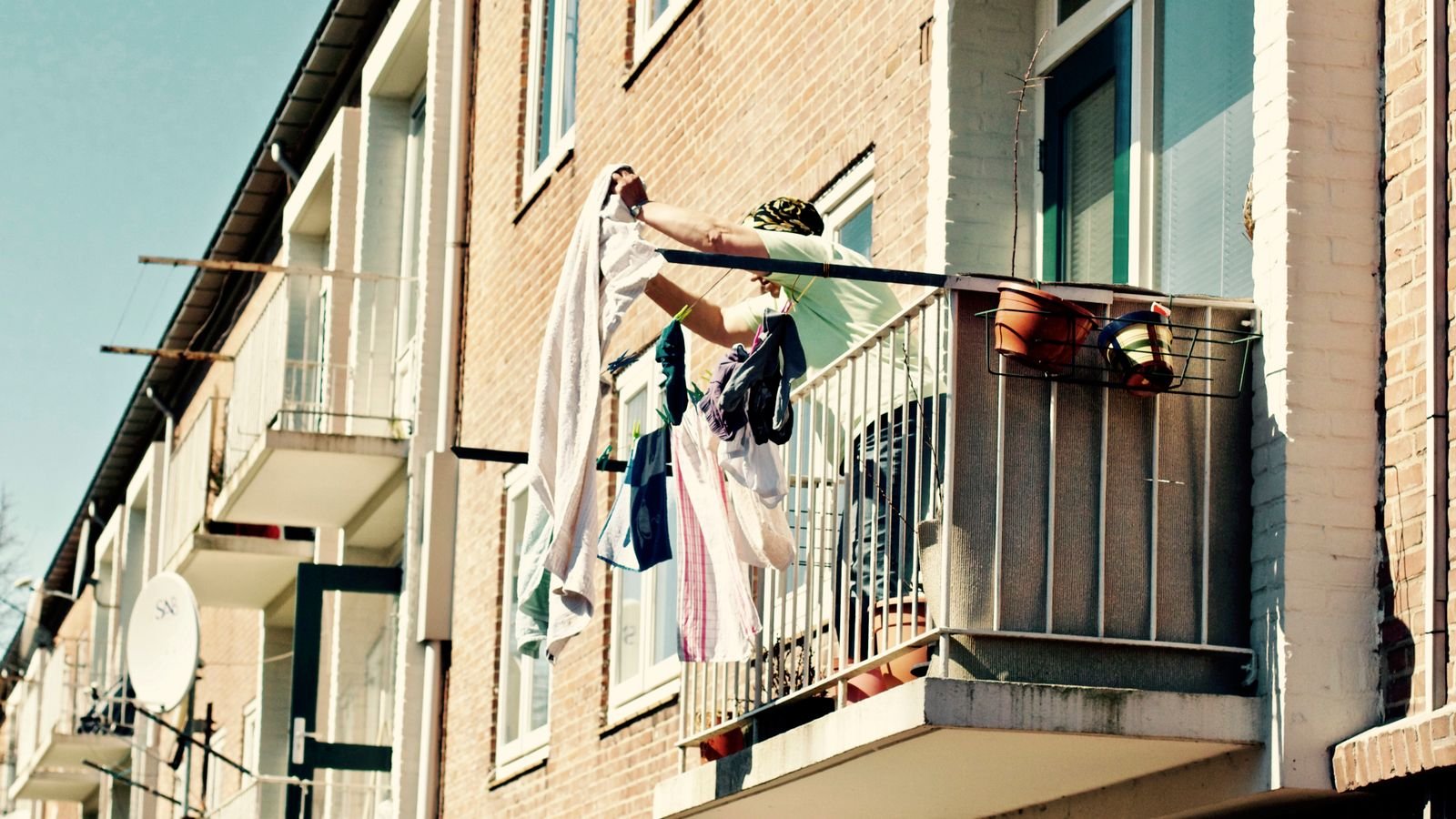
Use dry spells for the big, slow items such as jeans and bedding, and keep the indoor airer for the small stuff.
Know the three damp rules before you commit
- Not in the bedroom. You breathe out moisture all night, so adding a wet load makes a closed room worse.
- Not draped on a radiator in a closed room. The radiator dries the surface of the cloth quickly, but all that water still ends up in the room. A slim airer beside a radiator is fine; washing smothering it is not.
- Watch the windows. If the glass is streaming, the room is telling you it is saturated. Open the window wider, wipe it down, and see how to stop condensation on windows.
Other ways to get the washing dry when the airer is not enough
None of these is a recommendation, just the honest list:
- A dehumidifier in the drying room makes indoor drying faster and takes the water out as a tank to empty. Whether it can fully stand in for a machine is covered in can a dehumidifier replace a tumble dryer.
- A laundrette with dryers, which costs you time and money per load but puts all the water in someone else’s building.
- A heat pump dryer, if your flat has the space and your landlord allows it. Which? lists the average heat pump dryer at about £54 a year to run, which is its figure and moves with energy prices (Which?, tumble dryer running costs).
If humidity is a problem across the whole flat, not only on wash days, how to reduce humidity in an apartment is the wider fix.
How to dry clothes in a small flat without a dryer comes down to one shut room
You do not need a dryer. You need less water going in, a hanger that fits, one shut-door room with a way out for the vapour, and the discipline to keep it out of the bedroom. Add outdoor days and a dehumidifier or laundrette for the weeks that beat you, and the small flat stops being the problem.
FAQ
What is the fastest way to dry clothes in a small flat?
Spin on the highest speed the label allows, hang items apart on a slim airer in a warm, ventilated room with the door shut, and use a dehumidifier or open window to carry the moisture away. Smaller pieces dry much faster than jeans and towels, so split the load.
Can I dry clothes in the bedroom if the flat is tiny?
I would avoid it. The room is closed overnight and you add moisture just by sleeping, so a wet load tips it into condensation. If it is the only room, dry the washing in the day with the window open and the door shut, then move it out before bed.
Is it safe to dry clothes in the bathroom?
Yes, provided the extractor works and the door is shut so the vapour leaves the flat. With no fan or window, it traps the damp and the ceiling suffers.
Can I dry clothes on a radiator in a small flat?
It is better to put the airer next to the radiator than to cover the radiator with washing. Washing smothering it adds moisture to a closed room and can block the heat.
How do I dry clothes without a balcony or garden?
Use the one-room method: slim airer, closed door, cracked window or extractor. A dehumidifier in that room speeds it up if the window cannot stay open.

