
Last Updated on October 23, 2026 by Umar Farooq
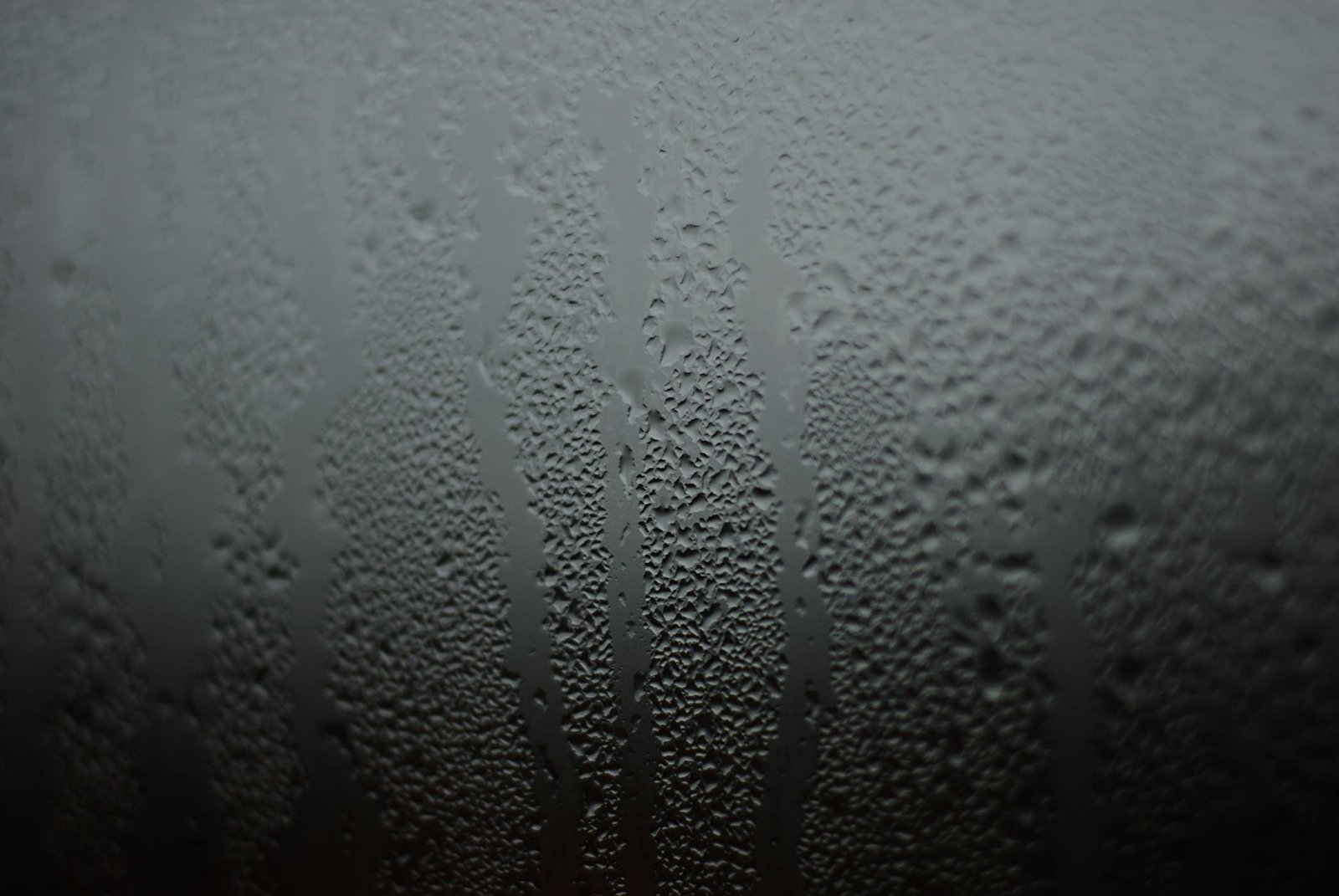
Condensation on windows is water vapour from the room turning back into liquid on glass that is colder than the air around it. It is not a leak, and on the inside it is usually the cheapest warning your house will ever give you about its humidity.
The window is the one part of the house that tells you the truth every morning, and asks only for a cloth.
Why glass gets wet when nothing is leaking
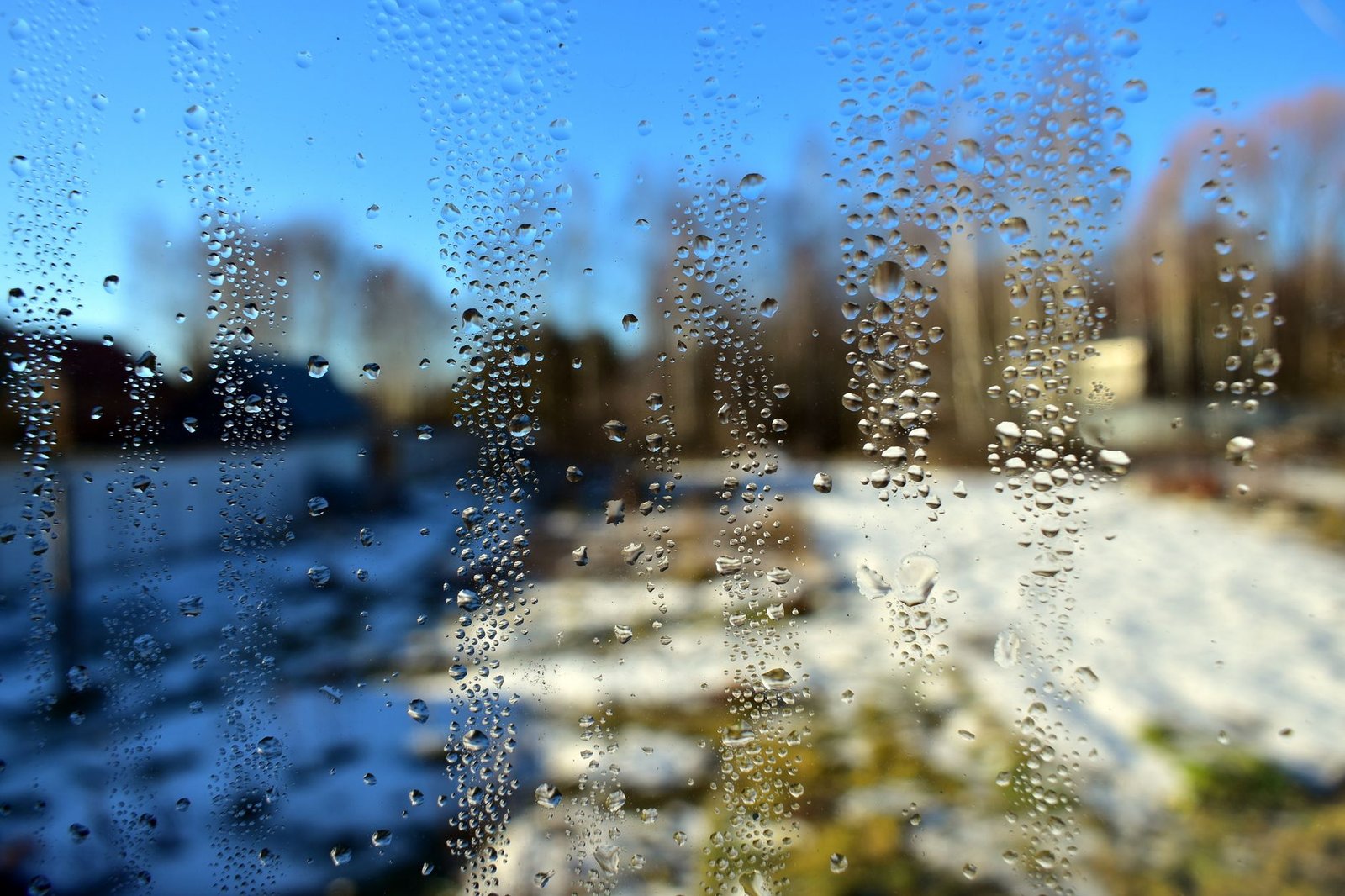
Air holds water vapour, and warm air holds more than cold. Cool that air down far enough and it cannot hold what it is carrying, so the surplus drops out as liquid. The temperature at which that happens is the dew point.
Glass is usually the coldest surface in a room, so it reaches the dew point first. The numbers are simple to work out (I calculated these with the standard Magnus formula, so treat them as rounded): in a room at 20°C / 68°F, air at 50% relative humidity starts depositing water on any surface below about 9°C / 48°F. At 70% humidity, it is about 14°C / 57°F. Same window, same winter night, a very different morning.
That is my one firm opinion here: blame the room before you blame the window. The glass is only the place where the moisture becomes visible. EPA says the same: condensation can be a sign of high humidity.
Read condensation on windows by where it forms
Condensation on windows shows up in three places, and each means something different. Look before you buy anything.
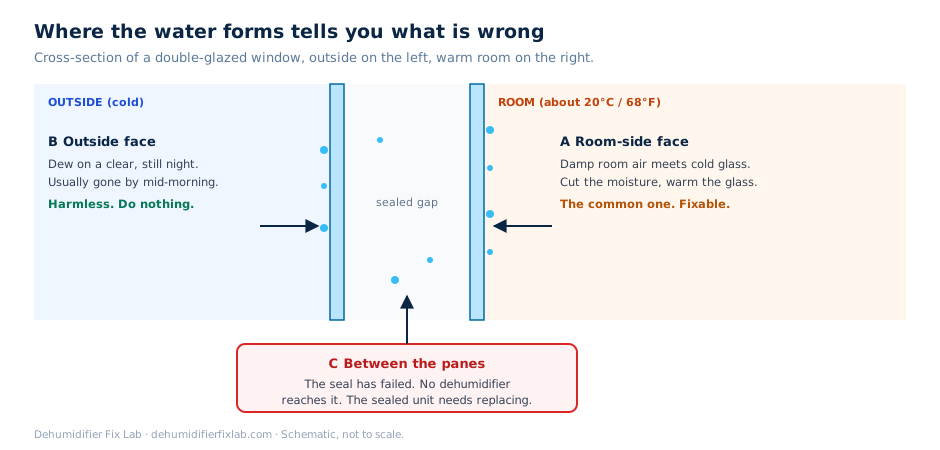
- Room-side face of the glass. The common one. Damp indoor air has met cold glass. It is fixable by drying the air, warming the glass, or both.
- Outside face. Dew, the same as on your car or the lawn. It forms on clear, still nights and usually burns off by mid-morning. It is not a defect, and it gets its own explanation here.
- Between the panes. The sealed unit has failed and moisture has got into the gap. This is the only one where the window itself is at fault, and no appliance reaches it. The double glazing guide covers what to do.
A pattern worth noticing: the wet is usually worst along the bottom edge and in the corners, and on bedroom windows. The edges of a pane tend to be colder than the middle, and bedrooms collect a night’s worth of breathing.
What puts the water in the air
- Breathing and sleeping (a closed bedroom is the classic 7am mist)
- Cooking with lids off, showers, and washing dried indoors
- A tumble dryer that is not vented outside
- A new build or recent plastering, which releases building moisture that Marvin notes usually fades after the first cool season
Nobody publishes a reliable litres-per-day figure for a typical household, so I will not invent one. Put a cheap hygrometer in the room instead and read the real number.
Tight, efficient houses are not at fault either: Marvin points out that a window that keeps heat in is the reason the glass can mist at all. Draughty old windows just hide the problem by leaking the damp air out.
Is condensation on windows bad for the house?
A film of water that clears by lunchtime is harmless. Water that sits is not, because it runs onto the frame and sill, and timber and plaster that stay damp are where mould starts.
EPA’s guidance is to keep indoor relative humidity below 60%, ideally between 30% and 50%. Dry the surface quickly and find the moisture source. If mould has already appeared and covers less than about 10 square feet (roughly 1 square metre), EPA says most people can clean it themselves; anything bigger, or water damage behind it, is a different conversation. Fix the water first, or it comes straight back.
Fix it in this order
Work down this list and stop when the glass stays clear:
- Wipe it off each morning with a microfibre cloth, wrung out in the sink, not on the sill.
- Run the extractor during cooking and showers, and for twenty minutes afterwards.
- Open blinds and curtains by day. Heavy closed curtains trap warm damp air against cold glass.
- Crack a window for ten minutes when the air outside is drier than inside.
- Add a dehumidifier if you have done all of that and the room still reads above 50%. A dehumidifier fixes the moisture half of the problem; what size you need depends on the room, and if it is going in a bedroom, a quiet dehumidifier for the bedroom is the sensible shortlist.
Still misting? The full prevention guide goes further.
The window is a free humidity meter
Condensation on windows is a symptom, not a verdict. Wet inside on cold mornings and clear by lunchtime means the room is a little too damp. Wet between the panes means a failed seal. Wet outside means a clear night and nothing else. Fix the humidity, mind the frames, and let the glass keep score.
FAQ
What causes condensation on windows?
Warm, humid air touching glass colder than the air’s dew point, so the vapour turns back into liquid. Cooking, showers, breathing and indoor drying supply the moisture.
Is condensation on the inside of windows bad?
Occasional morning mist is harmless. If it runs down and sits on frames and sills, it can keep timber and plaster damp enough to grow mould, so wipe it away and cut the humidity.
Why do I have condensation on the outside of my windows?
It is dew. The outer pane falls below the outdoor dew point on clear, still nights and normally clears with the sun. It does not mean the window is faulty.
What does condensation between double glazing mean?
The sealed unit has failed and moist air has got into the gap. Drying the room will not clear it; the usual repair is replacing the sealed glass unit.
What humidity level stops condensation on windows?
Keep the room between 30% and 50% relative humidity, as EPA suggests. At 20°C / 68°F, 50% means the glass has to fall below about 9°C / 48°F before it mists.
If your windows have been misting since the day you moved in, buy a hygrometer before you buy anything else. It is about the price of a pint, and it will settle the argument.

