
Last Updated on October 24, 2026 by Umar Farooq
Does bleach kill mold? On a hard, non-porous surface it can kill what it touches, but the EPA says using bleach is “not recommended as a routine practice during mold cleanup”, and it does nothing about the damp that grew the mould. Which is awkward, because a bottle of bleach is what most of us reach for first.
I spell it “mould”, the EPA spells it “mold”, and the advice is the same either way.
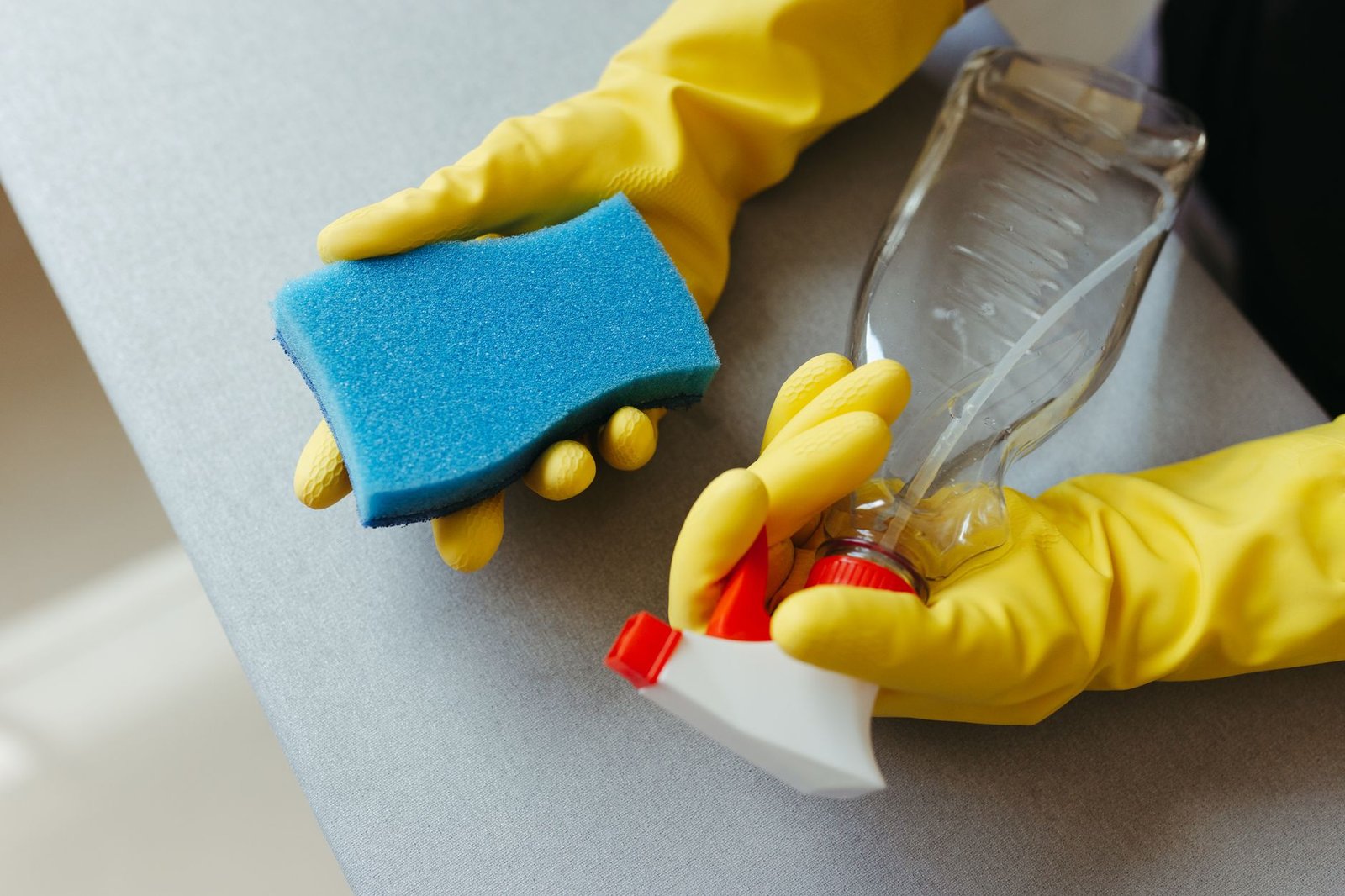
Never mix chlorine bleach with other cleaning solutions or detergents, especially anything containing ammonia: the EPA warns this can produce toxic fumes. Ventilate the area and exhaust the air to the outdoors, and wear gloves (natural rubber, neoprene, nitrile, polyurethane or PVC, per the EPA). Do not use bleach and then another product on the same patch.
What the EPA says about bleach on mould
I read the EPA’s Brief Guide to Mold, Moisture and Your Home for this, rather than a cleaning brand’s blog. Four points matter.
- Using a biocide such as chlorine bleach is “not recommended as a routine practice”. The EPA allows that professional judgement may justify it, for example when immune-compromised people are present.
- It is “not possible or desirable to sterilize an area”. A background level of spores stays, and those spores will not grow if the moisture problem has been resolved.
- “It is not enough to simply kill the mold, it must also be removed”, because dead mould can still cause allergic reactions in some people.
- “The key to mold control is moisture control.”
That is the whole position. It is not “bleach is banned”. It is “bleach is not the method”.
Why bleach stops at the surface of porous materials
A liquid can only act on what it reaches. On tile or glass, the mould sits on top and a wipe gets all of it. On plasterboard, wood or grout, the mould can grow into the material, and the EPA’s mould cleanup page says absorbent or porous materials such as ceiling tiles and carpet may have to be thrown away if they become mouldy. The Brief Guide adds that mould can grow on or fill in the empty spaces and crevices of porous materials, so removing it fully may be hard or impossible.
Bleach on a wall therefore wets the visible layer and leaves the rest. I have not run a trial and I have no study I would cite, so I will say only that the mechanism points one way: a surface that looks clean is not the same as a wall that is. If you want the same point for alcohol and vinegar, does alcohol kill mold covers it, so I won’t repeat that table.
My opinion, and I’ll defend it: the bleach question is the wrong question. Whether the liquid kills the mould matters less than whether the patch is still wet next month.
Where bleach is still a defensible choice
Be honest about the narrow case: a small patch on glazed tile, glass or another sealed, non-porous surface, where you have decided a disinfectant is worth it. The EPA leaves that to your judgement. My reading is that this is the only place it makes sense, because it is the only place the bleach reaches everything.
If you go ahead:
- Read the bottle. I am not quoting a mixing ratio, because I would be guessing at your product’s strength. Follow the label.
- Clean first. The EPA’s own method for hard surfaces is to scrub mould off with detergent and water and dry completely.
- Do not blend products to be thorough. See the warning above.
- Dry the surface afterwards. Bleach is mostly water, and a surface left wet is a surface mould can use.
Dead mould is still mould: remove it, then dry it
This is the part the bleach-and-walk-away approach misses. Bleached mould can lose its colour and look dealt with. The EPA’s point is that killing it does not finish the job, as dead mould can still trigger reactions in some people, so it has to be physically removed.
That is why detergent, water and a cloth keep winning the argument. They lift the mould off rather than just changing its colour. How to get mould off walls has the step-by-step for painted surfaces.
What to do instead of reaching for bleach
- Find the water. A leak, a cold wall collecting condensation, a bathroom with no extraction. The EPA says you must have completely fixed the water or moisture problem, or the mould will come back.
- Scrub hard surfaces with detergent and water, and dry completely.
- Dry wet materials fast. The EPA says to dry water-damaged areas and items within 24-48 hours. That is a drying deadline for wet materials, not a mould timer.
- Bin what is porous and soaked in. Ceiling tiles and carpet may have to go.
- Keep the room dry afterwards. A dehumidifier can help hold humidity down, and why mold keeps coming back explains the loop of cleaning without fixing the cause.
The EPA’s rule of thumb for DIY work is a patch under about 10 square feet (roughly 1 square metre). Past that, it points to its remediation guidance rather than a spray bottle.
So, does bleach kill mold? Only where it can touch it
Bleach can kill mould it reaches on a hard, non-porous surface. It cannot be relied on inside porous material, it leaves dead mould behind, and it does nothing about moisture. The EPA’s advice is to remove the mould, dry the area, and fix the water. If you want to know what drying does to mould that is left, does mold die when it dries out is the honest answer.
FAQ
Does bleach kill mold on drywall?
Not reliably. Plasterboard is porous, and the EPA says mould can fill the spaces in porous materials, so it may be hard or impossible to remove fully. Bleach wets the surface; it does not clean the inside.
Does bleach kill black mould?
Colour does not change the advice. The EPA does not treat black mould differently in the guides I read: remove it, dry the area and fix the moisture. I would not rely on bleach for it on a porous wall.
Can I mix bleach with vinegar or other cleaners?
No. The EPA says never to mix chlorine bleach with other cleaning solutions or detergents, and specifically warns about ammonia, because toxic fumes can result. Use one product at a time and ventilate.
Why does mould come back after bleaching?
Because the moisture is still there. The EPA says that if you don’t fix the water problem, the mould problem will come back. Bleach does not dry a wall.
Is bleach better than detergent and water?
The EPA’s cleanup method for hard surfaces is detergent and water, scrubbed and dried completely, and it does not recommend bleach routinely. I have no measured comparison, so I won’t claim one is stronger.
Do I need bleach to clean mould safely?
No. The EPA says sterilising an area is not possible or desirable, and that removal matters more than killing. Gloves, ventilation and a scrubbed, dried surface are the basics.

