
Last Updated on October 24, 2026 by Umar Farooq
How to reduce humidity in a bedroom: find out the actual reading with a cheap hygrometer, air the room when the outside air is drier, keep wardrobes off cold external walls, and stop drying washing in there. A dehumidifier is the last option on that list, not the first.
Most bedroom damp is not one big leak. It is a small, steady supply of moisture in a room that is shut for eight hours and has one cold wall. The fixes are boring, which is rather the point.

Why a bedroom fills with moisture overnight
People breathe out water vapour, so a closed bedroom with someone asleep in it gains a little moisture overnight. I have no measurement for how much in your room and I will not quote a litre figure I cannot source; it depends on how many people, how big the room is and how leaky it is. What matters is the pattern: the moisture has nowhere to go while the door and window are shut.
The problem appears when that vapour meets something cold. The UK government’s guidance on damp and mould describes condensation as moisture from everyday activity that cools and condenses onto colder parts of the building, such as window frames, corners and low points on walls. It also names poor ventilation as a key factor, because the moisture cannot escape. A bedroom has all of those: cold glass, an external wall, and a shut door.
How to reduce humidity in a bedroom: measure first, then go after the biggest source
Buy a hygrometer (a few pounds) and put it at head height, away from the window. Read it at night before bed and again first thing in the morning for a week.
The EPA’s guide to mould and moisture says to keep indoor humidity below 60 percent, ideally between 30 and 50 percent. If your morning reading sits comfortably in that band, you do not have a humidity problem and the rest of this page is optional. If it is 60 or above, the gap between the evening and morning numbers tells you something useful: a big overnight jump points at the room itself and its ventilation, while a high reading all day points at something else in the house. For where the numbers should sit, see ideal bedroom humidity.
Then do what the readings suggest, in this order. Moving things costs nothing; buying a machine does not.
Open the window when the outside air is the drier, not when it is convenient
Airing the room only helps if the air coming in holds less moisture than the air going out. On a cool, dry morning that is true. On a muggy or foggy one you are swapping damp air for damp air and cooling the walls as a bonus.
A rough habit that works: air the room for ten or fifteen minutes in the morning, with the bed pulled back and the door open, then close up. That time is my own rule of thumb, not a measured figure, so let the hygrometer overrule me. If the reading barely moves, the outside air was not drier than the inside air.
At night a trickle vent or a window left open a crack does steady work, if you can stand the cold and the noise and the room is secure. If you cannot, skip it and ventilate harder in the morning.
Pull the wardrobe off the cold wall
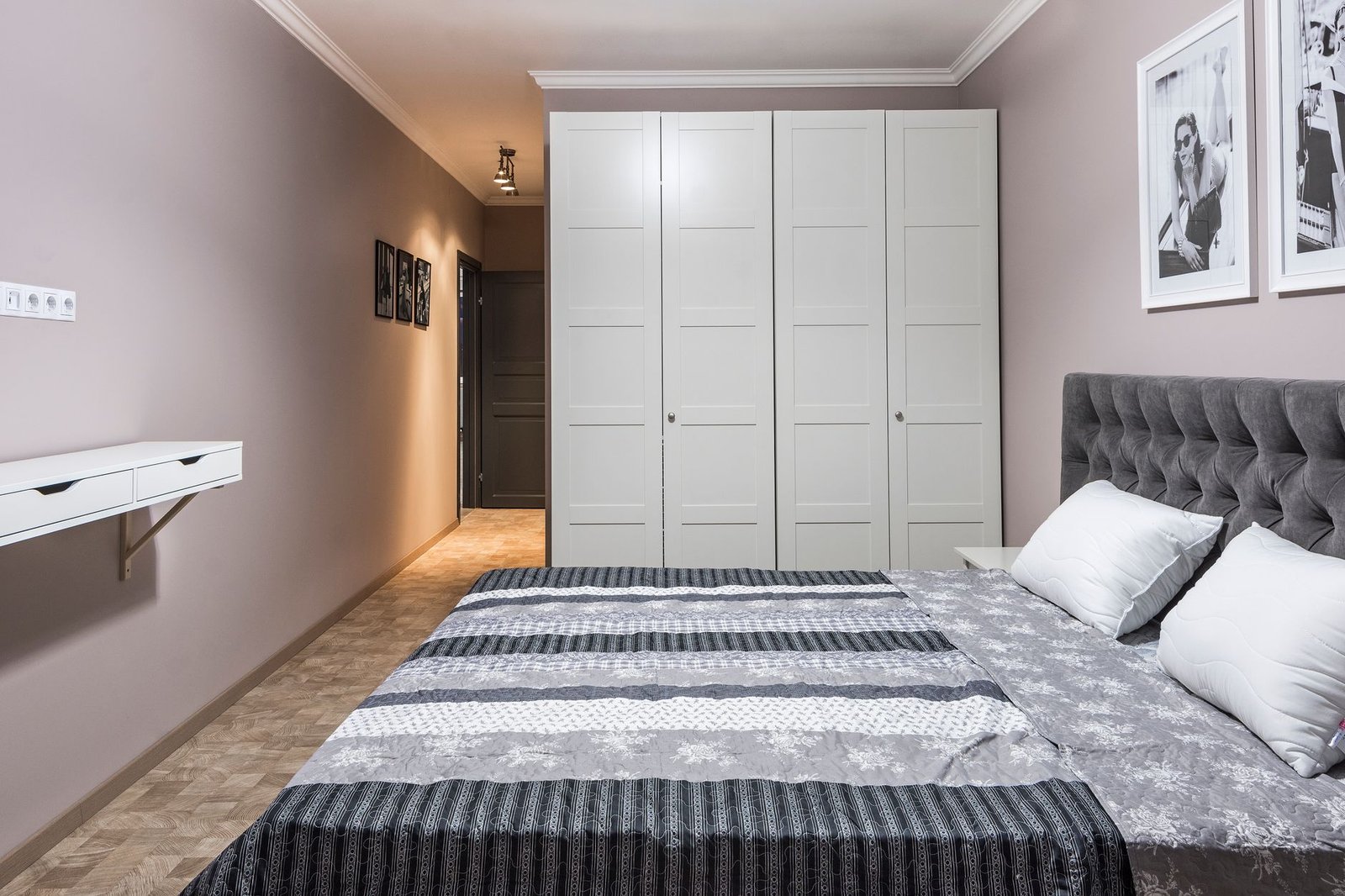
The same government guidance says furniture placed against external walls creates cold spots where condensation forms, and advises leaving a gap between furniture and external walls. In a bedroom that usually means the wardrobe, the headboard and the chest of drawers.
The mechanism is simple. The wall behind the furniture is colder than the room, and still air in that gap cannot dry itself out. Moisture settles on the cold surface and stays there. Two to three centimetres of clearance (about an inch) is enough to let air through, and I would move the biggest piece first. Keep the wardrobe from being packed to the doors too, so air can move inside it.
If the same corner keeps going dark, the humidity is a symptom and the cold wall is the cause. That is a mould in the bedroom job, and fixing the water has to come before any cleaning.
Door open or door shut?
It depends who is generating the moisture. If you are the one breathing in the bedroom, an open door at night lets the vapour spread through the landing instead of settling on the bedroom walls. The cost is warmth and noise, and in a cold house the vapour will then find the cold wall of another room.
If the moisture comes from the rest of the house, a shut bedroom door keeps it out. A shut bedroom with a hot shower running next door is the classic way to get wet window frames by morning.
So decide by the hygrometer: open the door if the overnight rise is large and the landing is dry, shut it if the landing reads higher than the bedroom. The condensation on windows guide covers the glass side of this in more detail.
Keep the airer and the radiator-drying habit out of the bedroom
Drying laundry is one of the activities the government guidance lists as a normal moisture source, alongside showering and cooking. A load of wet washing releases its water into the air as it dries, and the bedroom, with its closed door, is the worst place to let it do that.
If the airer has to live indoors, put it in a room with an extractor fan or a window you can open, and shut that door behind it so the vapour stays in the room you can ventilate. A bedroom with an airer and a closed window for a whole night is the quickest way to wake up to wet window frames.
Houseplants are a small source and a bowl of salt or charcoal is a smaller one. I would not count either as a fix; they are fine as decoration.
A dehumidifier is one option, and only once the sources are dealt with
A dehumidifier makes sense once the sources are removed and the reading still sits above 60 percent, or in a room you cannot ventilate. It does not repair a cold wall, a leak or a blocked trickle vent. It just treats the symptom, with a fan, a heat output and a tank to empty.
If you do get one for a bedroom, noise and placement become the real questions. Do I need a dehumidifier in my bedroom? walks through whether the readings justify it, and the quiet dehumidifier for bedroom guide covers what is tolerable overnight. Put it clear of the bed, 30 cm from walls and furniture, and run it on the low fan.
Never run a dehumidifier on a long, thin extension lead overnight, and never put one in a bathroom or any wet room. Plug it directly into a wall socket and read the manual before leaving it running while you sleep.
Six fixes, in the order I would try them
How to reduce humidity in a bedroom comes down to working down this list and stop as soon as the hygrometer is happy:
- Measure the morning and evening readings for a week.
- Air the room when the outside air is drier, then close up.
- Pull wardrobes and the bed off cold external walls.
- Take drying washing, wet towels and the heated airer out of the bedroom.
- Decide on the door by whichever side of it is damper.
- Add a dehumidifier only if the reading stays at 60 percent or above.
Most bedrooms never need step six. The ones that do usually have a cold wall nobody has sorted out.
FAQ
Does sleeping in a bedroom increase humidity?
Yes, a little, because people breathe out water vapour. The amount depends on the room size, the number of sleepers and how well the room is ventilated, and I would not quote a general figure. A hygrometer showing a higher morning reading than evening reading tells you how much it matters in your room.
Should a bedroom window be open or closed to reduce humidity?
Open when the air outside is drier than the air inside, such as a cool dry morning, and closed when it is muggy, foggy or raining. Airing a bedroom with damp outdoor air just swaps damp air for damp air.
What is the quickest way to reduce humidity in a bedroom?
Air the room on a dry day and take any wet washing out of it. Those two changes act within hours. Moving furniture off cold walls works more slowly but stops the problem returning.
Is 70 percent humidity too high for a bedroom?
It is above the EPA’s advice of keeping indoor humidity below 60 percent, ideally 30 to 50 percent. A one-off reading after a shower is nothing to worry about; a reading that stays there for days deserves attention.
Can a bowl of salt or rice reduce bedroom humidity?
Only trivially. A bowl takes up a small amount of moisture and then stops, so it will not change a bedroom that is actually damp. Treat it as a gimmick, not a plan.

