
Last Updated on October 23, 2026 by Umar Farooq
Do moisture absorbers work? Yes, inside a small closed space such as a wardrobe, and no, not against the damp in a whole room. A tub genuinely pulls water out of the air. The trouble is how little air it can reach, and how little it can hold.
I like them, the way I like a good umbrella: very useful until someone asks it to hold back a flood. Here is where the line sits, with my own arithmetic labelled as such.

Four materials, one trick: they all have a ceiling
Every moisture absorber is a hygroscopic material in a pot or bag. It attracts water vapour, with no fan and no plug. The materials differ in what happens next.
| Material | What it does with the water | Honest limit |
|---|---|---|
| Calcium chloride (tubs, hanging bags) | Dissolves into brine that drips into a reservoir | Spent when the crystals are gone or the reservoir is full |
| Silica gel (sachets, reusable boxes) | Holds water in its pores; can be dried out and reused | A modest few percent of its weight at ordinary humidity |
| Rock salt | Draws a little water, mostly onto its surface | Slow, and holds very little. See the natural dehumidifier guide |
| Activated charcoal | Mainly traps smells | I found no test showing meaningful moisture removal; treat it as a deodoriser |
For silica gel the best numbers come from museum conservators, who care about this rather a lot. A Western Association for Art Conservation note says regular silica gel sorbs about 3.5% of its dry weight in water across 40-50% relative humidity, and about 2% across 50-60%. Damper air is exactly when you would want more, and exactly when it gives less.
Calcium chloride holds more, which is why the sold-by-the-tub products use it. I go through what that looks like in a real test in the disposable dehumidifier guide, so I will not repeat the figures here.
Run the sums: one wardrobe against one bedroom
This is my arithmetic, not a published test, and every input is an assumption you can swap for your own. I use a standard figure that saturated air at 24°C (75°F) holds about 21.8 g of water per cubic metre, the same textbook figure I use on this site when working out how long a dehumidifier takes.
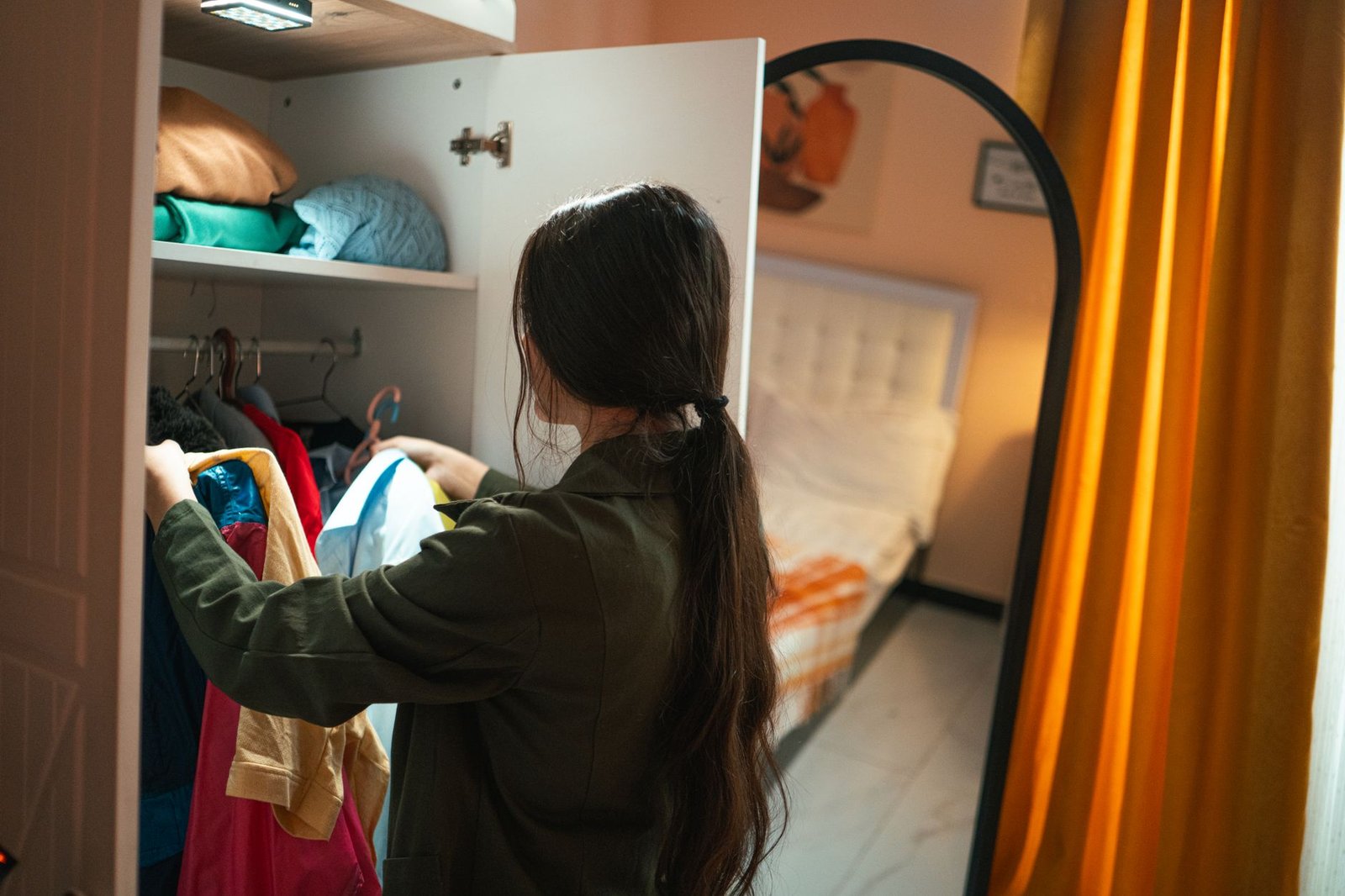
The wardrobe. Say the inside is about 1.2 cubic metres (42 cubic feet). At 70% humidity that is roughly 18 g of water vapour in the air. Pulling it down to 50% means removing about 5 g. Even a modest tub, holding a few hundred grams of water, has a huge amount of spare capacity for that job. Capacity is not the problem here. The tub is working on a tiny, nearly still volume of air, and it keeps working as damp creeps back in around the doors.
The bedroom. Take a 48 cubic metre room. At 70% it holds about 730 g of vapour, and 50% needs about 210 g removed. That is a few tubs’ worth, once. Then comes the real issue. A City of London condensation guide says the average family can produce up to 20 litres of water a day through ordinary living. Against a tub reservoir of about half a litre, that is up to 40 tubs a day to keep pace. I would call that a rounding error with a price tag.
So the rule is simple. A moisture absorber’s job is small volume, slow leak. A room is large volume, fast source.
Where moisture absorbers genuinely help
Anywhere the air is still, the space is small, and a socket is missing or unwelcome:
- Wardrobes and closets, especially against an outside wall. See mould in a wardrobe for why those boxes go damp.
- Caravans, boats, holiday homes and sheds left shut for weeks.
- Under-stairs cupboards, loft storage and seasonal boxes that smell stale.
One habit makes the difference: keep the doors closed. Every time you open them you let in fresh damp air for the crystals to deal with.
Why a tub in the lounge looks like it is working
Calcium chloride is a good trick. It dissolves, so within days you can see a pool of liquid in the bottom of the tub. That looks like proof.
It is proof that the tub is absorbing. It is not proof that the room is drier. A tub collecting 100 ml in a fortnight against a room being fed litres a day cannot move a hygrometer in any way you would notice. If you want to know, buy a cheap hygrometer, read it before you put the tub down and again two weeks later. I would bet the number has not shifted, and the reading is more honest than the liquid.
Condensation on windows, damp patches and a musty smell mean a source is feeding water in. The absorber is sitting next to a tap.
Can a moisture absorber stop mould?
It can help a wardrobe stay dry enough that mould has less to work with. It cannot fix the reason the wardrobe is damp. The EPA puts it bluntly: the key to mould control is moisture control, and if you clean mould but do not fix the water problem, it will most likely come back.
The same page advises keeping indoor humidity below 60%, ideally 30-50%. That is a room target, and an absorber is not equipped to hit it. If you already see growth, treat the tub as a supporting act, and read how long mould takes to grow before assuming you have weeks in hand.
How to tell a tub is spent, and what to do next
Calcium chloride brine can irritate skin and eyes, and it is not for drinking. Keep tubs out of reach of children and pets, and follow the pack when you dispose of the liquid.
A calcium chloride tub is finished when the crystals have dissolved and the reservoir is full. Replace it. Do not tip the liquid into a plant pot.
Silica gel is spent when it stops taking water, which many packs show with a colour-changing bead. Dry it only as the pack instructs. Some are made for an oven or microwave and many are not, so I will not guess your product’s method.
If you replace the tub every month and the cupboard is still musty, stop buying tubs. The cupboard is telling you it has a leak or a cold wall.
Do moisture absorbers work? For a shelf, yes. For a damp house, buy a machine
Use an absorber where the space is small, still and closed. Check the wardrobe, clear the cause, then let the tub handle the leftovers. If you are drying a bedroom, a basement or a house with laundry on airers, the arithmetic says you need a machine moving litres per day. What size dehumidifier you need is the next thing to read. The tub can stay in the wardrobe, where it belongs.
FAQ
Do moisture absorbers work in a bedroom?
Not for the room itself. A tub only treats the air immediately around it, and a bedroom takes in moisture from breathing, drying clothes and the outside air faster than a tub can collect it. Inside the wardrobe in that bedroom, it can help.
How long does it take for moisture absorbers to work?
You can see liquid in a calcium chloride tub within days, but that shows it is absorbing, not that the space has dried. In a small closed wardrobe the effect is slow and modest, and I found no standard test giving a timescale. Check it with a hygrometer rather than judging by the liquid.
What is the best thing to absorb moisture?
For a wardrobe or cupboard, calcium chloride tubs hold the most water per pot and silica gel is the tidy reusable choice for small boxes. For a room, nothing passive is the best: you need a dehumidifier, or you need to stop the water getting in.
Are moisture absorbers better than dehumidifiers?
They are different tools. An absorber wins on a small unpowered space such as a caravan or cupboard. A dehumidifier wins everywhere else, because it removes water continuously and drains it away.
Does charcoal absorb moisture?
A little, but I found no test showing it does meaningful moisture removal. Its real use is smell. Use it after the wardrobe is dry, not instead of drying it.

