
Last Updated on October 25, 2026 by Umar Farooq
Do extractor fans help dry clothes? A little, indirectly: a fan carries away the damp air that wet washing gives off, which helps keep the water out of your walls, but it is a ventilation tool and not a drying one. Do not expect a load to be dry by teatime.
The fan is not blowing across your jeans. It sits in the ceiling pulling a modest stream of air out of the room, and the clothes dry the way they always do, by giving water up to the air. All the fan changes is how quickly that damp air leaves.
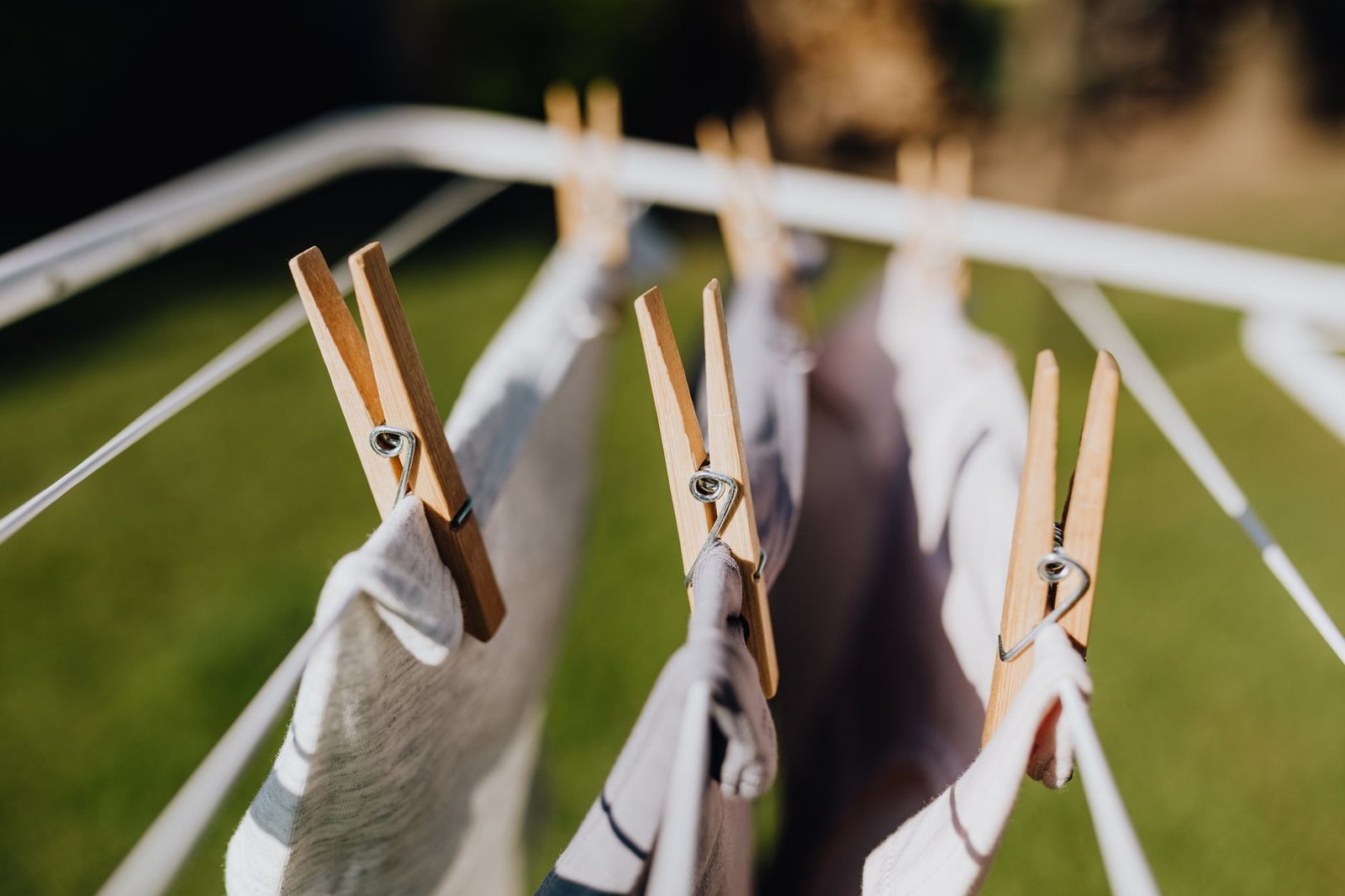
What an extractor fan really does to wet washing
Wet clothes dry by evaporation, and evaporation slows as the air around them fills up with water. West Lothian Council’s damp and mould guide tells tenants to use an extractor fan when cooking, bathing or doing laundry, and to shut the doors and open windows in rooms where clothes are drying. Which? makes a related point in its guide to drying clothes indoors: bathrooms usually have a vent or extractor fan to handle steam, and ventilation is important to avoid damp.
Notice the wording: the fan is there to avoid damp. Faster drying is a side effect of removing damp air, not the headline benefit.
The sum: how much water can a bathroom fan carry away?
A fan removes water in proportion to how much moisture each cubic metre of outgoing air holds compared with the air that replaces it. Here is a rough illustration, and it is my arithmetic with assumed numbers, not a measurement.
- A bathroom fan running at the 15 litres a second minimum that Approved Document F sets for an intermittent bathroom fan moves 54 m³ of air an hour (my conversion).
- The National Physical Laboratory’s guide to humidity measurement says room air might typically contain about 10 grams of water vapour per cubic metre.
- Suppose the air arriving from outside holds 5 g/m³ (an assumption). Each cubic metre swapped carries away about 5 g, so 54 m³ an hour removes about 270 g, or 0.27 litres.
- If the incoming air is damper, say 8 g/m³, the fan removes only about 108 g an hour.
| Incoming air (assumed) | Water removed per hour at 54 m³/h | Hours to remove 5 litres |
|---|---|---|
| 5 g/m³ | about 270 g | about 19 |
| 8 g/m³ | about 108 g | about 46 |
Five litres is the order of magnitude of daily indoor drying in the council leaflets summarised in how much moisture does a household produce. So a minimum-rate fan alone clears a heavy day of washing slowly, over a day or more, and much more slowly in damp weather. A stronger fan does better. The point is the scale: a fan is a steady drip, not a tap.
How to dry clothes in a room with an extractor fan
If you are going to dry washing in the bathroom, set it up so the fan helps rather than just spins:
- Wring or spin first. The less water that goes on the airer, the less the fan has to carry.
- Choose the bathroom, or the room with the fan, and shut the door. That keeps the moisture where the fan is, rather than spreading it to the bedrooms. Bathroom door open or closed after a shower explains why the fan needs a path for replacement air.
- Leave space around the clothes. Which? warns against rooms with little or no air circulation. Do not pack the airer against the wall.
- Check the fan works. West Lothian’s tissue test is simple: hold toilet paper to the fan with it on. If it sticks when you let go, the fan is working.
- Keep the fan running after the clothes are dry, for a while, to clear what is left.
Avoid radiators as an airer. Dry clothes indoors without mould covers the wider setup, including why a bedroom is the wrong place.
When the fan is not enough
In damp weather, with a big load, or with a weak fan, you will see condensation on the window and a wet-towel smell. At that point a fan is not the right tool. A dehumidifier collects water from the room, and Which? says one will help clothes dry faster. Dehumidifier for drying clothes covers it, and how long clothes take to dry indoors has the published timings for the other options. The reliable fix is the same as always: less water in the room, and more of it leaving.
A fan keeps the washing from wetting the walls, and a dehumidifier is what dries it
An extractor fan helps a little with drying, mainly by removing the damp air that slows it. Use it, shut the door, and do not expect miracles. If drying is taking days and the windows are streaming, add a dehumidifier or dry outside.
FAQ
Do extractor fans help dry clothes?
A little. They remove the humid air that washing gives off, which helps the clothes dry and cuts condensation, but the effect is slow and depends on how much air the fan moves.
Is it OK to dry clothes in the bathroom with the extractor fan on?
It is a sensible choice if the fan vents outside and works properly. Shut the door, give the clothes space, and keep the fan running for a while after.
Is a dehumidifier better than an extractor fan for drying clothes?
For drying speed, usually. A dehumidifier takes water out of the air in the room, while a fan only helps if the air replacing it is drier. Which? says a dehumidifier will help clothes dry faster.
Should I open a window or use the extractor fan to dry clothes?
West Lothian Council advises both: use the fan, and open windows while keeping the doors shut in the room where clothes are drying. Guidance varies, so if condensation appears, change one thing at a time.
Will an extractor fan stop damp from drying washing indoors?
It reduces the risk, but does not remove it. A fan that works and vents outside helps; a heavy load in a small room can still overwhelm it.

