
Last Updated on October 24, 2026 by Umar Farooq
How to stop damp in an empty house: leave low background heat on, keep internal doors open so air can move, take every source of moisture out before you lock up, and have someone look in now and then. An empty house fails at the two things an occupied one does for free: it stops being warm, and it stops moving air.
Nobody is showering, cooking or drying socks on the radiator, so you might expect the place to dry out. It does the opposite, which I find mildly unfair.
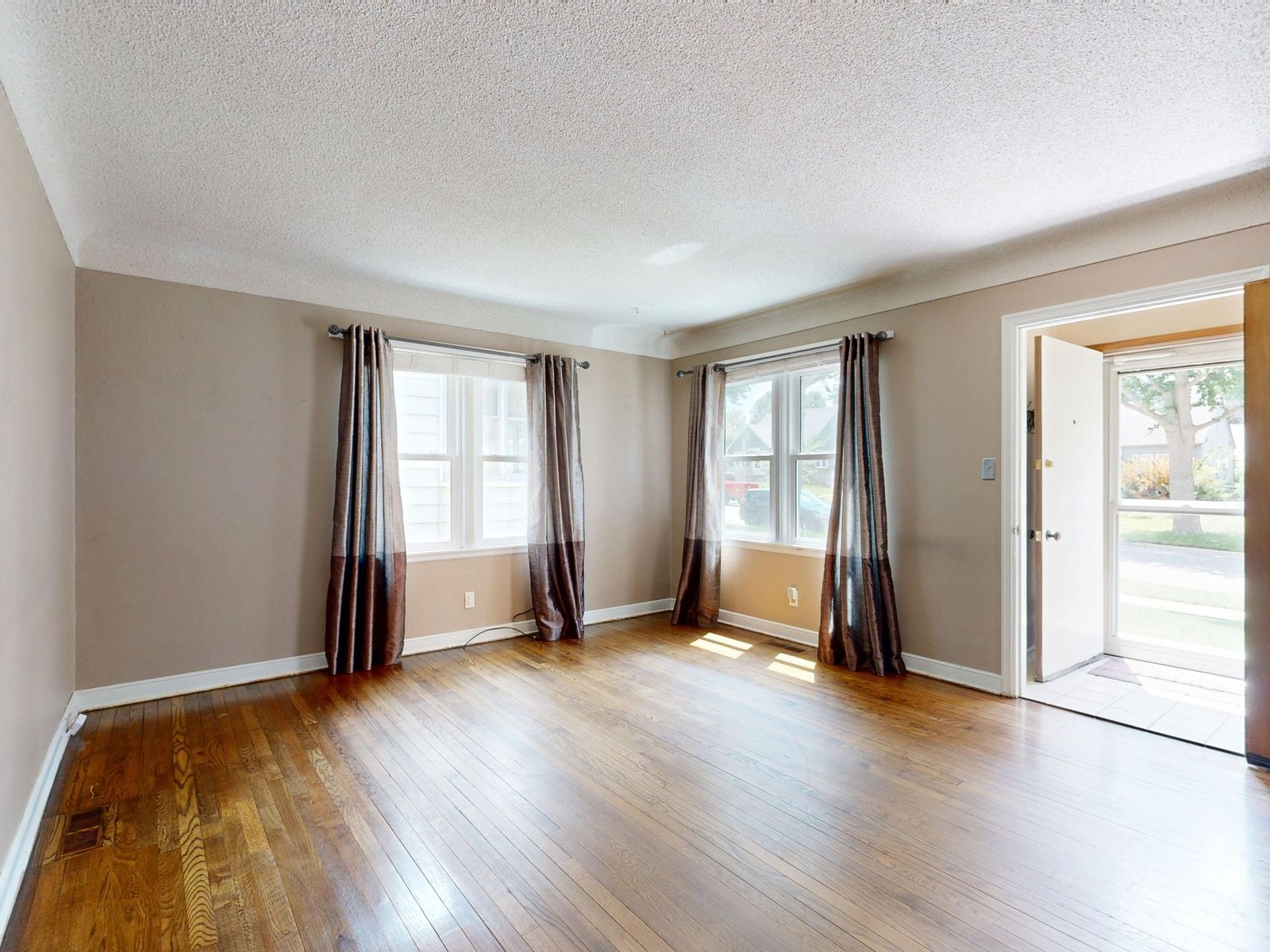
Why an unoccupied house goes damp
Damp in a vacant property is mostly a temperature problem. Without heating, the walls cool towards the outdoor temperature, and whatever moisture is already in the air condenses on the coldest surfaces first: north-facing walls, window reveals, the back of a wardrobe. The spare room guide covers the same effect on a smaller scale.
The air is the second half. Closed doors and cupboards create pockets that never mix with the rest of the house, and behind furniture on an external wall a surface can sit cold and damp for weeks. A house also keeps adding moisture without people in it:
- Ground moisture rising through a solid floor or into a cellar.
- A slow leak from a pipe, a loose tile or a blocked gutter, which nobody is there to notice.
- Stored items: damp towels, laundry that was not quite dry, wet boots, cardboard boxes.
- Standing water: plant saucers, a shower tray with a puddle, the drum of a washing machine.
Before you leave: seven steps
Bury Council’s holiday checklist is short and sensible: air the home, check the extractor fans, let the heating run on auto, and make sure laundry is dry first. Here is that, plus what I would add for a house that will be empty for weeks rather than days.
- Air it for 10 to 15 minutes with windows and internal doors open, as Bury suggests, so you are not locking stale, humid air in.
- Dry everything wet. Finish the laundry, wipe the shower tray, empty plant saucers and put damp coats and boots somewhere they will dry.
- Empty the fridge-freezer, switch it off, defrost it and prop the door open. A shut, empty fridge becomes a sealed damp box. A rolled towel in the door does the job. (If you are keeping it running, see the FAQ.)
- Open internal doors and wardrobes, except fire doors, which stay closed as designed.
- Move furniture 5 to 10 cm (2 to 4 in) off external walls. That is my own rule of thumb, not a published figure: the point is a gap for air to move through.
- Raise stored boxes off the floor. The reasoning in the storage unit guide applies just as well to a spare room or garage.
- Set the heating to run on auto at a low temperature, with the radiator valves turned down rather than off.

What temperature to leave the heating at
There is no single official figure, and I would be suspicious of anyone who quotes one confidently. Bury Council says to let the heating run on auto so cold spots do not form, but gives no number. British Damp Proofing, a damp specialist rather than a council, says that “even just leaving it at 12°C will be enough to help prevent the build-up of moisture”, and suggests a programmable thermostat for cold spells.
I could not open an Energy Saving Trust or council page that gives its own figure for empty homes, so treat 12°C (about 54°F) as a sensible working number rather than a rule. Two caveats are mine:
- It is a floor. A cold house with solid walls and a known damp problem will do better a few degrees higher.
- Your insurer may set its own minimum for an unoccupied property, and it may be higher. Check the policy before relying on any of this.
Frost is a separate job. Heat that stops pipes freezing is not automatically enough to stop condensation. In summer, or for a few days away, you may need no heating at all, and the airflow steps matter more.
What to do while you are away
Someone needs to look in. Once a fortnight is a sensible rhythm for a house empty a month or more, but that is my judgement, not a standard. The visit is short:
- Open a couple of windows for 10 minutes if the weather is dry, then close and lock them.
- Look at ceilings and under sinks for new stains, and listen for a dripping tap or running cistern.
- Check the heating is still running and nobody has reset the thermostat.
- Smell the air. Musty means something is wet.
A data-logging hygrometer is worth owning for this. Leave it in the coldest room and it records temperature and humidity while you are gone, so on your return you can see whether the house stayed within the EPA’s advice of keeping indoor humidity below 60 percent, ideally 30 to 50 percent. A basic model that stores a week or two of readings is enough.
Should you leave a dehumidifier running? Mostly no. An unattended mains appliance in an empty house is a risk of its own, and in a cold house a compressor model ices up and stops. Sort out heat and airflow first.
What to do the day you get back
Do not walk in and shut everything. Open the windows, open every internal door and cupboard, and bring the heating up gradually over a day or two.
Then check in this order:
- Look for water first. A ceiling stain, a damp patch away from an external corner, a wet floor under the sink. A leak is a plumber’s job, not a dehumidifier’s.
- Check behind furniture and inside wardrobes, the places that never got air.
- Read the logger. Long stretches well above 60 percent mean something was wet.
- Clean small patches of mould only after the cause is fixed. EPA says that when the area is less than about 10 square feet (roughly 3 ft by 3 ft) you can usually handle it yourself. For how quickly it develops, see how long it takes mould to grow.
- Dry what you can lift. If humidity is still high after a week of heat and open doors, the humidity guide goes through the sources.
How to stop damp in an empty house: heat, open doors and a visitor
If I could do three things only, they would be the cheap ones: low steady heat, internal doors open, and a person who looks in. A hygrometer tells you whether it worked, a prop in the fridge door saves you a smell, and a dehumidifier is a last resort rather than a first. That is how to stop damp in an empty house without turning it into a project.
FAQ
Should I leave the heating on in an empty house?
Usually yes in winter, at a low steady setting rather than off. A damp specialist suggests 12°C is enough to help prevent moisture build-up, but check your insurer’s conditions, which may be stricter. In summer you may not need it.
How long can a house be left empty before damp sets in?
I cannot point to a published number. A week in mild weather is rarely a problem if you have aired the house and dried everything first. Damp becomes likely over several weeks of cold, closed-up conditions.
Is it better to leave windows open or shut in an empty house?
Shut and locked while you are away, which is also what insurers generally expect. Air the house before you leave and on return, and rely on open internal doors, trickle vents if you have them, and visits for fresh air.
Should I leave a fridge door open when the house is empty?
If you are emptying and switching it off, yes, prop it open so it dries and stays fresh. If you are keeping it running, leave it closed and check on each visit that it still works.
Will a dehumidifier stop damp in an empty house?
Not reliably. It does nothing about cold walls, a leak or ground moisture, and an unattended mains appliance carries its own risk. Heat, airflow and fixing the source come first.
How do I tell if an empty house has gone damp?
A musty smell, condensation on windows, black spots in corners, or flaking paint on external walls. A humidity logger in the coldest room gives you actual numbers.

