
Last Updated on October 24, 2026 by Umar Farooq
Why is paint peeling in the bathroom? Nearly always because moisture has got into or behind the paint film and pushed it off the wall, whether that is shower steam, a damp surface that was painted too soon, or a leak behind the plaster. The paint is the messenger. Repainting without finding out who sent it is how you end up doing the same job again next spring.
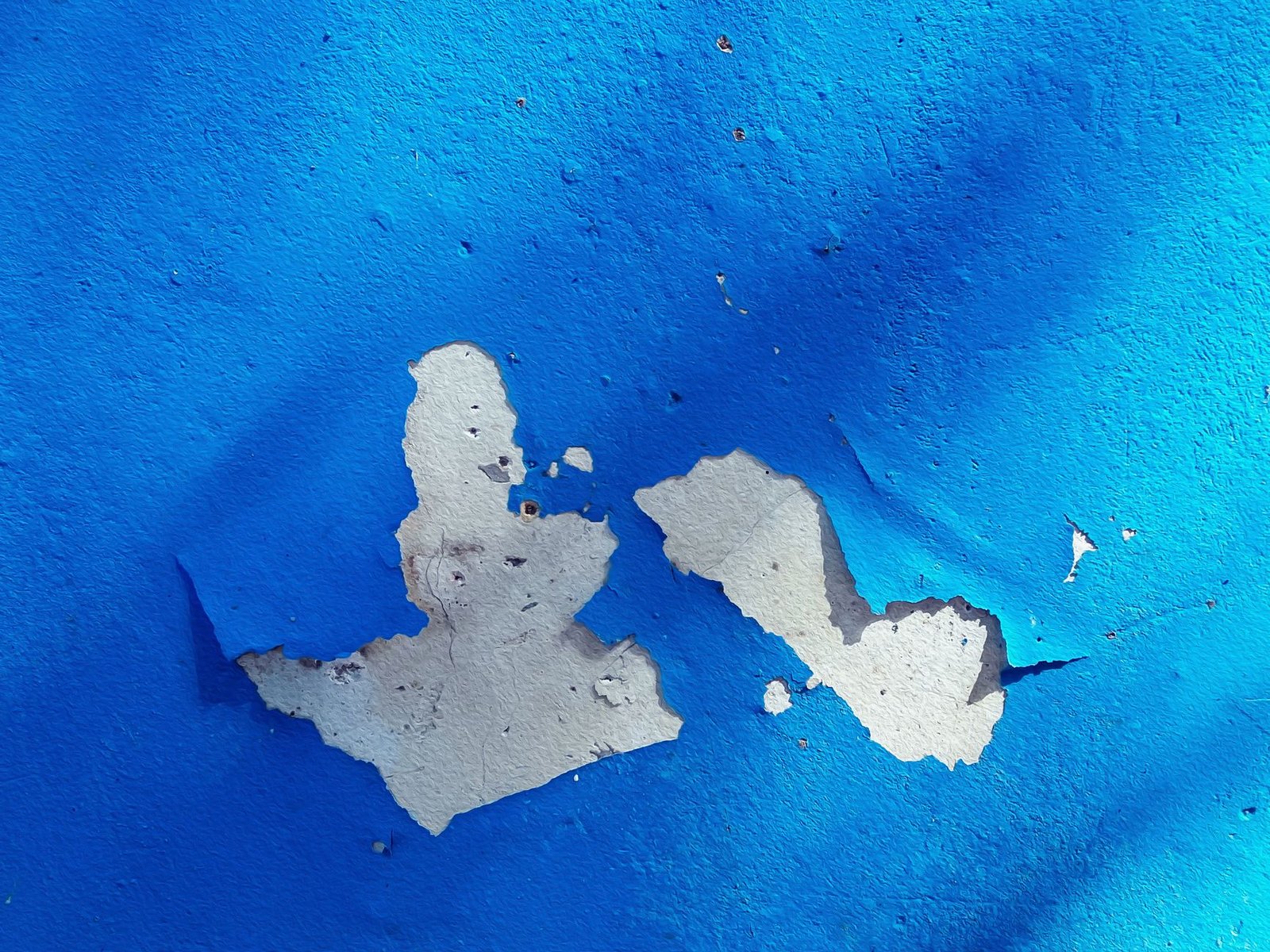
Why is paint peeling in the bathroom? Five causes, most likely first
Sherwin-Williams, a paint maker, describes the mechanism on its peeling-paint-from-moisture page: over time moisture gets through the film and pushes it away from the surface. It names showering as one of the everyday sources. Which route the water takes is what separates the five causes.
- Steam and condensation soaking the film. Every shower puts a lot of water vapour into a small room, and it settles on the cooler walls and ceiling. Paint that sits wet for 20 minutes, every day, slowly loses its grip. I would bet this is the cause in most bathrooms with peeling on the ceiling or on the wall beside the shower. The mechanism is the same one covered in bathroom ceiling condensation.
- Extraction that does not finish the job. A fan that stops with the light, a duct that goes nowhere, or no fan at all leaves the room damp for hours. See how long to run a bathroom extractor fan and why a bathroom stays damp all day.
- Painting over a damp, dusty or greasy surface. Paint cannot bond to soap film, body oils or a wall that is still holding water. This is the classic cause of peeling that appears within weeks of a fresh coat.
- A finish never meant for a wet room. Standard emulsion is fine in a bedroom. In a bathroom it can fail where a product designed for damp rooms might not. Layers painted over each other without a key will also let go in sheets.
- A leak behind the wall. A weeping pipe joint, a failed shower seal or a gap round the bath sends water in from behind. This one will not be fixed by a fan or by paint, and it is the cause you most need to rule in or out early.
Steam on the surface or water from behind? Five clues
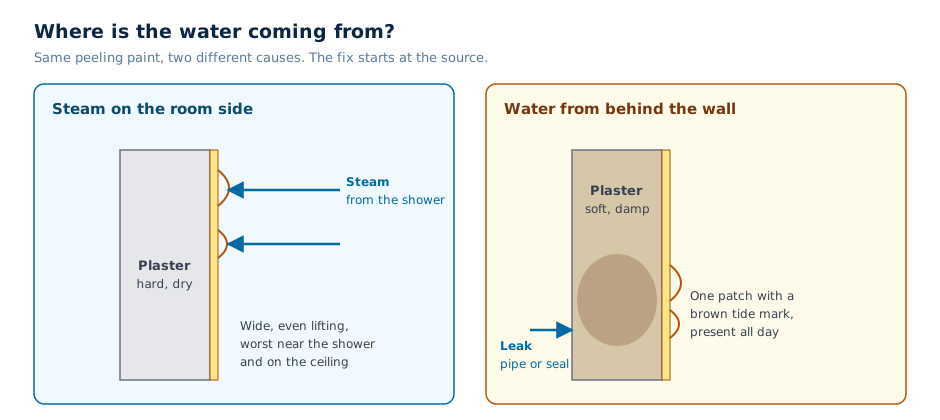
The diagram below is the whole idea. If water arrives on the room side, the plaster stays sound and the lifting is broad. If it arrives from behind, the damage is local and the wall itself is affected.
| Clue | Steam on the surface | Moisture from behind |
|---|---|---|
| Pattern | Wide, even blistering | One patch, often irregular |
| Location | Ceiling, shower wall, cold corners | Below or beside a pipe, bath, basin or shower tray |
| Timing | Worse after showers | Present at any time of day |
| Plaster | Hard when you press it | Soft, crumbly or powdery |
| Stain | Specks of mould, no ring | Brown tide mark with a defined edge |
These are rules of thumb, not a survey. Press the bare plaster with a thumbnail once the loose paint is off: if it dents or crumbles, the wall is wet and the fault is not the paint. A moisture meter helps, and how to use a damp meter explains how to read one without fooling yourself. If the marks look more like mould than lifting paint, is mould on a wall from a leak or condensation covers that decision.
I have not measured any of this in your bathroom, so treat the table as a way to ask better questions. Two or more clues in the right-hand column mean find the leak before you do anything else. Plumbers are cheaper than re-plastering.
Fix the water before you touch the paint
Sherwin-Williams’ own order is worth copying, and it runs against instinct: ventilation first, paint last. It says proper ventilation can fix most interior moisture problems, and that bathrooms with showers should have an exhaust fan. Only once that is sorted does it tell you to remove the peeling paint, clean and prime the exposed surface.
So the sequence is this.
- Find and stop any leak. If the clues point behind the wall, fix the pipe, seal or tray first and let the wall dry fully. Painting over a wet wall guarantees a repeat.
- Improve extraction. Run the fan during the shower and for a while after it. If the room still fogs for an hour, the fan or duct is the problem, not you. The EPA’s guidance for moisture and your home says condensation signals high humidity, and the answer is to lower humidity or increase airflow.
- Let it dry. Give the wall days, not hours, with the door open and the fan running. A damp meter reading against a dry wall elsewhere in the house is a better guide than the calendar.
- Then prepare and repaint.
My strong opinion here: if the peeling is wide and the plaster is sound, a better fan does more for the finish than a more expensive tin of paint. I cannot back that with a trial, only with the mechanism. The paint failed because it stayed wet, and the cure for staying wet is removing water vapour faster.
A dehumidifier can help in a bathroom with no outlet for a fan, but it is a back-up. It does nothing about the steam hitting the wall during the shower.
Scrape, clean, prime, repaint: what the manufacturer says
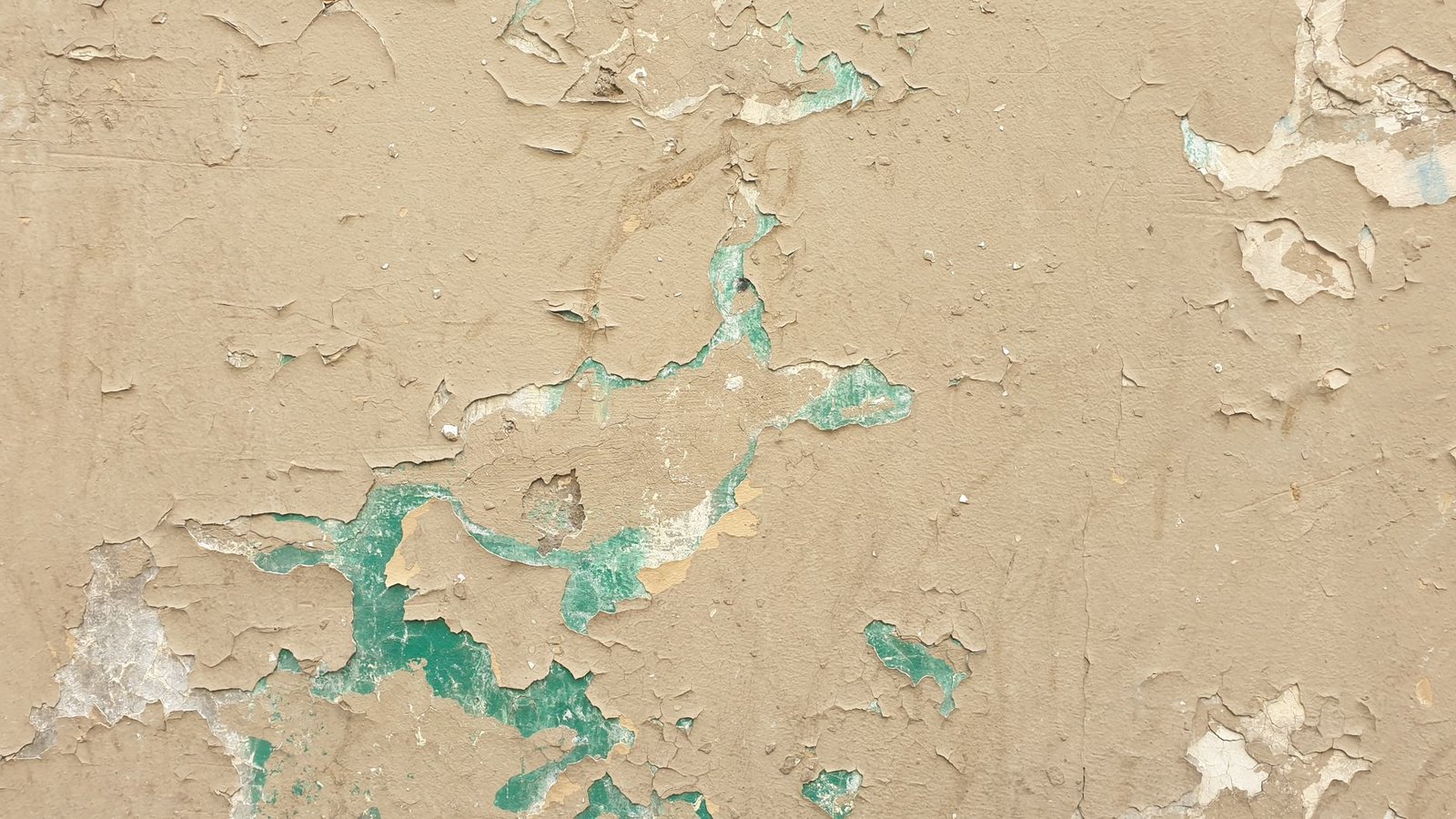
If your home is old, the paint may contain lead (the EPA flags US homes built before 1978). Do not dry-sand or scrape it until you have checked. The EPA says peeling or chipping lead-based paint is a hazard and that even small amounts of dust matter.
The EPA explains this on its page about sources of lead in the home, and it is a US source, so if you are elsewhere check your local guidance on older paint. If you cannot rule lead out, test before you disturb the paint.
Once the wall is dry and safe to work on, the steps follow the manufacturer’s page above.
- Remove everything loose. Take off the peeling paint right back to firm edges.
- Test the edges. Sherwin-Williams advises testing the coating in a 6 to 12 inch (15 to 30 cm) radius around the peeled area. If it lifts easily, keep going.
- Clean and prime. Wash off grease and dirt, let the wall dry, then prime the exposed surface.
- Seal the gaps. The same page says to seal openings, such as round fittings, with a waterproof sealant.
- Choose the topcoat from a data sheet. I am not going to pick a brand. Read the technical data sheet for the product you are considering, check that it is rated for bathrooms or humid rooms, and follow its recoat times. If it does not say, ask the manufacturer.
If you are wondering whether a special anti-mould paint changes any of this, it does not rescue a wet wall; see does anti-mould paint work for the full answer.
Peeling bathroom paint is a verdict on your extraction, not on the paint
That is the short version of why paint peels in a bathroom. The film gives way where water sits against it, and the water comes either from the room or from behind the wall. Work out which, stop it, dry the wall, then prepare and repaint. If the peeling comes back after all that, the first thing I would check is whether the fan runs long enough to clear the room.
FAQ
Why is paint peeling off my bathroom ceiling?
The ceiling is usually the coldest surface, so steam condenses on it first and soaks the paint. Wide, even blistering after showers points to that. A single stained patch points to a leak from above.
Can I just paint over peeling bathroom paint?
No. Paint over loose paint will lift with it. Remove what is flaking, check the surface is dry and sound, then clean and prime before repainting.
Does peeling paint mean there is damp in the wall?
Not always. Steam alone can lift paint over a dry wall. If the plaster behind is soft, powdery or stained with a tide mark, then the wall itself is wet and needs investigating.
Why is my bathroom paint bubbling?
A bubble is water trapped under the film, pushing it away from the surface. Wide small bubbles suggest steam or condensation. One large, fluid-filled blister near a fitting suggests a leak.
How long should I wait before repainting a bathroom wall?
There is no universal figure. Wait until a damp meter shows the wall in line with a dry wall in the house, and follow the paint’s data sheet for recoat and drying times.

