
Last Updated on October 24, 2026 by Umar Farooq
Is mold on walls from a leak or condensation? Mould that sits in corners and behind furniture on cold outside walls, in blotches that come and go with the weather, is usually condensation, while a patch that grows from one wet point, keeps its edge and stays damp in dry weather is usually a leak. Neither pattern is proof, but together they settle most arguments.
Scrubbing the same corner every winter while a drip feeds it is a very British hobby. The wall does not care what you assumed.
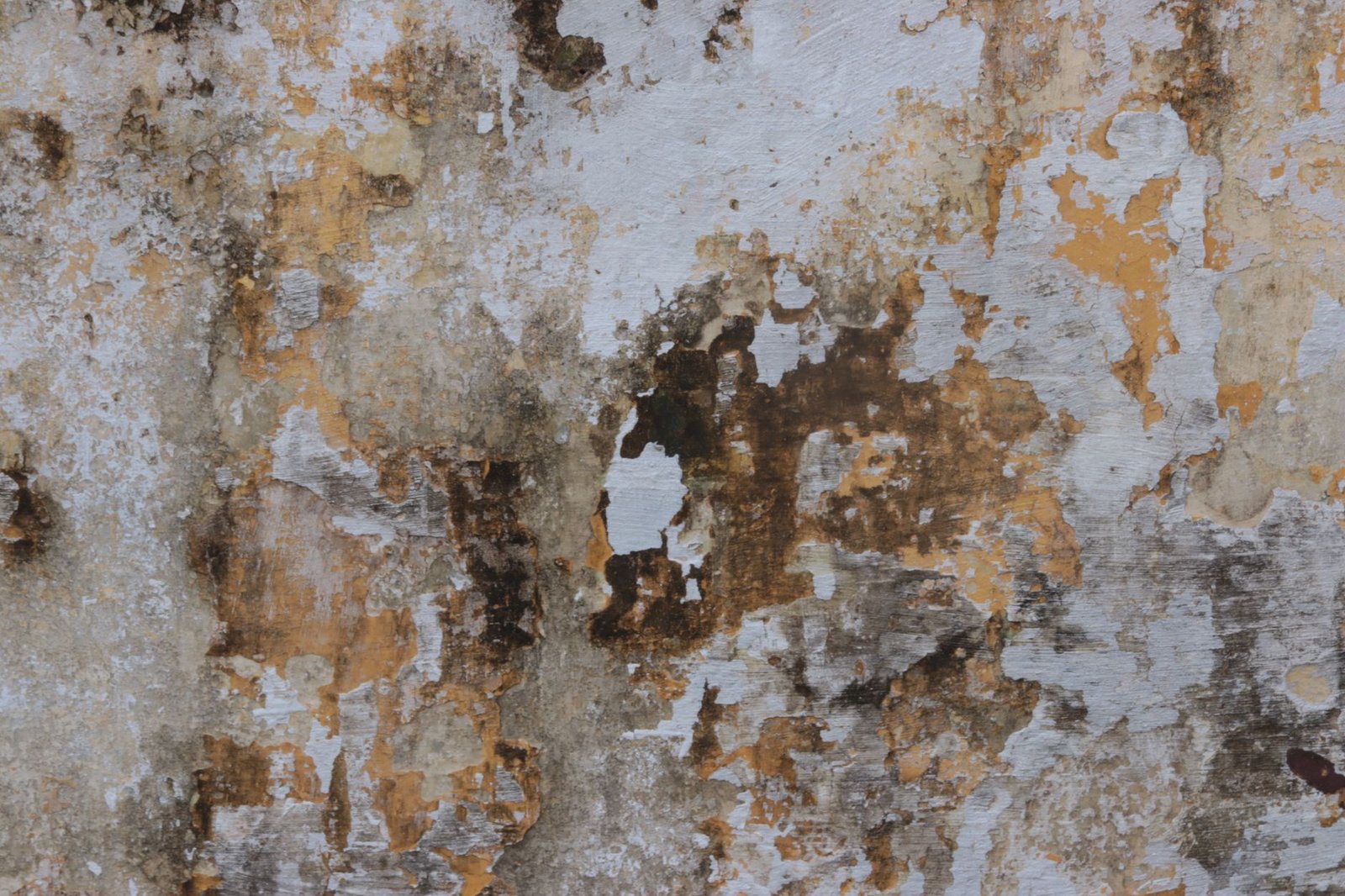
Is mold on walls from a leak or condensation? Start with where it sits
Condensation forms where a surface is colder than the air touching it and the air is barely moving. The UK government’s damp and mould guidance describes it as moisture generated inside the home that cools and condenses on colder parts of the building, and calls it the most common form of damp. So the mould follows the cold:
- upper corners, where two outside walls meet;
- behind wardrobes and beds pushed against an outside wall;
- around window reveals and along the top of north-facing walls.
A leak follows the water instead. The same guidance lists leaking waste and heating pipes, burst pipes and overflowing baths as sources, plus water entering from outside through defects in walls, roofs, windows or floors. In practice that gives you a patch around a pipe run, below a bathroom, under a roof valley, or beneath a window with a failed seal.
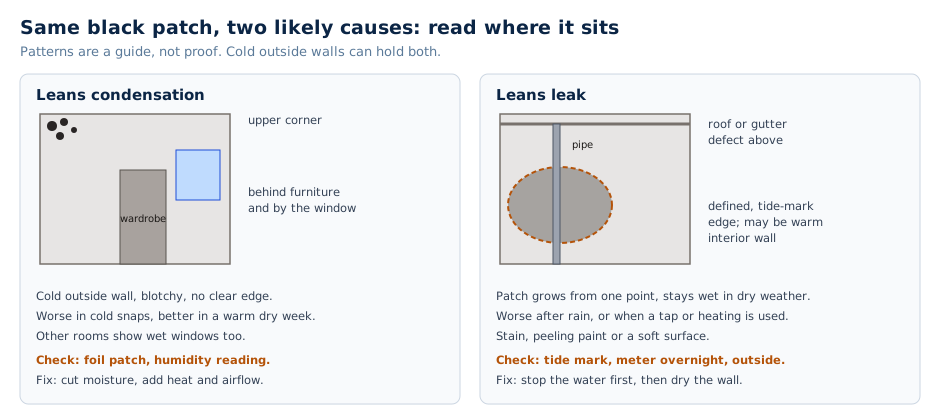
One honest caveat: an outside wall can carry both. A cold corner next to a leaking gutter is a real thing, so treat the sketch as a lean, not a ruling.
Does the mould follow the weather or ignore it?
This is the clue I trust most, because it costs nothing and cannot be faked by a pretty cleaning job.
- Worse in a cold snap, better in a warm dry week: points to condensation. The wall temperature moved, and the mould followed.
- Worse a day or two after heavy rain: points to water getting in from outside, such as a blocked gutter, cracked render or a window seal.
- Same in July as in January, and still damp after a dry fortnight: points to a leak, most often plumbing or heating pipes, or a source that has nothing to do with the weather.
- Worse after a shower, cooking or a washing day: points back to condensation, because the room air got wetter.
Keep a few dated photos of the patch with a ruler beside it. A week of notes beats a month of guessing. If the same patch keeps returning after you clean it, why mould keeps coming back covers the maintenance side.
Read the edges: tide marks, stains and soft plaster
Condensation mould tends to be speckled, with no clear boundary, because the wetness is thin and spread across the surface. Water from a leak is a bulk of liquid soaking into the material, so it leaves evidence of volume:
- a defined edge or tide mark where the wet area dried back, often brown or yellow rather than black;
- peeling, bubbling or stained paint that looks wet from behind rather than dewy on top;
- soft or crumbling plaster or plasterboard under a thumbnail press;
- a patch that is centred on a pipe, an appliance or something above it and grows outward from there.
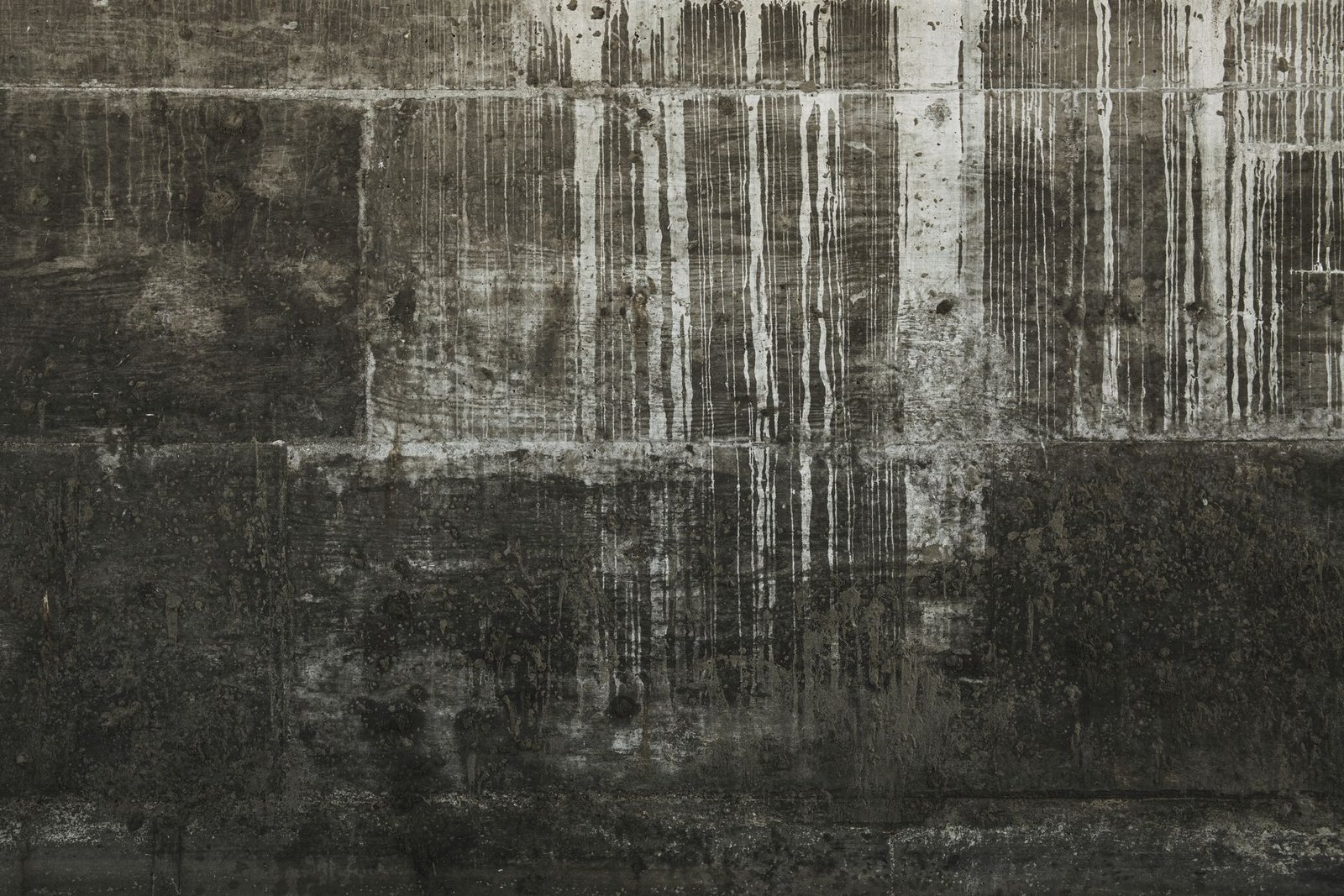
White, powdery crust next to the stain is a separate look-alike. Salts mean water has moved through masonry, so a crust beside the stain is another reason to suspect moisture from inside the wall rather than room air.
Run these checks in this order
Switch off the power at the consumer unit before touching a wall that is visibly wet near sockets, switches or light fittings. Do not drill or cut into a wall that may hold pipes or cables.
- Photograph and map the patch. Pencil its edge and compare in a week.
- Check the room, not the wall. Place a cheap hygrometer in the room. The EPA advises keeping indoor relative humidity below 60 percent, ideally between 30 and 50 percent. A reading that sits above that for days supports condensation.
- Do the foil patch test to see which side of the wall the water is on. I describe it once in condensation on walls and ceilings, so I will not repeat it here.
- Look outside and above. Check gutters, downpipes, render, window seals and the roof line above the stain. The gov.uk guidance lists damaged or blocked pipes, gutters and downpipes and broken window seals among the things to look for.
- Try an overnight water meter test. Turn off every tap and appliance, note the reading on your water meter, and read it again several hours later. Movement suggests a supply leak. It does not find a waste or heating-pipe leak, so a still meter proves less than a moving one. This is my own simple check, not a standard.
- Use a moisture meter as a pointer only. It can show a wall is wetter than its neighbours, but it cannot name the source.
If steps one to five leave you split, the rising, penetrating and condensation damp comparison covers the other two damp types in full, including ground-floor tide marks that are not a plumbing issue.
If it is condensation: dry the air, warm the wall, then clean
Cleaning first only gives the mould a fresh start. Deal with moisture and temperature, and the patch stops being replaced.
- Cut the moisture at its source: extractor fans on for showers and cooking, lids on pans, laundry dried outdoors or with a vented dryer rather than on radiators.
- Let air reach the wall: pull wardrobes a few centimetres (an inch or two) off outside walls.
- Keep a steady background heat rather than short blasts, so the wall does not stay at the bottom of the temperature range.
- Run a dehumidifier while you fix the cause if the room sits above that 60 percent line. It lowers the humidity that feeds the problem, but it is a support, not a repair. How to lower humidity in the house lists the habits that do most of the work.
Then clean the patch. The EPA says a mouldy area of less than about 10 square feet (about 1 square metre) is generally a job you can handle yourself, and how to get mould off walls walks through it.
If it is a leak: stop the water before you touch the mould
A dehumidifier cannot out-run a pipe. If the evidence points to a leak, the order is firm:
- Stop the supply if you can: isolate the pipe or appliance, or at least cap the source.
- Get the source repaired. That is a plumber, a gutter clear-out or a roof repair job. I would rather a reader hired someone than kept cleaning mould off a wall fed by a drip.
- Dry the structure. The EPA advises drying water-damaged areas and items within 24 to 48 hours. That is a deadline for wet materials, not a promise about when mould will start.
- Remove what will not dry, such as sodden plasterboard or insulation, then clean.
The EPA also lists inside walls around leaking or condensing pipes as a typical hiding place for mould, and says a musty smell without a visible source can mean mould is behind a surface. If you suspect that, it suggests getting an experienced professional rather than cutting into the wall yourself, because disturbing hidden growth can release a lot of spores.
The same gov.uk guidance adds that simply removing surface mould will not stop it reappearing, and suggests checking again about six weeks after repairs to confirm the problem has not returned.
The wall can have both, so fix the leak first
Many walls have a slow leak and condensation at the same time. The leak raises the moisture in the wall, which cools its surface further, and the cold wall then collects room humidity as well. Sort the leak first because it is the larger water source, then deal with the condensation. If the patch is still there after both are done, that is a sign one of them was not the cause you thought.
Wet in dry weather means leak, wet in cold weather means condensation
If the mould follows the weather and the cold corners, work on your air and your heating. If it follows a pipe, a roof line or a tide mark and refuses to dry in dry weather, stop the water first and clean afterwards. Either way, a wall that never gets a chance to dry is the real cause, and mould is only the notice. When the clues leave you stuck, an independent assessor of the damp is cheaper than a wrong repair.
FAQ
How can I tell if mold on a wall is from a leak or condensation?
Look at the position, the timing and the edge. Mould in cold corners or behind furniture that worsens in cold weather points to condensation. A patch centred on a pipe or defect that keeps its edge and stays damp in dry weather points to a leak.
Can condensation cause mould on walls?
Yes. Condensation keeps a cold wall surface damp for long periods, and mould can grow on that damp surface, especially behind furniture where air does not move. It is the most common form of damp, according to the UK government damp and mould guidance.
Does mould from a leak look different from condensation mould?
Often, yes. Leak damage tends to show a defined patch with a tide-mark edge, peeling or stained paint and soft plaster, while condensation mould is usually speckled with no clear boundary. It is a guide, not a certainty.
Will a dehumidifier fix mould caused by a leak?
No. It can help dry the room while you repair the leak, but it will not stop water coming through a wall. Fix the source first, then dry the wall.
Why does mould keep coming back after I clean it?
Because the moisture source was never stopped. The EPA says that if you clean the mould but not the water problem, the mould problem will come back.

