
Last Updated on October 25, 2026 by Umar Farooq
How to measure humidity without a hygrometer: you mostly can’t get a number, but you can tell “damp” from “not damp” with a glass of ice water, watching how windows and mirrors fog, and noticing how salt behaves. Anything that promises a percentage without an instrument is guessing.
I like these tricks, and I do not trust them past a shrug. They answer one question, “is this room probably too humid?”, and that is enough to decide whether buying a cheap meter is worth it.
Do the ice-water glass test properly
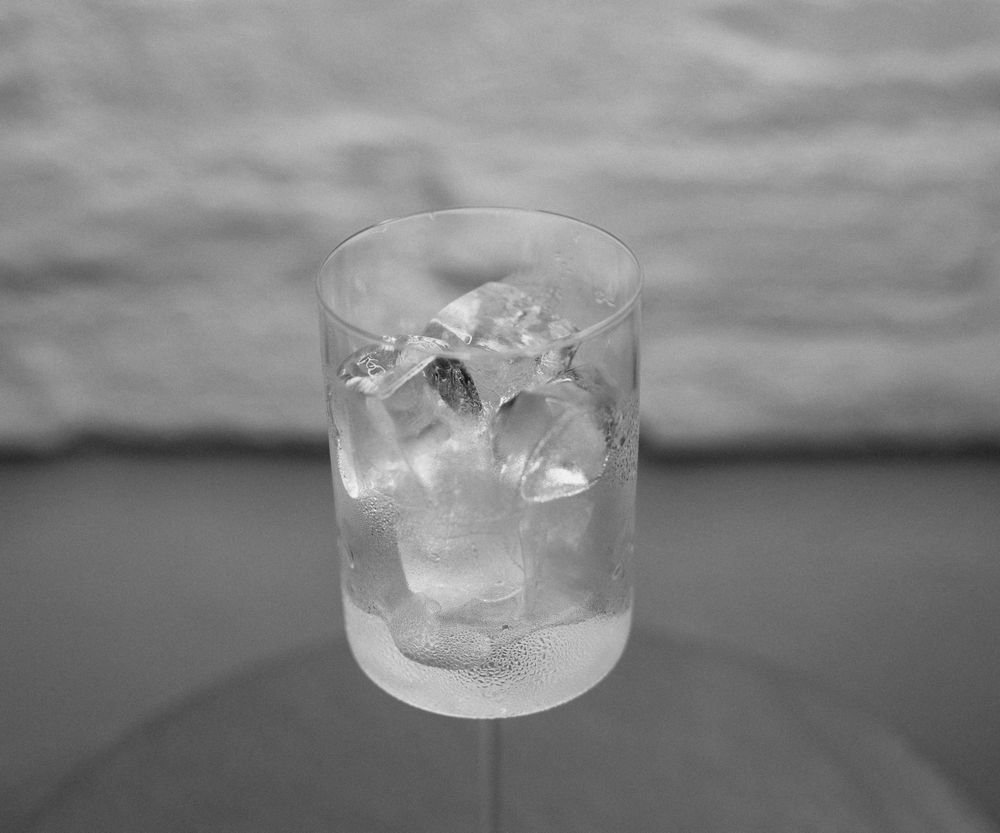
This is the best of the no-instrument methods because it rests on real physics. Air cooled below its dew point has to shed water, and it does so on the nearest cold surface.
- Fill a glass with water and plenty of ice.
- Stand it mid-room, away from the kettle, a window and any draught.
- Wait four or five minutes and look at the outside of the glass.
Fast, heavy beading means the room air is damp. A dry, clear glass after several minutes means it probably is not. A classroom dew-point experiment from Vernier uses the same idea in a more careful form: add ice slowly and record the water temperature at the instant condensation first forms, because that temperature is the dew point.
That is where the limit sits. The glass tells you the dew point only if you also read a thermometer, and even then dew point is not relative humidity. Without a thermometer it is a yes or no, and the answer depends on how cold your ice made the water and how long you waited. My own rule: if you cannot fog a glass of ice water in five minutes in a warm room, humidity is unlikely to be your problem.
Read the windows and mirrors you already own
You do not need to build anything for this one. The EPA lists condensation on windows, walls or pipes as a sign of high humidity, and the glass test is just a portable version of the same effect.
The cold surfaces in your house are a free set of probes:
- Bathroom mirror that stays fogged long after a shower points to damp air that is not leaving. The EPA page does not mention mirrors, so this is my inference from the same mechanism.
- Windows streaming on winter mornings show that the glass is below the dew point of the room air.
- Wet patches on a cold external wall behind furniture show the same thing in a place you would never think to look.
The catch is that these are threshold alarms. A window only fogs once the glass is cold enough, so a room can sit at an uncomfortable 62% on a mild day and show nothing. They also say little about the middle of the room. What the signs mean in practice is worth a read if you are using them to decide on a dehumidifier.
Check how salt behaves in your cupboard
Salt is a tidy folk indicator, because it is a real reference material. Sodium chloride starts absorbing water from the air at about 75% relative humidity. The conservation reference Saltwiki puts halite’s deliquescence humidity at about 75%, so it “tends to pick up moisture easily in most temperate climates”.
So a salt shaker that clumps, or damp salt that turns to a paste in an open dish, is a clue that the air got humid at some point. It does not say when, for how long, or whether it still is. Table salt often has anti-caking additives, which muddies it further, and sugar clumping is even less defined, because I could not find a trustworthy figure for the humidity that makes it do so.
The proper use of salt is the opposite way round. Sealed in a bag with a hygrometer, damp salt holds the air at about 75% and tells you whether the instrument is honest. That is the salt test for calibrating a hygrometer, and it is the one salt trick worth doing on purpose.
Pine cones, hair and “how the air feels” are folklore
Pine cone scales close in damp air and open in dry. That much is real biology, and the cone is a charming toy. It is not a gauge. I could not find a building-science or weather-service page that calibrates one, and temperature, sunlight and how old the cone is all affect it, so I treat it as decoration.
Hair is a different case. Hair does lengthen and shorten with humidity, and that is the principle behind the mechanical dial hygrometers described in how humidity is measured. But a single hair on your head is not one of those instruments, and “my hair goes frizzy” is a mood, not a reading.
Smell and feel belong in the same bucket. A musty odour, clammy sheets or soft cardboard are good reasons to investigate, and they correlate with damp, but your nose adapts within minutes of walking in. The EPA is plain that a humidity meter is an inexpensive tool, at roughly $10 to $50 in its guide, which is the honest answer to all of these.
How to measure humidity without a hygrometer: why none of these gives a number
Every method above is a threshold test. Something happens above a certain level (a glass beads, a mirror fogs, salt cakes) and nothing happens below it, so the best answer is “above or below something”. Three things stop them becoming measurements:
- They depend on temperature as well as moisture. Relative humidity is relative to how warm the air is, so the same water in the air reads differently at 6 am and 3 pm.
- Each has its own unknown trigger point. Your window’s temperature, your ice and your salt’s additives are all variables you cannot see.
- They are one spot, one moment. Nothing here logs a week.
The one no-hygrometer method that does produce a figure is the wet-bulb and dry-bulb pair of thermometers, but it needs two thermometers, moving air and a lookup table. That is the psychrometer, covered with a diagram here, and at that point you have built a worse hygrometer than the one in the shop.
A basic hygrometer is the cheap way to get a real number
If a rough “high or not” has convinced you there is a problem, stop guessing. A basic digital hygrometer costs about as much as a pizza, and the EPA says to keep indoor humidity below 60% and ideally between 30% and 50%. You then need somewhere sensible to put it and a week of readings, which tells you far more than any glass of ice.
Keep the salt test for after you buy it, and you will know the number is honest. Until then, the glass and the fogged mirror are a decent smoke alarm; they are not a thermometer, and the only way to know exactly how damp the room is, is to measure it.
FAQ
Can you measure humidity at home without a hygrometer?
Only roughly. An ice-water glass that beads quickly, fogged windows and caked salt all say the air is probably damp, but none yields a percentage. For a real figure you need a hygrometer, or a wet-bulb and dry-bulb thermometer pair and a conversion table.
How do you test humidity with a glass of water?
Fill a glass with ice and water, stand it mid-room away from draughts, and watch the outside for four or five minutes. Quick, heavy droplets mean damp air; a dry glass suggests drier air. It is a yes-or-no check, not a measurement.
Does a pine cone tell you the humidity?
It shows direction, not a level. Pine cone scales close in damp air and open in dry air, but temperature and sunlight also affect them and I found no calibrated source. Use it as a talking point, not a gauge.
Can you tell humidity by feel or smell?
Not reliably. Clammy air, a musty smell or condensation are good reasons to investigate, and your nose adapts quickly. A cheap hygrometer settles it.
Is a hygrometer worth buying?
Yes, if you are deciding whether to run a dehumidifier. The EPA describes meters as inexpensive, at roughly $10 to $50, and one tells you whether you are above 60% or inside the 30 to 50% target. Compare it once against the salt test.

