
Last Updated on October 24, 2026 by Umar Farooq
How to find cold spots on walls: compare the surface temperature of each suspect patch with a plain stretch of the same wall, using the back of your hand or an infrared thermometer, on a cold morning before the heating has caught up. The patch that reads clearly colder than its neighbours is where condensation, and then mould, will turn up first.
You do not need a thermal camera or a surveyor. You need ten minutes, a cold day and the willingness to stroke your own walls.
Why the cold patch matters more than the damp patch
Condensation forms on a surface that is colder than the dew point of the air touching it. RICS puts it as “any cold surface that is at or below the dew point temperature of the air in the room”, and says it shows up on the coldest surfaces first, including external walls and ceilings close to them.
So a wall does not have to be wet to be a problem. A wet patch is the late sign and the cold patch is the early one. For how dew point works, see the rainy-day humidity guide; I will not redo the sums here.
Five checks, from free to fiddly
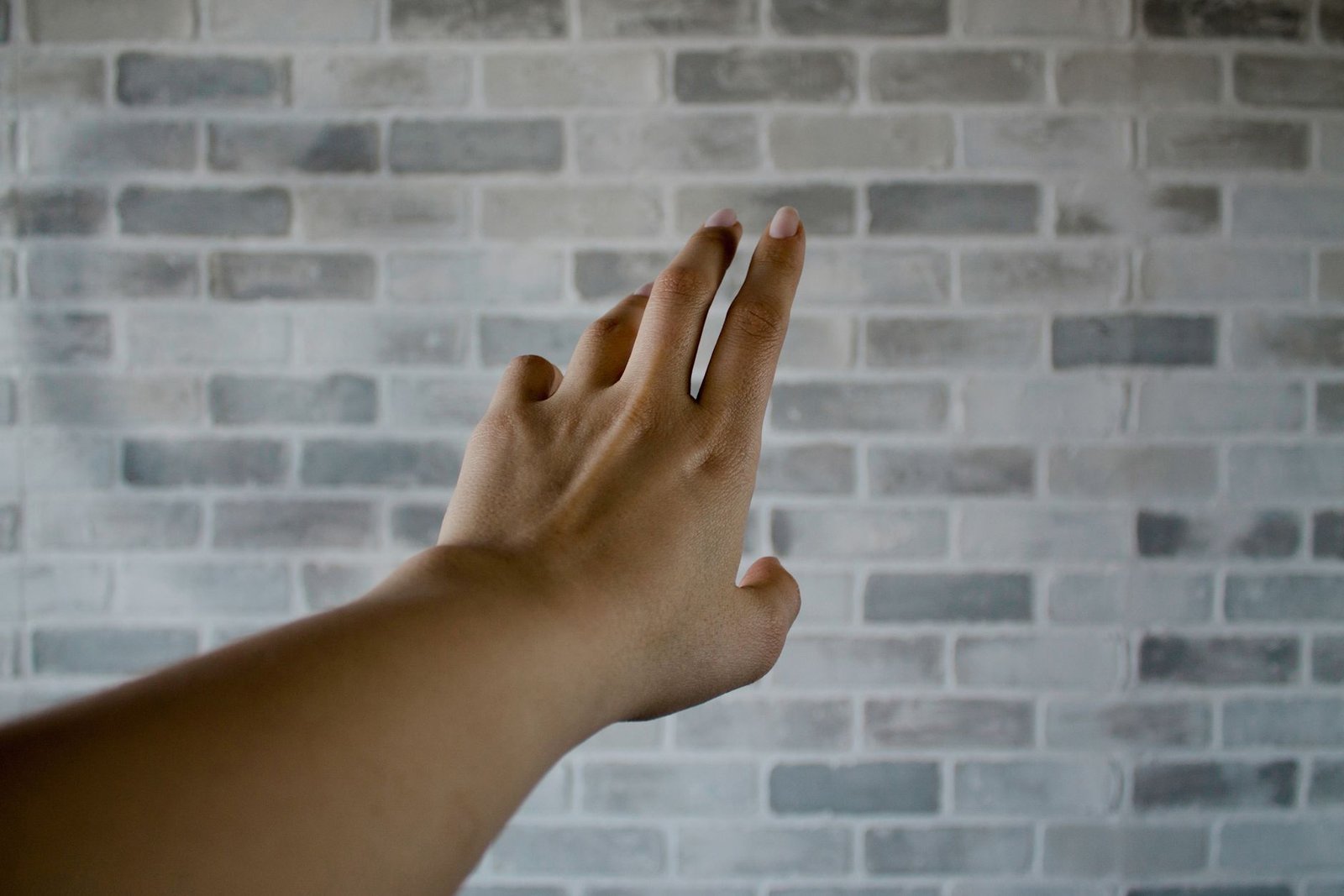
- The hand test. Press the back of your hand (more sensitive than the palm) flat on the wall, then on a plain patch a metre away. You are looking for a difference, not a number.
- An infrared thermometer, used as a comparer. Point it at the baseline wall first, write the reading down, then aim at each suspect spot. Cheap, quick and good at spotting a difference your hand cannot.
- The pattern of where mould shows. Speckling that repeats in the same corner or along the same strip tells you where the cold is, even if your hand cannot feel it.
- A cold early morning. Check when the house has had all night to cool and the heating is only just on. That is when the gap between warm room air and cold wall surface is widest.
- Surface temperature against the room’s dew point. A spot at or below the room air’s dew point will collect water. The section after next shows how to use it.
I rate the infrared thermometer above the hand, but only if you treat it as a comparer. Its absolute number is the least trustworthy thing it produces, as the next section explains, while the difference between two spots on the same painted wall is far more reliable. That is my own judgement, not a published rule, and I have not seen an official temperature gap that counts as “cold”.
Where to scan: the places heat leaves first

Start on an outside-facing wall and read a plain, mid-height patch as your baseline. Then work through these:
- Corners. Two outside surfaces meet, and furniture stops the air moving. They go first.
- Where the wall meets the ceiling. RICS lists ceilings close to external walls as a place condensation turns up.
- Window reveals and the strip above the window. The window opening is where the wall is thinnest and the glass is nearby. A lintel over it may conduct heat differently from the brickwork around it, though that is my reasoning rather than something I have measured.
- Behind wardrobes and beds. Still air against a cold wall is the worst combination. Pull the piece out 5 cm or so and scan the hidden wall, or read my notes on mould behind furniture.
- North-facing and other external walls. They stay coldest, so north-facing wall condensation is often a whole-wall cold spot rather than a patch.
Internal walls with a warm room on each side rarely matter here.
What a cheap infrared thermometer cannot tell you
An infrared thermometer reads the infrared energy a surface gives off and assumes how efficiently it gives it off. That assumption is emissivity, and it is where cheap gear goes wrong.
Fluke explains that shiny materials such as polished metal have low emissivity, which can make the thermometer under-report the real temperature, while paint, wood and plastic fall under high emissivity. Matt-painted plaster is on the friendly side of that line. Gloss tiles, foil-backed board and a metal window frame are not, so a reading from them can be wrong without the display warning you. Fluke’s workaround is to put a piece of non-reflective tape or flat paint on the surface and measure that instead.
Two more habits help:
- Get close. Fluke says the area you are measuring should be no larger than your target, and gives 12:1 as an example, where the thermometer reads a 1-inch spot from 12 inches away (about 2.5 cm from 30 cm). Check your own model’s ratio, because a narrow strip like a window reveal needs you very near.
A thermal camera shows the whole wall at once, but that is a survey job. For most households the hand, a basic thermometer and some patience will do.
Read the result against the room’s dew point
You have a baseline and a suspect spot. Now bring in the air.
Take the room’s temperature and humidity with a hygrometer (not a damp meter, which is a different tool for a different job). Read the dew point off the device, or look it up for those two numbers. If the cold spot’s surface temperature is at or below it, water will form there. If it is only a little above, a shower may push it over.
Repeat the scan on a second cold morning. One reading is a clue, two in the same place is a finding.
What to do with a cold spot once you find it
A cold spot is a symptom. The cure depends on the cause, and you can narrow it down yourself.
- Furniture in the way. Move it 5-10 cm off the wall and let air circulate.
- Cold all day, every day. Probably the wall: thin or missing insulation, or a section that conducts heat more easily. That calls for an insulation survey, not a dehumidifier.
- Cold only in the morning. Likely condensation. Hold the room warmer and steadier, ventilate after showers and cooking, and keep humidity down. I cover the whole routine in condensation on walls and ceilings.
If you find black growth, fix the water first and avoid disturbing it. The EPA says patches under about 10 square feet (roughly 3 ft by 3 ft) can often be cleaned by the householder, and that larger areas call for a professional. Use eye and breathing protection if you do clean.
The EPA also advises keeping indoor humidity below 60 percent, ideally 30 to 50 percent. In my view a house with known cold spots should aim for the lower end of that range, because the cold patch is the one that decides when water appears.
A cold spot you have found is already half fixed
Learning how to find cold spots on walls takes one cold morning and a baseline. Feel first, confirm with an infrared thermometer, and treat its number as a comparison, not a verdict. Then fix the reason the spot is cold or, failing that, keep the air dry enough that it never meets the dew point.
FAQ
How to find cold spots on walls without a thermal camera?
Press the back of your hand to the wall and compare each suspect patch with a plain area nearby, or use an infrared thermometer the same way. Do it on a cold morning, after the house has cooled overnight.
Can an infrared thermometer find cold spots on walls?
Yes, as a comparison tool. Read a baseline patch, then the suspect spot, on the same matt painted surface. It becomes unreliable on shiny finishes, where low emissivity makes it under-report, so put tape or flat paint on the spot first.
Where do cold spots usually appear on walls?
In corners, where walls meet the ceiling, around window reveals and above the window, behind wardrobes and beds, and on external and north-facing walls. Internal walls between two warm rooms rarely have them.
What causes cold spots on walls?
A part of the wall is losing heat faster than the rest, because insulation is thin or missing there or because the wall conducts heat more easily at that point. Furniture pushed against the wall makes it worse by trapping still, cold air.
Do cold spots mean I have damp?
Not necessarily. A cold spot is where condensation tends to form, which is surface damp from your own air. Rising or penetrating damp usually shows differently, so check the pattern before assuming the worst.
What temperature is a cold spot on a wall?
There is no single number. A cold spot is a surface at or below the dew point of the room’s air, so it depends on how warm and humid the room is. Compare against your baseline and your dew point.

