
Last Updated on October 26, 2026 by Umar Farooq
Does vinegar kill mold? Sometimes, on hard surfaces: in one lab test 4% vinegar stopped one common mould and had no effect on another, and it cannot reach mould growing inside porous material. So it is a reasonable cleaner for a small patch on tile and a poor one for a wall that keeps going black.
The internet’s favourite household mould remedy is already in your cupboard, which is the whole appeal. It’s also why so many people end up smelling like a chip shop while the mould sits there looking unbothered.
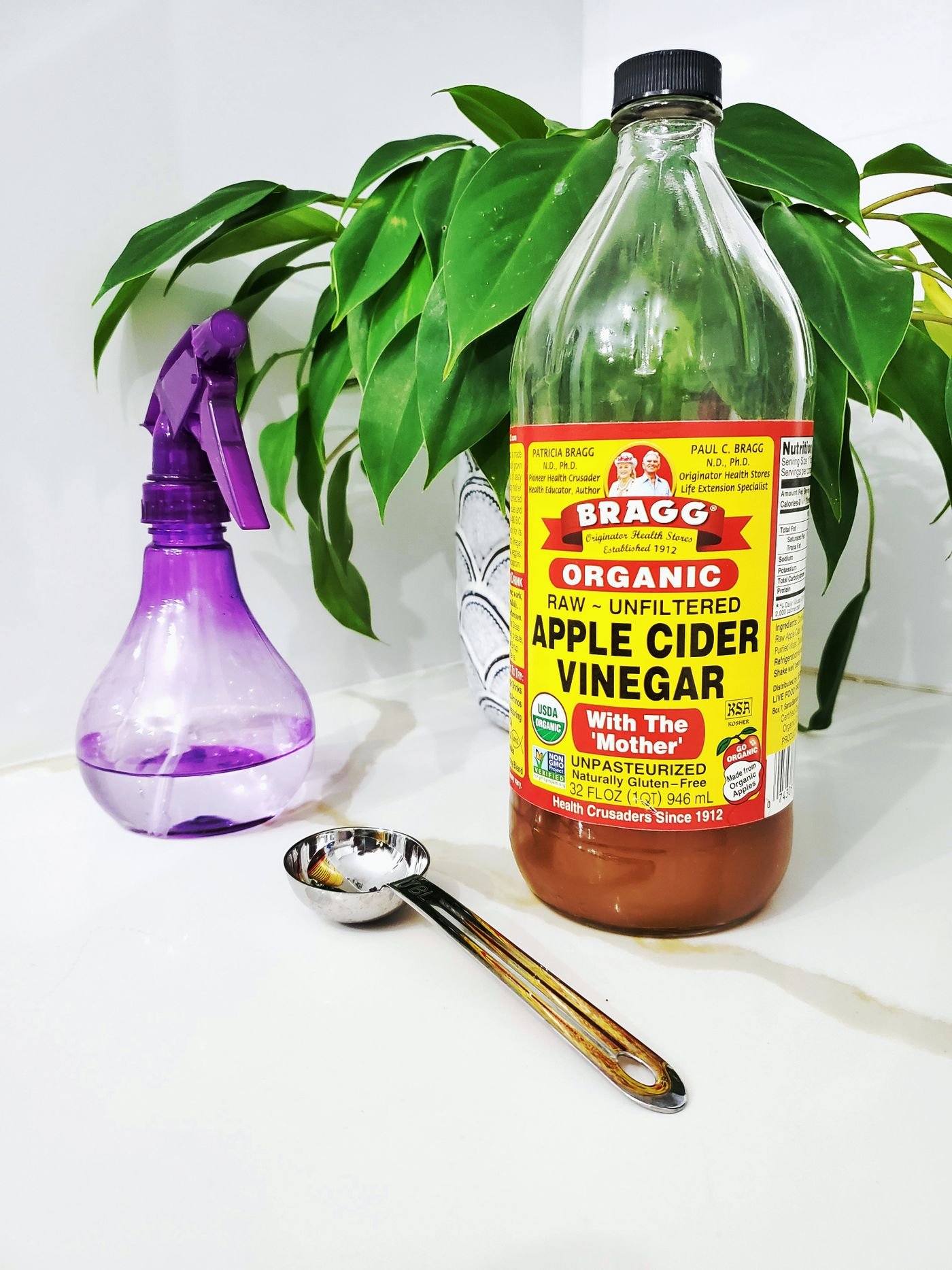
Does vinegar kill mold? What the one lab study I found showed
Most pages answering “does vinegar kill mold” just say yes. The primary evidence is thinner and more interesting. A 2015 paper in the International Journal of Environmental Research and Public Health, an evaluation of antifungal agents for indoor air environments, tested vinegar at 4.0-4.2% acetic acid against two moulds. It inhibited Penicillium chrysogenum and suppressed its sporulation, but did not inhibit Aspergillus fumigatus. The authors concluded vinegar may not be effective against the diverse fungi found indoors.
It’s a lab disc test, not a wall in a bathroom, so I wouldn’t stretch it far. But it is a fair warning: “vinegar kills mould” is not a single fact, because mould is not a single organism. You can’t see which species you have, so you can’t know which half of that result you’re in.
Limit one: you can’t see which mould you have
That is the practical consequence of the study above. A patch of black, green or grey tells you nothing reliable about species. A wipe that worked last month on one patch says little about the next.
Limit two: vinegar can’t get inside porous material
Vinegar is a liquid applied to a surface. On tile or glass, the mould sits on top and a wipe reaches it. On plasterboard, wood or grout, threads grow into the material, and the surface wetting stops short. The EPA’s position is that absorbent or porous materials may have to be thrown away if they become moldy, because the growth may be impossible to remove completely.
I covered the mechanism with diagrams in does alcohol kill mold, and it is the same for vinegar. Different liquid, same physics.
Limit three: it does nothing about the water
Oregon State University Extension, which does give a vinegar recipe, is careful about the order: once you have identified and fixed the source of water, you will want to remove the mold. Clean first and the patch returns when the surface gets wet again. Why mold keeps coming back goes through the usual culprits.
If you do use vinegar: a small-patch method
Never mix vinegar with bleach. Don’t combine any two cleaners, and ventilate the room. Wear gloves and eye protection, because vinegar is an acid. Keep it off natural stone and wood finishes, which it can etch or dull (that one is general caution, not a figure from a study).
Oregon State’s guidance is a spray of half water, half vinegar, with a face mask on, for areas under about 10 square feet. My version:
- Fix or at least identify the water source.
- Mask and gloves on, window open.
- Spray the hard surface with the half-and-half mix and leave it a short while.
- Scrub with a brush or cloth to physically lift the mould.
- Wipe with clean water and dry completely with a cloth or a fan.
The EPA’s own method is different and plainer: scrub mold off hard surfaces with detergent and water, and dry completely. That’s the one I’d choose first, as I argue below.
Does vinegar beat detergent? My opinion
I’d go with detergent and water for most jobs, and I’ll tell you why. Detergent plus scrubbing removes mould, and removal is what matters, because a dead patch still looks like a patch and a live one grows back. Vinegar adds a smell and a little acid, and the only experiment I can point to for it is the mixed one above. The same applies to bleach on mould, which has its own page.
If your patch is bigger than the EPA’s roughly 10 square feet (about 1 square metre), or the cause is a flood, none of this is a job for a spray bottle.
Keep the patch from returning: dry the surface, drop the humidity
Vinegar or not, a surface that stays damp regrows mould. The EPA advises indoor humidity below 60%, ideally 30-50%; what indoor humidity should be shows how to check yours, and how to get mould off walls covers the wall version of this job.
Vinegar cleans a small hard patch, and detergent plus dry air does it better
So, does vinegar kill mold? Sometimes, on some moulds, on surfaces it can reach. It does nothing about the damp, which is the real cause. Use it if you like it, but fix the water and dry the surface, or the patch will be back by the time the smell has gone.
FAQ
Does vinegar kill black mold?
I haven’t seen a trustworthy source showing vinegar reliably kills any particular colour of mould. Colour doesn’t identify species, and the lab test I cite found vinegar worked on one mould and not another. On a hard surface it can wipe growth away; it’s not a guaranteed kill.
Can I use white vinegar or apple cider vinegar?
The study tested vinegar at 4.0-4.2% acetic acid. Labels vary, so check yours rather than assuming. White vinegar is the usual choice because it doesn’t stain.
How long should vinegar sit on mould?
Sources vary and I couldn’t find a tested contact time. Oregon State gives no time at all. Scrubbing and drying matter more than waiting.
Can I mix vinegar and bleach to kill mould?
No. Mixing vinegar with bleach releases dangerous gas, and the EPA warns against mixing bleach with other cleaners. Use one product at a time and rinse between them.
Will vinegar stop mould coming back?
No, not by itself. Mould returns when the surface gets wet again, so fixing the leak or condensation is what prevents it.

