
Last Updated on October 24, 2026 by Umar Farooq
Does cooking cause damp? Not directly, but it is one of the biggest daily sources of the water vapour that condenses on cold windows, walls and cupboards, and left alone that condensation is what turns into mould. One UK council puts cooking and boiling a kettle at about 6 pints (roughly 3.4 litres) of moisture a day.
A pan on the boil is a very small, very efficient humidifier. The trick is to stop the water leaving the pan, or to see it off the premises before it finds a cold surface.

Does cooking cause damp or just condensation?
Strictly, cooking causes condensation, and condensation causes the damp patches and mould people notice. The distinction matters, because the fix is different from the one for a leak or rising damp. If you want the full sorting exercise, rising, penetrating and condensation damp are told apart there.
East Ayrshire Council’s tenant guidance lists cooking and boiling a kettle at 6 pints a day, against 9 for drying clothes and 2 for a bath or shower. That is a council’s rule-of-thumb figure for a household, not something I have measured in a kitchen, and a real evening of cooking will swing well either side of it. For the full budget of where a home’s water comes from, see how much moisture a household produces.
The point is not the exact number. It is that cooking is steady, daily and concentrated in one small room, so the kitchen is where the vapour peaks.
Why the steam ends up on windows and cupboard doors
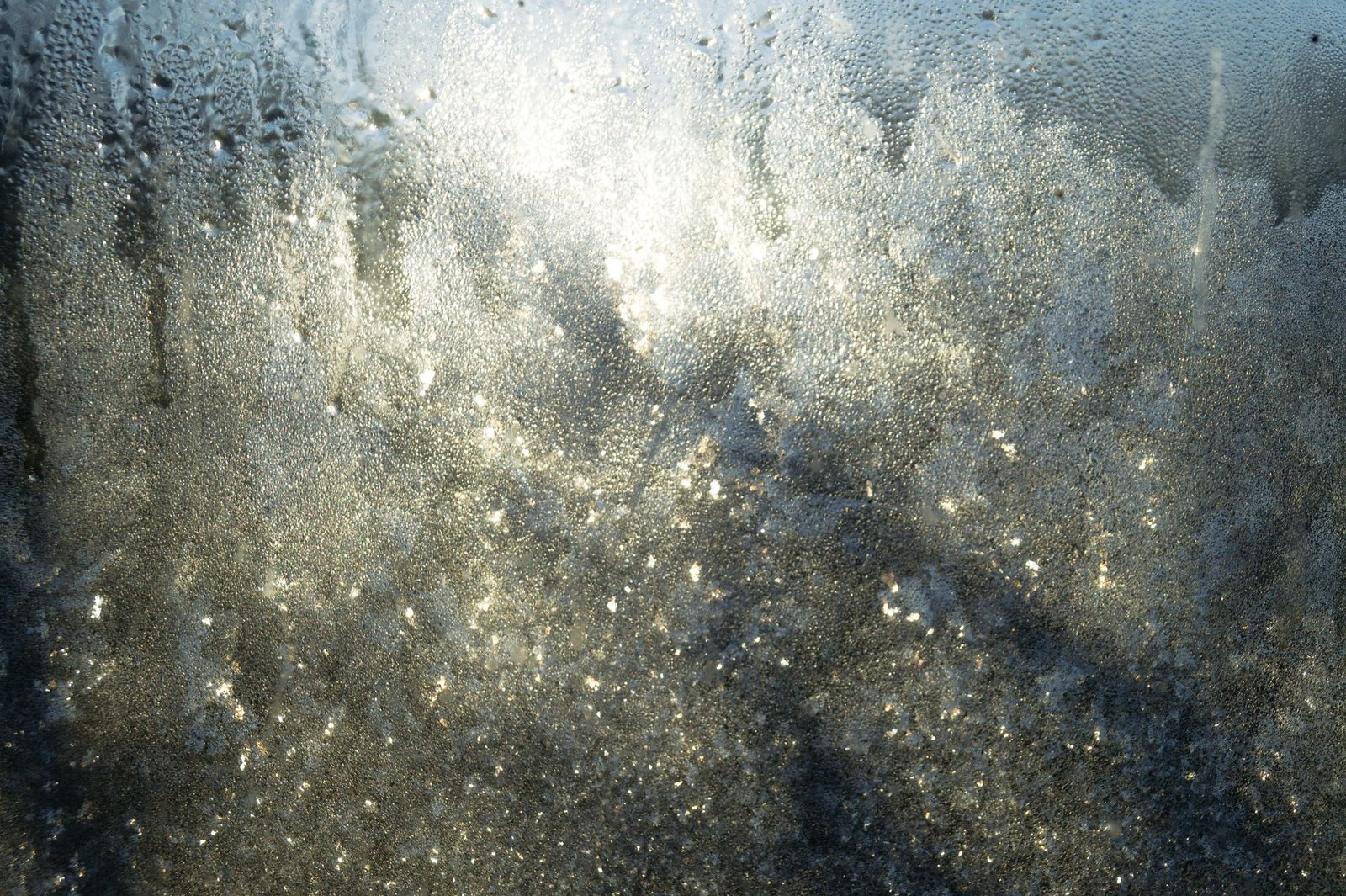
Warm air holds more water vapour than cold air. Steam from a pan mixes into the warm kitchen air, drifts, and meets a surface colder than the air around it: a single-glazed window, an external wall, the back of a cupboard on that wall, a metal tap. There the air is cooled, can no longer hold all its water, and the surplus turns to droplets.
That is why it is the window that streams first, and why the wall behind a cooker or the corners of upper cupboards darken later. Steam also travels. Leave the kitchen door open and the same vapour reaches the stairs and the bedroom windows, which is where condensation on windows often turns up, two rooms from the cause.
Gas hob or electric: does it change the damp?
GOV.UK’s guidance for housing providers says gas cooking needs particularly good ventilation and that kitchen ventilation should be powerful enough to remove cooking moisture. It does not give a figure for how much extra moisture a gas flame adds, and I have not found a measured one I would trust, so I will not invent one.
My practical reading: whichever hob you have, most of the water comes from the food and the pan, so lids and extraction matter more than the fuel. If you cook on gas, treat the hood or fan as non-optional.
Lids, simmering, fans, doors and windows: the habits that work
Councils say remarkably similar things, and the advice holds up. In order of effort:
- Lid on, heat down. East Ayrshire’s advice is to use lids on pans and turn the heat down once the contents are boiling. A lid keeps the steam in the pan.
- Boil less. Fill the kettle for what you need. Steam from a kettle counts too, as the 6 pint figure includes it.
- Run the extractor while you cook, and for a while after. GOV.UK suggests fans that keep running after you switch them off; with a manual switch, leave it on until the hob is cold and the glass is clear.
- Shut the kitchen door. Both sources above say to keep it closed while cooking so the steam does not spread.
- Open the window afterwards. East Ayrshire says to leave the kitchen window open slightly for 20 minutes after cooking; GOV.UK says to open it wide and close it once the air has changed.
I would put the lid first and the window last. A window opened during cooking can pull steam into the rest of the house, while one opened after the hob is off clears what is left. That ordering is my own judgement, not a quoted rule.
A recirculating hood is not a damp fix
A cooker hood only reduces moisture if its air ends up outside. The US Department of Energy’s Building America guidance says kitchen fans should vent outdoors, not into an attic or between floors, and that recirculating fans which filter air and return it to the room are not acceptable. That is American building guidance, but the physics does not change at the Atlantic: a carbon filter catches grease and smell, and water vapour passes straight through it.
So if your hood has no pipe to an outside wall or roof, treat it as a grease filter, and lean harder on lids, the door and the window. The duct and the hood are covered step by step in how to reduce humidity in a kitchen.
Kitchen already damp? Work out what you are looking at
Before buying anything, check the pattern.
- Damp or mouldy only on the cold wall behind units, on the window frame, or along the top of the cupboards, and worse after cooking: that is condensation. Wipe it, ventilate better, and keep the room warm enough.
- A tidemark, a stain below the sink or behind the dishwasher, a patch that does not change with cooking: that points to a leak or a penetrating-damp problem. No extra ventilation will fix a dripping trap.
For condensation mould, wipe it off, fix the moisture source and dry the area, in that order.
A dehumidifier is the last resort rather than the first, useful when you cannot ventilate or the weather is humid. What size dehumidifier do I need explains capacity, and for a kitchen a small unit is usually enough. It treats the damp air after the steam is made, so it will not stop the steam being made.
Cooking makes the steam, and damp only follows if the steam stays
So, does cooking cause damp? It supplies the water, and your ventilation decides whether it becomes damp. Lids on, heat down, a fan that really goes outside, the door shut, and a window opened after rather than during, will settle most kitchens without spending anything. If the problem is still there after that, look for the leak.
FAQ
Can cooking cause mould?
Indirectly. Cooking adds water vapour, and if that condenses repeatedly on a cold wall or window frame and is never dried, mould can follow. Fix the ventilation, wipe the water off promptly, and check there is no leak behind the units.
How much moisture does cooking produce?
One UK council lists cooking and boiling a kettle at about 6 pints a day for a household. Treat it as an average: a stew on the hob for hours will add far more than a sandwich.
Is it better to open a window or use the extractor when cooking?
Use the extractor if it vents outside, and keep the door shut. Then open the window for around 20 minutes once you have finished. If your hood only recirculates, the window and door matter more.
Does boiling a kettle cause condensation?
Yes, a little each time, which is why councils count it with cooking. It is a small steam source, but many times a day, and it is easy to reduce by boiling only what you need.
How long should I run the extractor fan after cooking?
There is no fixed rule I can verify. Run it until the steam has gone and the window glass is clear, and use the kitchen door being closed as part of the same plan.

