
Last Updated on October 24, 2026 by Umar Farooq
Does a wood burner reduce damp? It can reduce condensation and humidity in the room it heats, but only while it is burning and only with dry logs; it does nothing for a wet wall. The heat lowers the room’s relative humidity and the flue carries air up and out, so the stove behaves a bit like a very warm extractor fan.
I have no objection to a stove as a damp-fighting tool. My objection is to the sentence “we’ve got a wood burner, so we can’t have damp”, which is usually said a fortnight before someone finds black mould behind the wardrobe in the back bedroom.

Two ways a stove dries a room
Heat. Warm air can hold more water vapour than cold air, so heating a room lowers its relative humidity even if the amount of water in the air stays the same. Warmer walls and glass also mean less of that vapour turns to liquid when it meets them. That is the same mechanism behind steady heating in general, which I cover in low constant heating and condensation.
Extraction. A stove burns air as well as logs. That air goes up the flue, taking its water vapour with it, and the room draws replacement air from outside through vents, gaps and the odd badly fitted window. Outside air in winter is colder and holds less water, so once it is warmed it is drier than the air that left. Village and Cottage, a stove retailer, describes the same effect. Treat that as a retailer’s explanation rather than a measurement: I have not found a published figure for how much moisture a typical stove removes, so I will not give you one.
Does a wood burner reduce damp in the whole house?
Not reliably. It reduces damp in the room it sits in, and in open-door rooms nearby. Beyond that, it depends on whether warm air can circulate.
A stove that heats a living room to 22°C / 72°F while the bedrooms sit at 12°C / 54°F can make the bedrooms worse. Warm, moist living-room air drifts into the cold rooms and condenses on their coldest surfaces: window glass, the wall behind a wardrobe, the corner of an outside wall. If that pattern sounds familiar, why a house gets so humid in winter explains where the moisture comes from in the first place.
The stove also only works for the hours it is lit. Condensation does not take the evening off. If the fire is out by 11pm, the room cools overnight and the window glass is wet again by morning.
Wet logs make the stove part of the problem
This is my one firm opinion on the subject: a stove burning unseasoned wood is not a damp fix, it is a damp source with a chimney. Wood stores water, and a log that has not dried out releases that water as it burns. Wet fuel also burns cooler, so more of that steam can condense in the flue instead of leaving it.
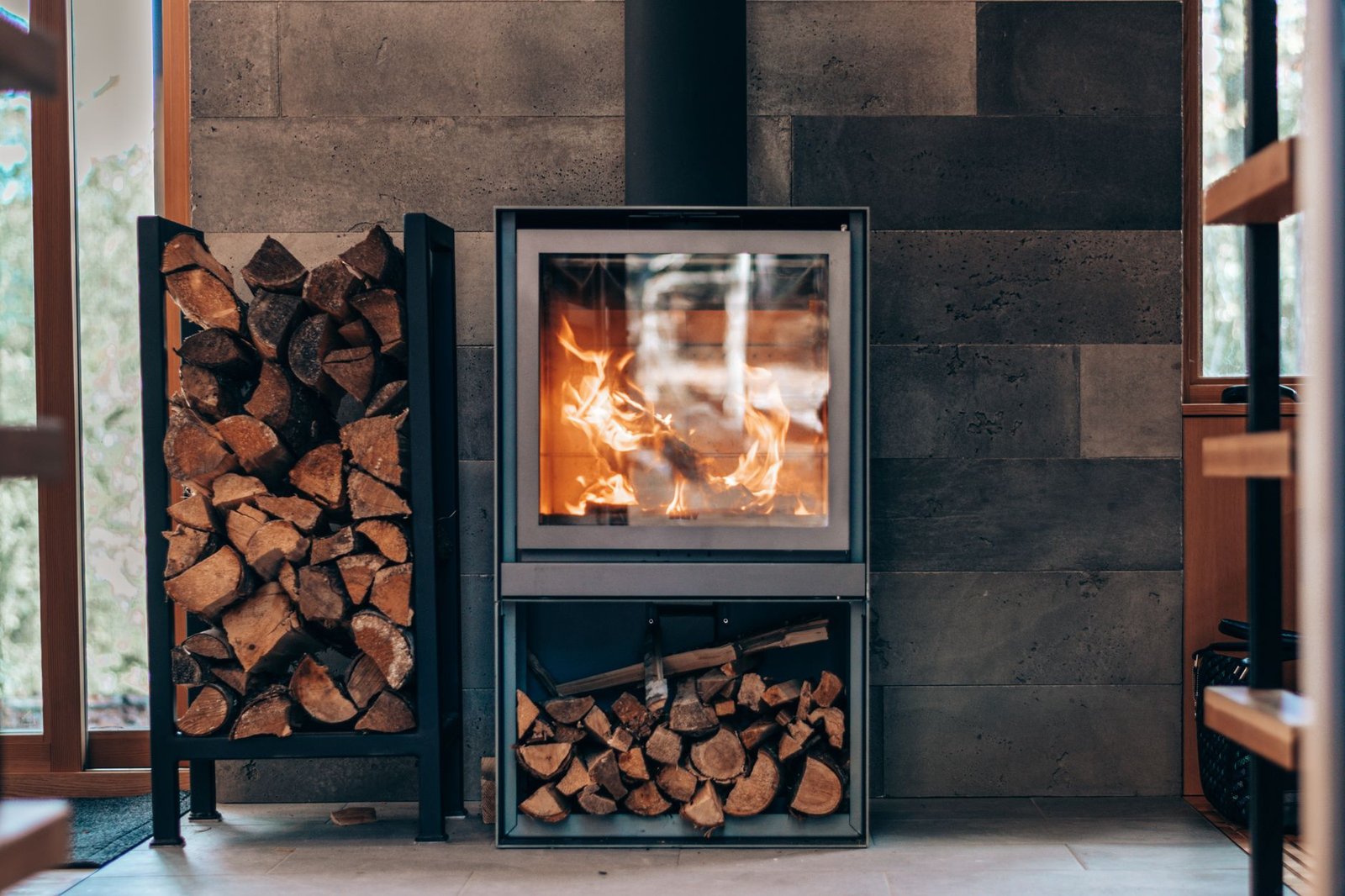
The standard in UK guidance is 20% moisture content or less. Oxford City Council says plainly that you should not burn wood until it has a moisture content of 20% or less, and that wet logs should be stored in a dry area for at least two years before burning. It suggests a moisture meter to check, and the “Ready to Burn” logo on wood you buy.
- Check, don’t guess. A cheap moisture meter, pushed into a freshly split face, tells you more than the colour of the bark.
- Keep the stack dry. Raised off the ground, roof on, sides open to wind.
- Do not dry wet logs next to the stove. You are putting the water into your own living room.
Wet logs also mean more smoke and more tar in the chimney. For that and the air quality side, use the council page rather than me.
Five things a stove will not do
- Fix rising or penetrating damp. A stove warms the wall surface for a few hours. The water still arrives from the ground, a leaking gutter or a cracked render. Telling condensation, rising and penetrating damp apart is the first step, and the fix follows the cause.
- Dry other floors. The heat stays mostly where the stove is.
- Work when it is out. No fire, no heat, no draw up the flue.
- Replace ventilation in the rest of the house. Bathrooms and kitchens still need a way to get steam outside.
- Cure mould that is already there. Keeping the room warm and drier can slow new growth. It will not remove what has settled on the plaster.
If you are wondering whether sealing up the house to save heat has made things worse, does draught proofing cause damp covers the trade-off. Stoves and airtightness do not mix without a planned air supply.
Room-sealed stoves and the ones that breathe room air
Not every stove ventilates. Many modern stoves can take their combustion air from outside through a dedicated pipe, which keeps heat in but removes the extraction effect. You still get warmth, so you still get a lower relative humidity and warmer surfaces, but you lose the free air change. The retailer page above makes the same distinction.
A stove that does take its air from the room is acting as a ventilation path, which is exactly why you should not block the vent that serves it when you draught-proof. One line on safety and nothing more from me: have the appliance installed and serviced by a registered installer and fit a carbon monoxide alarm, as HETAS advises, who also say an alarm is no substitute for servicing the appliance and sweeping the chimney.
Using a stove to fight damp without making it worse
- Burn dry logs at 20% moisture or below.
- Light it before the room has gone cold. The stove has to warm walls as well as air, and that takes longer than the flames suggest.
- Keep the vents that feed it open. Without a path for replacement air the flue has nothing to draw.
- Open internal doors if the room next door is the one with the problem.
- Do not dry washing on a stove airer as a habit. A loaded airer puts litres of water into the same air you are trying to dry. If the washing has to go somewhere, a dehumidifier handles the leftover.
- Measure. A cheap hygrometer shows whether the room is actually drier at the end of the evening, which is the only answer that matters.
FAQ
Do log burners help with damp?
They help with condensation and high humidity in the room they heat, while lit and with dry fuel. They do not help with damp that comes from the ground, a leak or a defective wall.
Does a wood burner dry out a room?
Yes, relative humidity drops as the room warms, and a stove that takes air from the room also pulls drier outside air in to replace what goes up the flue. Wet logs work against it, because the logs release their own water.
Can a wood burner cause condensation?
It can. Unseasoned wood adds water vapour and cools the fire, and a cold flue can condense moisture inside the chimney. Heating one room hard can also push warm, damp air into colder rooms where it condenses.
Is a stove better than radiators for damp?
Neither is a damp cure. A stove has the extra effect of drawing air out through the flue, but only when it is lit. Radiators on a steady low setting heat the whole house for longer, which suits condensation better.
Should I run a dehumidifier with a wood burner?
Often not in the same room at the same time. If the stove room is already dry, a dehumidifier has little to do. Put the machine where the damp is, which is usually a cold bedroom or the landing.
A wood burner reduces damp in one room, and only as long as it is burning
Used with dry logs and open vents, a stove makes a living room drier and warmer, and I would not argue with that. What it does not do is find the water source, dry a house it does not heat, or work when it is out. If there is damp in the walls or on the bedroom ceiling, find the cause first, and ventilate the rest of the house properly with a plan for how to ventilate a house to reduce moisture.
If your stove room feels wonderfully dry and the back bedroom is growing a beard, the stove is not the broken part.

