
Last Updated on October 26, 2026 by Umar Farooq
Does a dishwasher cause condensation? Yes, a little: it vents hot, moist air at the end of a cycle, and where that air meets a cool worktop underside or cabinet it turns into droplets. A bit of damp is normal; heavy water on the cabinet or on the outside of the door is not.
The annoying part is where it happens. The steam does not go anywhere you can see, so the first clue is usually a swollen worktop edge or a damp patch inside the cupboard next door.
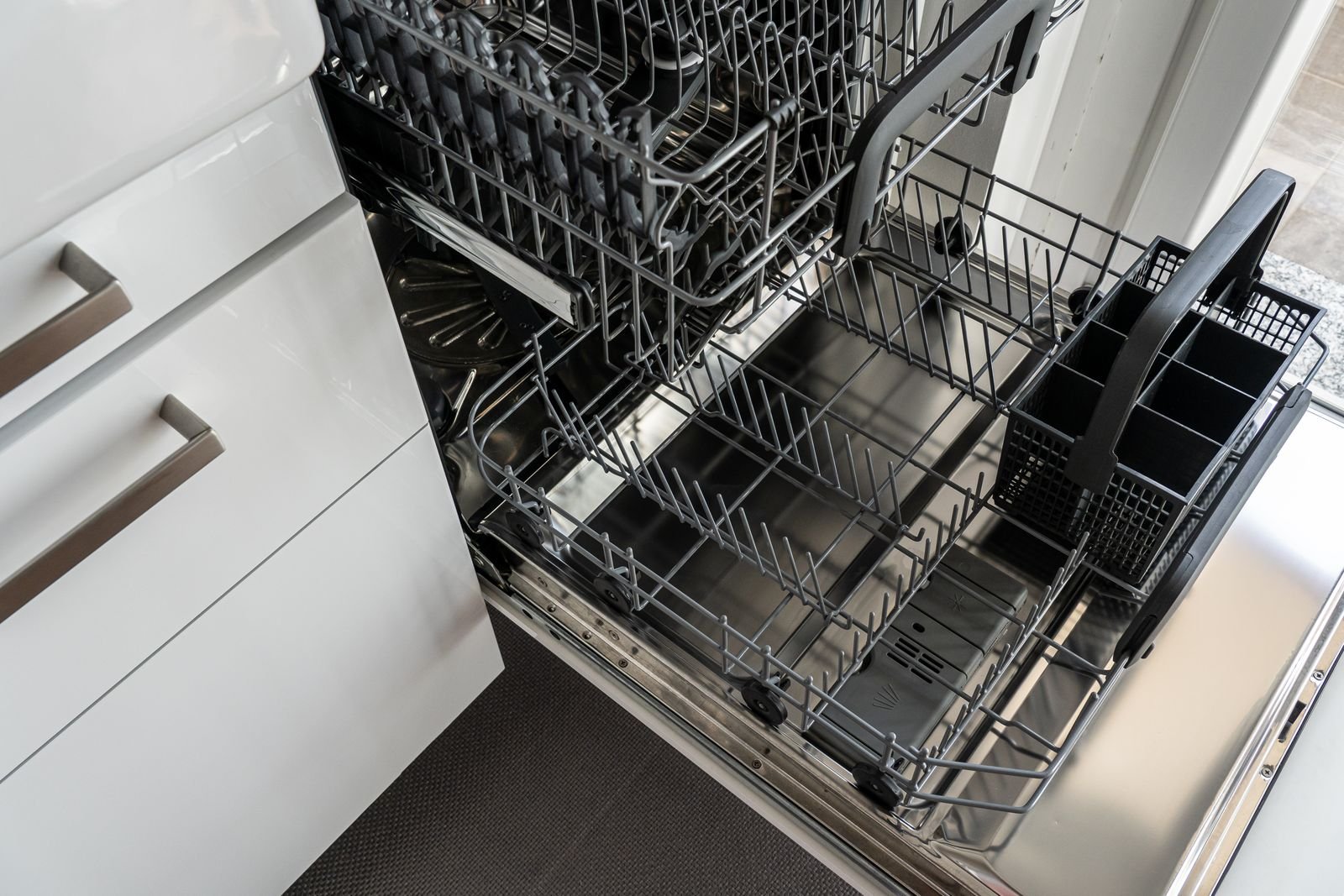
Does a dishwasher cause condensation? Where the steam comes out
A dishwasher heats water well above hot-tap temperature and then has to dry. Whirlpool’s product help describes the cause plainly: condensation typically results from warm, moisture-rich air meeting cooler surfaces. Steam can leave through the designed ventilation near the top of the door during and after the cycle, and in a rush when you open the door.
It is not a trivial amount. The Science Learning Hub, a New Zealand education resource, lists 1 litre of moisture for each dishwashing load alongside cooking, showers and washing clothes. That is a general guidance figure and will vary with the machine and the programme. Whirlpool adds that condensation is more noticeable after high-temperature cycles.
So a dishwasher is a regular, modest moisture source in the kitchen, and it is concentrated in one spot.
Why the worktop underside takes the hit
The vent sits just above the door, and the underside of the worktop is directly overhead. That surface is often cool, especially if it is stone, and it is in a gap that gets little air movement. Warm moist air rises, hits it and drops water.
Hunker’s guide to dishwasher condensation names the two classic set-ups: stone worktops that collect moisture when there is no gap between the dishwasher and the lip of the counter, and a worktop that blocks the top vent. Its fix for the second is to slide the machine out a few inches so the counter no longer blocks the vent. Whirlpool agrees that more condensation shows up when the unit sits back from the edge of the worktop.
Cool kitchens make it worse, as Whirlpool notes, because the surfaces stay colder. Over many months, repeated wetting is how a chipboard worktop edge swells. That last part is my reasoning from how the material behaves, not something either source tests.
Normal or a fault? What the location tells you
| Where you see the water | Most likely cause | What to do |
|---|---|---|
| Droplets on the worktop underside above the door | Normal vented steam meeting a cool surface | Cool before opening, improve extraction, add a barrier |
| Wet cabinet next to the machine | Steam escaping through gaps in the cutout | Check the cutout, seal gaps, level the machine |
| Water on the outside of the door | Seal or insulation problem, or a leaking soap dispenser | Inspect the gasket and dispenser, call service |
| Puddle on the floor in front | A leak, not condensation | Stop the machine and find the source |
Hunker’s guide gives the door rule: condensation on the outside of the door indicates a problem with the seals or insulation. Whirlpool lists gaps in the cabinet cutout, misaligned or worn door gaskets and insufficient insulation as ways warm moist air escapes.
Four easy fixes that stop the steam hitting the wood
Before you slide a dishwasher out to inspect the vent or the seal, switch off the appliance at its isolator or the fuse, and turn off the water supply. The hoses and the power cable are connected behind it, and pulling it hard can damage both. If you are not comfortable, ask a plumber or the manufacturer.
- Let it cool, then open the door a crack. Whirlpool suggests waiting a few minutes after the cycle and opening the door slightly rather than flinging it wide, so the steam escapes gradually instead of in a burst.
- Keep the vent clear and the machine level. Check that the worktop is not blocking the vent, that the unit sits level and that the door seal is tight. Follow the installation instructions for your model.
- Use the drying options and rinse aid. Whirlpool lists heated dry, extended dry, open-door and fan drying where the model has them, and says rinse aid helps water sheet off stainless steel instead of turning to steam.
- Add a moisture barrier and run the kitchen fan. A foil or purpose-made barrier under the worktop edge protects the wood, and a kitchen extractor running during and after the cycle removes the vapour from the room. Whirlpool also recommends keeping indoor humidity around 30 to 50 per cent and wiping up moisture promptly.
When the kitchen is damp for other reasons
A dishwasher is rarely the only moisture source in a kitchen. Cooking, boiling the kettle and drying washing add to it, and the dishwasher’s steam arrives on top. If you also see black spots in cupboards or on the ceiling, treat the whole kitchen: how to reduce humidity in a kitchen lists the sources, does cooking cause damp covers the steam from the hob, and mould in kitchen cupboards deals with what to do if growth has started.
A hygrometer on the worktop tells you whether the kitchen is staying inside that 30 to 50 per cent range after a wash. If it is not, a dehumidifier in the room or better extraction is the next step, not a different dishwasher.
A little condensation is normal, so protect the wood and watch the door
A dishwasher puts roughly a litre of moisture into a kitchen per load, and some of it will land on whatever is coolest above the vent. That is normal. Water on the outside of the door or in the cabinet is a seal or fitting fault. Let the steam out gently, keep the vent clear, shield the worktop edge and run the extractor.
FAQ
Why is there water under my worktop above the dishwasher?
Warm, moist air from the dishwasher’s vent is condensing on the cool underside of the worktop. It is more likely with stone worktops, a worktop that blocks the vent, hot cycles and a cool kitchen.
Is condensation on the outside of a dishwasher door normal?
No. Manufacturer and service guidance treat it as a sign of a seal or insulation problem. A leaking soap dispenser can also let heat escape into the door.
Should I open the dishwasher straight after it finishes?
It is better to wait a few minutes and open the door slightly, as Whirlpool advises, so the steam is released gradually instead of in one burst into the kitchen.
Can dishwasher steam cause mould?
Steam can wet cabinets and worktops, and persistent damp can support mould growth. Fix the source of the damp, dry the area and keep kitchen humidity moderate. Clean small patches under about 10 square feet by EPA guidance.
Does a dishwasher need to be vented?
Dishwashers are designed with their own vent for steam, so the point is to keep that path clear and use the kitchen extractor, not to add a duct. Check your manual for your model.

