
Last Updated on October 24, 2026 by Umar Farooq
Do I need an extractor fan in my kitchen? In a new or newly built kitchen in England, yes: the 2021 guidance expects extract ventilation to the outside, and an openable window is not offered as the alternative. In an older kitchen that never had one, you are not required to add one, but the steam you cook with still has to go somewhere.
The legal answer is only half of it. A window, a wall fan and a cooker hood do very different things with the water.
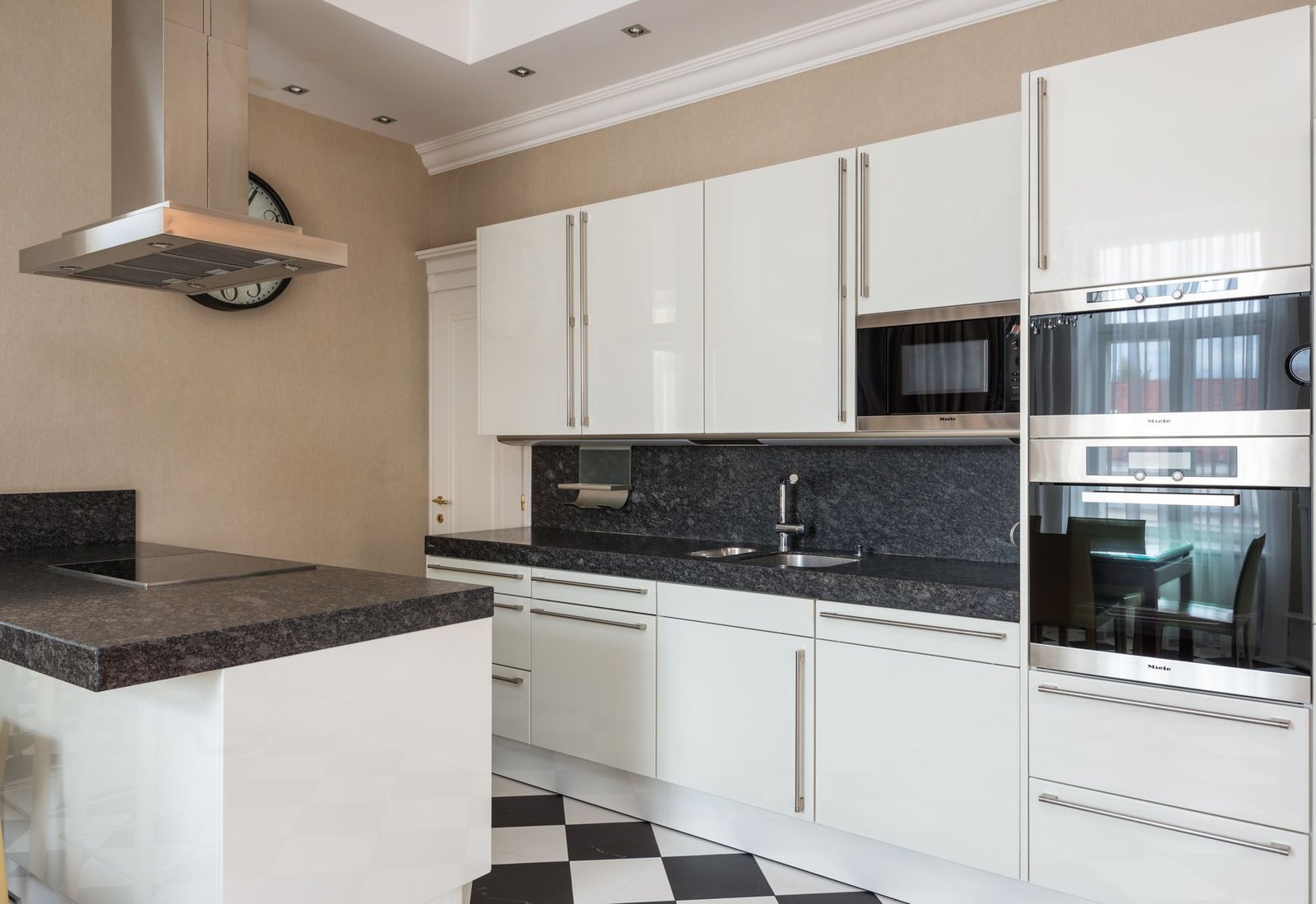
What England’s Approved Document F actually expects of a kitchen
I opened Approved Document F, Volume 1 (2021 edition), the statutory ventilation guidance for dwellings in England, and read the kitchen parts. This is England only. Wales, Scotland and Northern Ireland publish their own guidance and I have not read it. The gov.uk publications page also lists a newer edition, which I have not read, so check the current text before building work.
What the 2021 edition says, in plain terms:
- Kitchens, utility rooms and bathrooms should all have extract ventilation to the outside (paragraph 1.17).
- A cooker hood that extracts outside should move at least 30 litres per second (about 108 m³ an hour, my own conversion).
- With no hood, or a hood that does not extract outside, the minimum is 60 litres per second (about 216 m³ an hour), so a plain wall fan has to work twice as hard.
- The hood should span the full width of the cooker and sit 650 to 750 mm (26 to 30 in) above the hob unless the manufacturer says otherwise.
- Windows are offered as an alternative only for sanitary accommodation, meaning a toilet room (paragraph 1.49). A kitchen is not on that list.
For existing homes the position is gentler. If you refurbish a kitchen, existing fans, including a hood that extracts outside, should be retained or replaced (paragraph 3.30). If the original kitchen had no ventilation system, you do not have to add one, though extra ventilation may be needed if the work makes things worse, such as fitting airtight windows (paragraph 3.31).
| Your kitchen | Is extract to the outside expected? |
|---|---|
| New build or new kitchen extension | Yes |
| Refurbishing a kitchen that has an outside-venting hood or fan | Keep it or replace it |
| Refurbishing a kitchen that never had extraction | Not required by the document, but see the signs below |
| Existing kitchen, no building work | No legal trigger, no safety net either |
Do I need an extractor fan in my kitchen if it has a window?
A window helps, but I would not call it extraction. A window has no fan behind it, so how much air moves depends on the wind, the temperature difference and whether anyone has opened it. On a still, mild evening it moves very little, and a window across the room from the hob does nothing for the pan in front of you.
The guidance reflects this: paragraph 1.49 gives windows to toilets and withholds them from kitchens. A window earns its place when opened wide for a few minutes after cooking. There is more on that timing in how to reduce humidity in a kitchen.

My view: a ducted hood beats a window, because it captures steam at the source before it reaches the ceiling and the cold cupboard fronts.
Cooker hood, wall fan or window: what each one really does
Moisture is the reason a kitchen needs extraction at all, so rank the options by where the water goes.
- Cooker hood venting outside: captures steam above the pan and sends it out of the building. This is the one the guidance names, at 30 l/s.
- Wall or ceiling fan venting outside: removes moist air from the room, but further from the source. The guidance asks for 60 l/s here.
- Window only: inconsistent, and relies on you remembering.
- Recirculating hood: filters and returns the air to the kitchen. More on this next.
CDA, a hood manufacturer, says in its guide to whether you need a cooker hood that window fans and simple wall fans are not designed for steam, grease and smells the way a hood is. That is a manufacturer’s view, but it fits the capture-at-the-source logic.
Ducted or recirculating: where does the steam end up?
A ducted hood pushes air through a pipe to the outside. A recirculating hood pulls air through a filter, usually grease and charcoal, and blows it back into the room.
The filter catches grease and some smell. It does not remove water vapour. The Approved Document is blunt about it: beside its diagram of a recirculating hood, it notes that a recirculating cooker hood on its own does not provide a means of ventilation that complies with Part F. US Building America guidance, in its kitchen exhaust fan guide, goes the same way and says recirculating fans that discharge back into the room are not acceptable. That is American guidance, with its own numbers (100 cfm or more for intermittent kitchen fans, about 47 l/s by my conversion), so do not compare it directly with the UK 30 l/s.

So a recirculating hood is a grease and smell tool. It is better than nothing if you cannot duct outside, such as in a flat with no outer wall behind the hob, but it will not stop a kitchen steaming up. The same point, with a diagram of the two airflow paths, is in does cooking cause damp.
Four signs your kitchen needs more extraction
If the kitchen is not covered by the rules, the kitchen itself will tell you. Look for these.
- Windows streaming after you cook. Water running down the glass means the steam is reaching cold surfaces, not leaving.
- Damp or swollen cupboards. Backs of units on an outside wall, or the underside of the sink cabinet, going soft or spotty. Mould there is covered in mould in kitchen cupboards.
- A stained, yellowed or flaking ceiling above the hob. That is steam and grease reaching the ceiling and staying there.
- Steam and smell that hang around for an hour. With a working outside-venting hood, a pan of pasta should not still be haunting the room at bedtime.
One check before blaming the fan: see where the duct ends. A hood with a duct stopped at the loft or a cupboard void is a recirculating hood in disguise. The bathroom case has the same duct-ending rule, and the answer is the same here.
Send the steam outside and the rest is housekeeping
Do I need an extractor fan in my kitchen? If it is new, yes, to the outside. If it is old and stays dry, no law says so, and a window plus good habits may be enough. If it is old and the windows run, the cupboards are going soft or the ceiling is yellowing, then you need one, preferably a hood that vents outside, mounted 650 to 750 mm above the hob. Recirculating comes second, and a window alone comes last. A dehumidifier is a top-up after extraction, not a replacement: dehumidifier vs extractor fan covers the split.
FAQ
Is an extractor fan a legal requirement in a kitchen?
For new work in England, Approved Document F (2021) says extract ventilation to the outside should be provided in kitchens. For an existing kitchen with no ventilation, it says you need not add one when refurbishing, although extra ventilation may be needed if the work makes things worse. Other UK nations have their own guidance.
Can I have a kitchen without an extractor fan?
Older kitchens often do, and nothing forces you to add one if you are not doing building work. But it then relies on a window and your habits.
Is a window enough instead of an extractor fan?
For a toilet room, the guidance allows it. For a kitchen it does not. A window works best opened wide for a short time after cooking.
Do I need a cooker hood if I have a gas hob, or an induction one?
Yes in both cases. Gas, electric and induction all make steam as soon as a pan boils.
Does a recirculating hood reduce humidity?
Not meaningfully. It filters grease and smell and returns the air to the room, and Approved Document F says a recirculating hood alone does not provide compliant ventilation.
How long should I run the kitchen extractor fan?
Switch it on when you start cooking and leave it running for a few minutes after you finish. The Approved Document sets run-on only for rooms without an openable window, so for a kitchen with one this is a sensible habit, not a rule.

