
Last Updated on October 25, 2026 by Umar Farooq
Do extractor fans work? Yes: a correctly sized fan with a short, straight duct to the outside clears steam and smells quickly, and the ones that disappoint are nearly always undersized, badly ducted or starved of replacement air. The fan itself is rarely the weak link.
The trouble is that a fan looks the same whether it moves a gale or a sigh. You hear the motor and assume the air is moving.
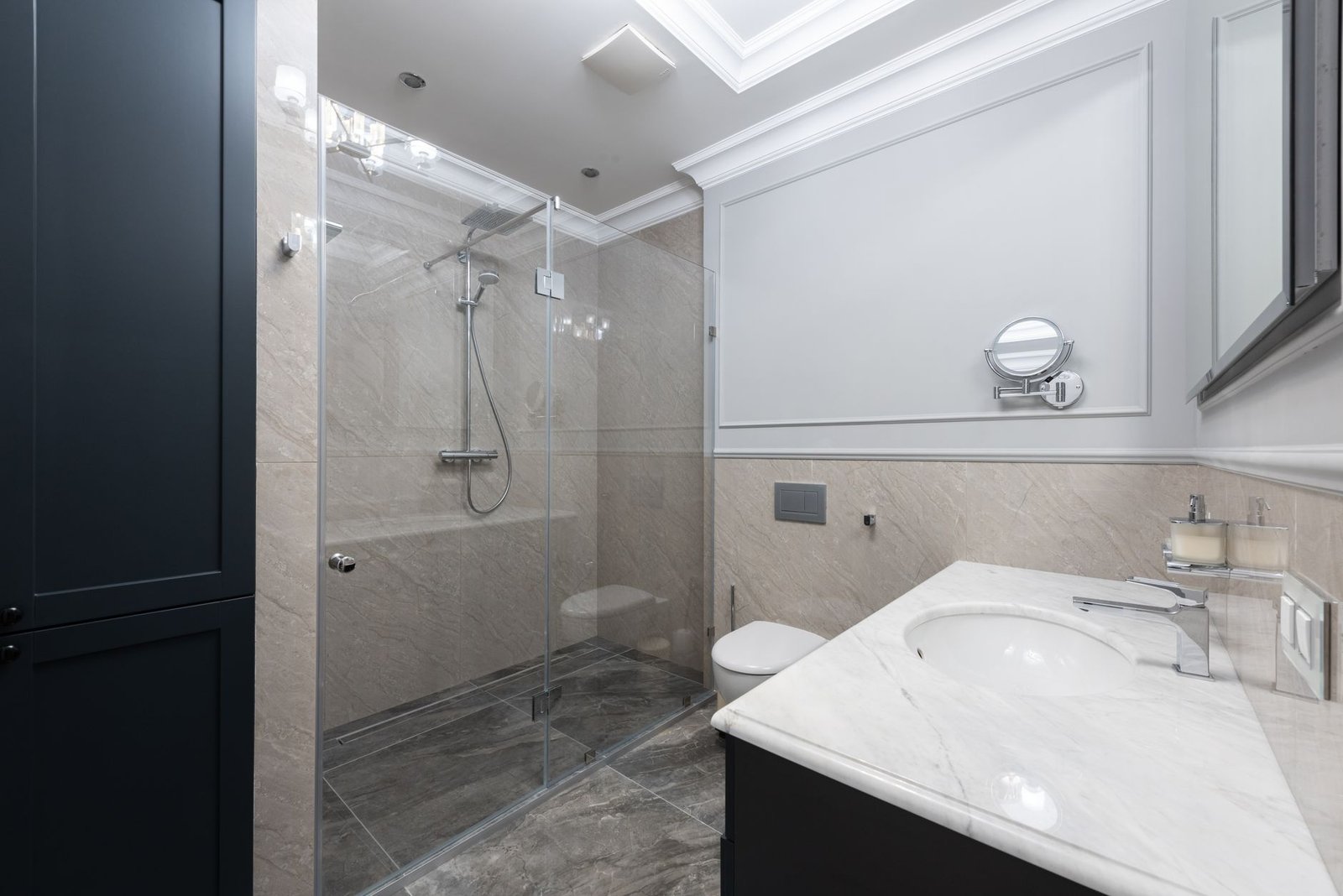
What an extractor fan can and cannot do
It can pull warm, damp, smelly air out of a room and send it outside before it lands on cold surfaces. That is its whole job, and done well it stops a bathroom running with condensation.
It cannot dry a wall that is already wet, heat a room, or lower humidity in a house that is damp for other reasons, such as a leak or a cold, unheated room. For that, see how an extractor fan compares with a dehumidifier.
The numbers that say how much air a working fan must move
England’s ventilation guidance, Approved Document F, sets minimum rates for intermittent extract fans in Table 1.1. The 2021 edition gives:
| Room | Minimum extract rate (litres per second) | In cubic metres per hour (my conversion) |
|---|---|---|
| Bathroom | 15 | 54 |
| Toilet only | 6 | 22 |
| Utility room | 30 | 108 |
| Kitchen, cooker hood venting outside | 30 | 108 |
| Kitchen, no hood or a hood that does not vent outside | 60 | 216 |
To see what that means, take a bathroom 3 m by 3 m with a 2.4 m ceiling, which holds about 21.6 cubic metres, or 21,600 litres, of air. At 15 litres per second, one room-volume of air takes 1,440 seconds, or 24 minutes, to pass through the fan. That is my own arithmetic and it is a simplification, because the air in a room never mixes perfectly. It does explain why the same guidance asks for fans in windowless rooms to run on for at least 15 minutes after the room is vacated.
Do extractor fans work? Four rules decide it
1. The fan must move enough air once installed, not just on the box. Americans have worked this out too: the Pacific Northwest National Laboratory’s Building America guide says installation can reduce measured airflow, so EPA recommends a fan rated above the required amount. One UK blogger measured a cheap fan at about 3 litres per second against a rating of 5. That is one test of one fan, so treat it as a warning, not a statistic.
2. The duct must be short, smooth and end outside. Approved Document F asks for rigid ducts wherever possible, flexible duct only for final connections and no longer than 1.5 m, few bends, and sealed joints. A fan that vents into a loft just moves the damp problem; venting into the loft covers that.
3. Air has to be able to get in. A fan can only extract as much as can get back into the room. With the door tight against the carpet and no gap, it starves. A small gap under the door lets it breathe.
4. It has to run long enough. A fan that switches off with the light leaves the steam behind. Run it for the whole shower and a while afterwards.
Three quick checks on your own fan
- Tissue test. Hold a single sheet of toilet tissue to the grille. It should cling. If it flutters or falls, the fan is weak or blocked.
- Mirror test. Time how long the mirror stays fogged after a shower with the fan on and the door shut. If it clears in a reasonable time and the ceiling stays dry, it is working. This is a rough guide, not a measurement.
- Ask for a reading. Approved Document F expects an installer to check, and record, that intermittent extract fans meet the required rates. If you are not sure, a ventilation installer can measure it.
When an extractor fan is not enough
If the walls still run with water after you have fixed the fan and the duct, the problem is not extraction alone. The room may be too cold, the humidity too high from other sources, or the fan too small for a big shower room. A fan that runs but leaves the steam is nearly always an airflow fault, and the fix starts there.
A decent extractor fan works well, so the question to ask is whether yours is decent
Fans do what they are meant to do when they are the right size, ducted straight outside and given air to draw. If yours is not clearing steam, do not assume the whole idea is broken. Check the rate, the duct, the gap under the door and the run time, in that order.
FAQ
Are extractor fans effective at removing moisture?
Yes, when they meet the required airflow and vent outside. England’s guidance sets 15 litres per second as the minimum for a bathroom fan, and an installed fan can fall short of its rating if the duct is long or poor.
Do extractor fans reduce mould?
They remove the moist air that mould needs, so a working fan helps keep surfaces dry. It will not fix a leak or clean mould that is already there.
Do bathroom extractor fans work without a window?
They have to. A room with no openable window relies on the fan, and Approved Document F says the fan should keep running for at least 15 minutes after the room is vacated.
Why does my extractor fan not seem to do anything?
Likely it is weak, blocked, undersized, or has no replacement air. Try the tissue test, check the duct and outside cover, and make sure there is a gap under the door.
Are cheap extractor fans any good?
Some are, but the rating on the box is not the same as the airflow you get once it is installed. Check the rated flow against the room’s needs and ask a professional if in doubt.

