
Last Updated on October 24, 2026 by Umar Farooq
A dehumidifier for laundry room use is worth buying only if the room still sits above 60% humidity once the dryer is vented outside and damp air has somewhere to go. If it does, a small machine on a drain hose fixes it for good. If it doesn’t, you are paying to dry air that a hose and an open door would have removed for free.
A laundry room is designed around making things wet and then asking them to dry in a cupboard. It is hardly a surprise that the walls complain.
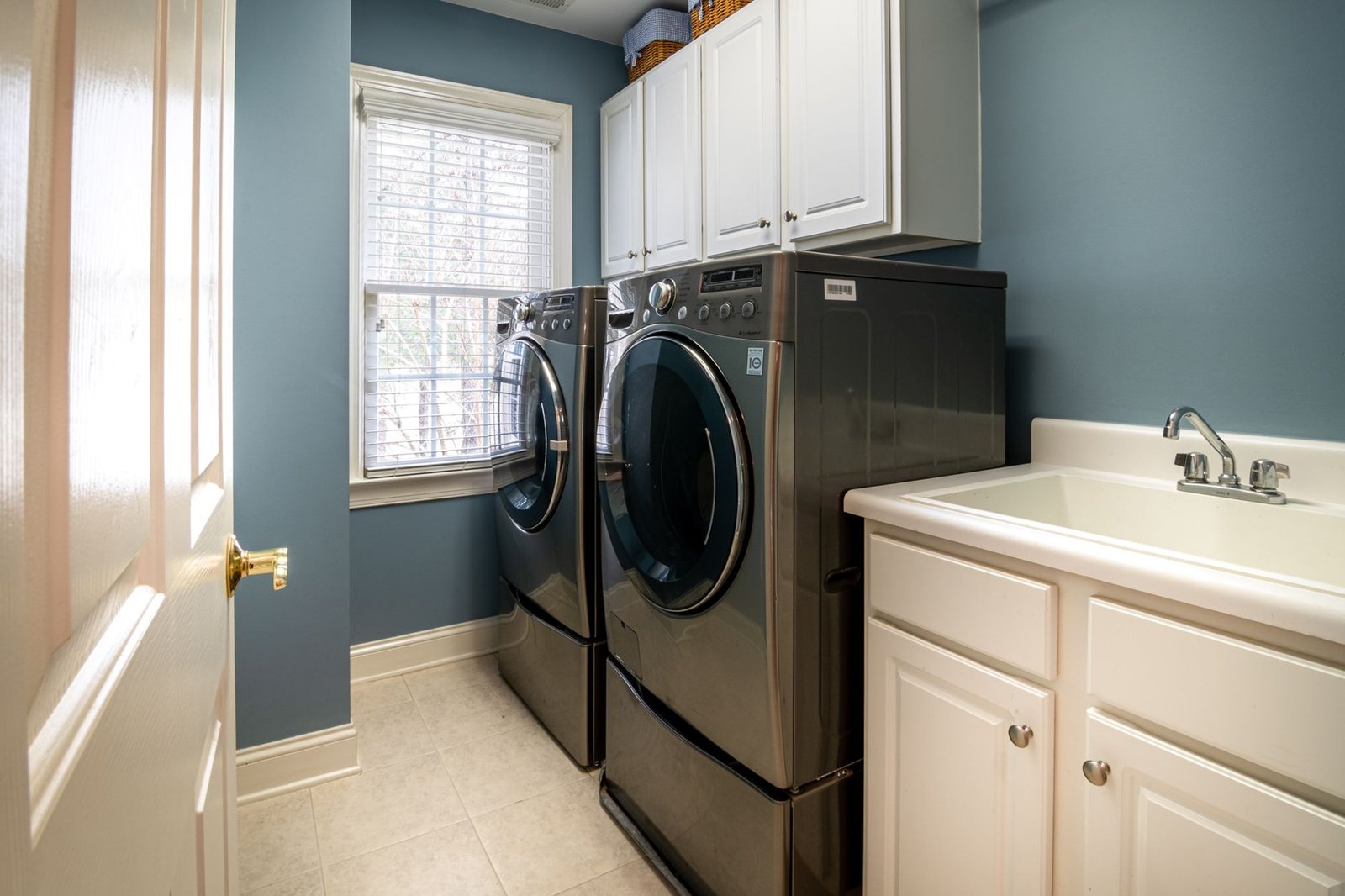
Why does a laundry room get so damp?
Four things stack up, and a dehumidifier only touches one of them.
- The washer. Hot cycles fill the room with vapour, and the drum stays warm and wet long after it stops.
- The dryer. Whatever water was in your clothes has to go somewhere. EPA’s moisture guidance says to vent appliances that produce moisture, such as clothes dryers, to the outside where possible.
- Drying indoors. Airers and towels over radiators add the same load again, which the indoor-drying guide deals with.
- Cold surfaces. Utility rooms often sit on an outside wall, a slab or a basement. Warm damp air meeting a cold wall turns to water, so the room can look wet even when the average humidity is not extreme.
Close the door and all four get worse.
Does your dryer type change the answer?
More than anything else in this article.
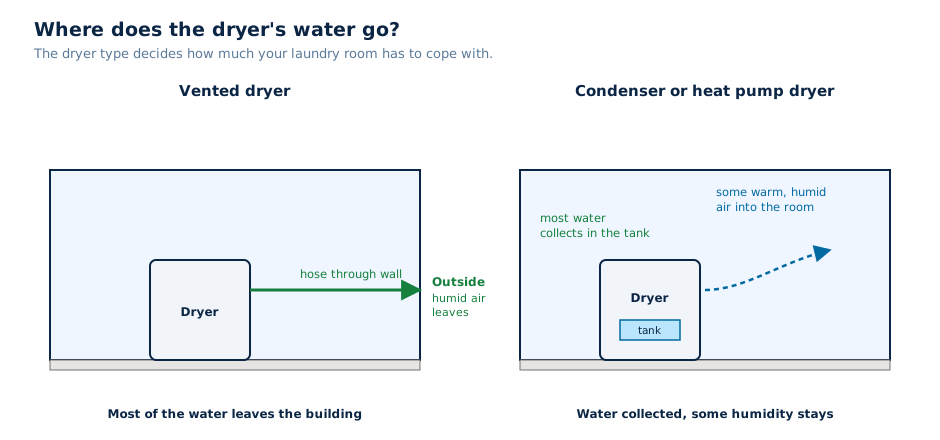
A vented dryer pushes humid air through a hose outside. Done properly, the room barely notices it. Done badly (hose draped into the room, or a vent blocked with fluff) the room takes the whole load.
A condenser dryer has no hose. It collects most of the water in a tank, and some warm, humid air still reaches the room. A heat pump dryer recycles its air and is gentler, but not a free pass: Beko’s support page says heat pump dryers can release moisture back into the room, that it can condense on walls and windows in small unventilated spaces, and that ventilation is the number one way to reduce moisture build-up.
So a properly vented dryer rarely needs a dehumidifier for its own sake. A condenser or heat pump dryer in a small, windowless room often does.
Fix the air before you buy a machine
My one strong opinion: do not buy a dehumidifier until the dryer’s exhaust and the room’s door are sorted. A dehumidifier dries the air in the room and leaves the sources alone, which makes it the slowest, dearest way to cope with a vented dryer that is venting into the room. In order:
- Check the hose and vent. Is it connected outside, kinked or full of lint?
- Open a window or door after every wash and dry. EPA suggests exhaust fans or open windows whenever you run moisture-producing appliances.
- Use an extractor fan if there is no window. It sends damp air out of the house, which a dehumidifier cannot.
- Leave the washer door and detergent drawer ajar between loads.
Then measure. A cheap hygrometer in the room for a week, read at the end of a washing day, tells you more than any buying guide. The target is EPA’s band: below 60%, ideally 30 to 50%.
Is a dehumidifier for laundry room use worth buying?
| What you find | What it suggests | Do this |
|---|---|---|
| Humidity drops below 60% soon after opening the window | Mostly ventilation | Skip the machine |
| Dryer exhausts into the room or a sealed cupboard | Wrong exhaust, not wrong humidity | Vent it outside first |
| Condenser or heat pump dryer, no window or fan | Moisture the room can’t shed | A dehumidifier is justified |
| Still above 60% with the door open | Damp from the building itself | Read how to lower humidity in a house |
| Washing dries indoors in the same room | Heavy, repeated load | A machine earns its keep, per the clothes-drying guide |
Where to put the dehumidifier in the laundry room
The usual advice flips here. In most houses I’d leave doors open and use the landing. In a laundry room, close the door and give the machine the small volume to itself.
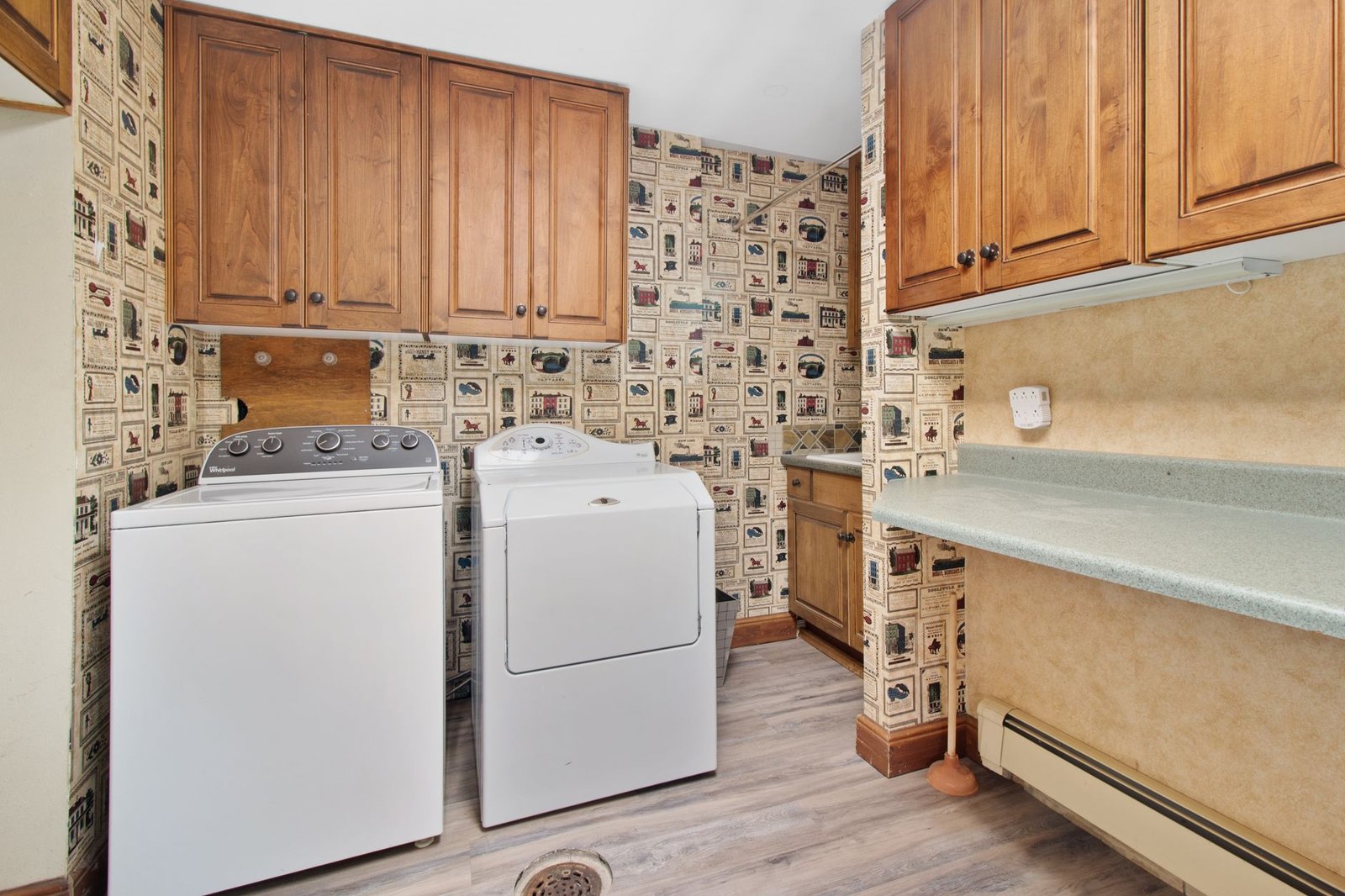
- Near the middle, not behind the dryer. GE advises placing it near the centre of the area, with at least 18 inches (46 cm) of air space on all sides.
- Outlet away from the dryer exhaust, so it isn’t re-breathing its own air.
- Door and window shut while it runs. Ventilate first, close up, then run it.
- Mind the cold. GE says a dehumidifier will not operate satisfactorily below 41°F (5°C), because the coils can freeze. A cold basement or garage laundry room needs a model rated for low temperatures.
Keep the machine and its lead out of splash range and standing water, and switch the washer off at the wall before moving anything behind it. If the floor is wet, find the leak first.
How to drain a dehumidifier in a laundry room
Draining is easy here, because the room already has a waste pipe, standpipe or floor drain.
- The tank. Fine occasionally, but a full tank stops the machine.
- Gravity hose. Run a hose from the drain outlet downhill to a floor drain, sink or standpipe. The drain hose guide covers fitting and leaks.
- A built-in pump. If the drain is above the machine, a pump lifts the water. How built-in pumps compare is worth reading first.
Vent the dryer, open a door, buy the machine last
A laundry room runs damp because it is a small room that makes more water than any other in the house. The order matters more than the product: vent the dryer outside, ventilate after each wash, measure, and only then add a dehumidifier for laundry room use if the readings stay above 60%.
If you bought one first, it isn’t wasted. Point the dryer hose out of the house and watch how much less it has to do.
FAQ
Do you need a dehumidifier in a laundry room?
Not always. With the dryer vented outside and a window or door opened after washing, the room often dries on its own. It becomes worthwhile when humidity stays above 60% anyway, or a condenser or heat pump dryer sits in a small room without a window.
Why is my laundry room so humid?
Washer vapour, wet clothes and dryer exhaust add moisture, and a closed door or unvented dryer traps it. Cold walls and floors make it worse, because warm damp air condenses on them.
Can a dehumidifier drain into a sink or floor drain?
Yes, if the model has a drain outlet: a hose carries the water downhill to a sink, standpipe or floor drain. If the drain is higher than the machine, you need a built-in pump.
What humidity should a laundry room be?
Below 60%, ideally between 30% and 50%, which is the range EPA recommends for indoor air.

