
Last Updated on October 25, 2026 by Umar Farooq
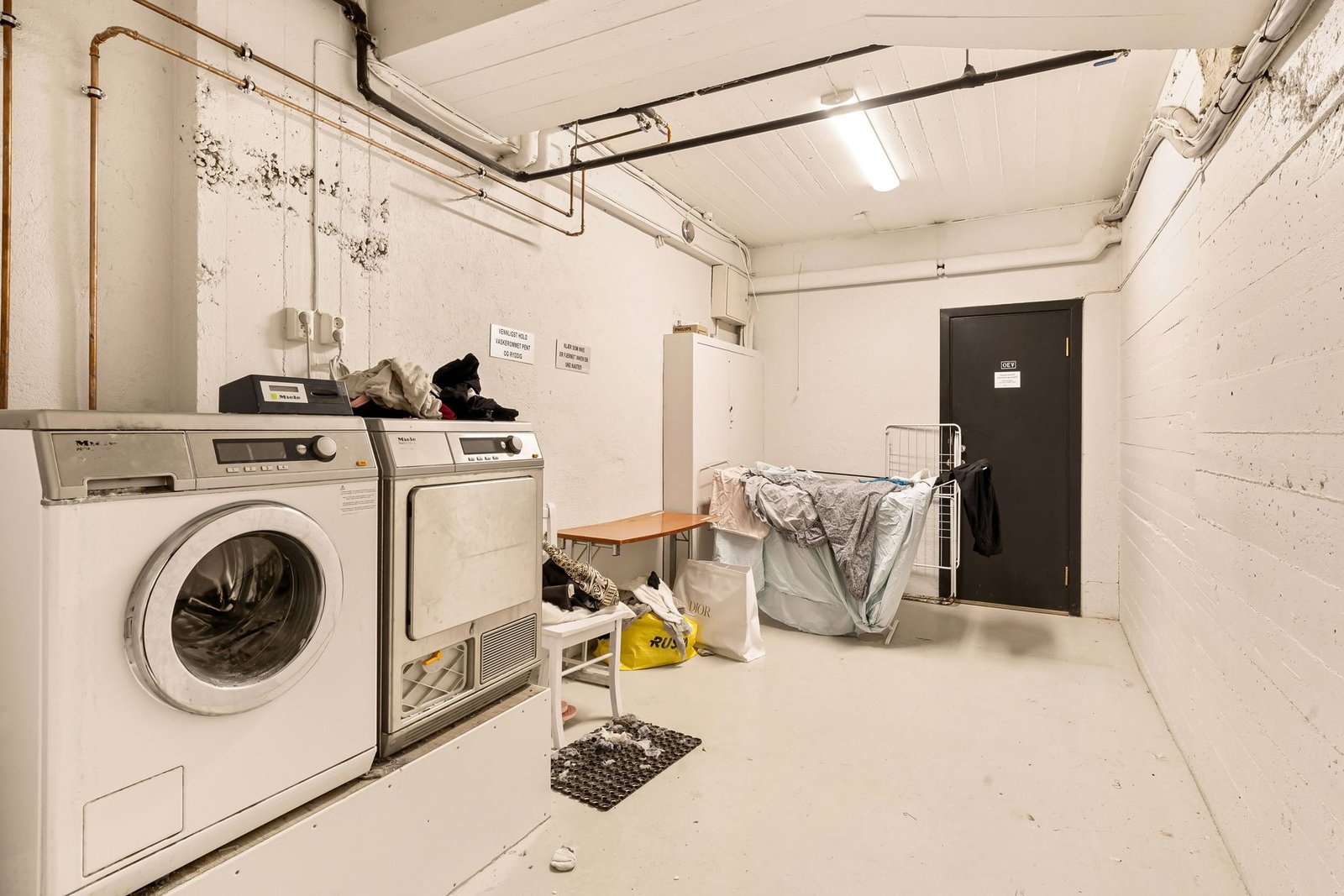
Condensation in utility room spaces is washing-machine and dryer vapour, plus wet laundry on racks, meeting cold walls, floors and window glass in a small room with nowhere for the water to go. Fix the exits for that water first and the walls usually stop running.
A utility room is the one room in the house designed around wet things, and then it gets the smallest window and the coldest wall. I would not have planned it that way either.
Condensation in utility room corners: five causes, biggest first
Condensation is water vapour cooling onto a surface colder than the air. The UK government’s damp and mould guidance lists drying laundry among the everyday sources and names wall corners and the walls behind furniture as places it lands. A utility room stacks all of it in one small box. I have ranked these by how much water I would expect each to add. That ranking is my judgement, not a measurement.
- A vented dryer exhausting into the room. Everything the dryer pulls out of the washing leaves through the hose. If the hose end sits in the room, or the gap around it at the window is loose, all of that water becomes room air. The tumble dryer venting guide covers the three dryer types and where each puts its water.
- Washing drying on racks. A load that went through the dryer comes out dry. A load hung on a rack gives all of its water to the room, slowly, over a day or more.
- The washing machine itself. Warm cycles, a door opened straight after a hot wash and a drawer left pulled out all add a little. It is the smallest source, but it never stops.
- Cold surfaces. Utility rooms are often on an outside wall, in an extension or a converted garage, with an uninsulated floor and a cold external door. Cold surfaces are what turn a damp room into a wet one.
- A small room kept shut. Closing the door stops the damp spreading. It also traps everything inside. Electrolux’s guidance on moisture around a tumble dryer says small rooms are a particular problem and suggests a room larger than roughly 10-12 m² with a window or door opened during drying.

Start with the dryer hose, not the wall
A hose that ends outside removes the biggest single source in one go. The EPA says to vent moisture-producing appliances such as clothes dryers to the outside where possible.
Check three things. The hose should run to a proper outlet in the wall, not sit on a windowsill with the window propped open around it. It should be short and straight, because a long kinked hose holds back air and water. And the lint filter should be clean, which is free.
If you have a condenser or heat pump dryer, there is no hose. The water goes into a tank, so empty it after every load. The room will still warm up, which matters in the cold-surfaces section below.
Never run a vented dryer with its hose disconnected or ending inside a cupboard. Lint and heat build up fast. Keep the hose clear and lint-free, and follow the dryer’s manual for hose length.
Get air moving: extraction, a window and the door
Once the dryer’s water has an exit, give the rest of the room one too. Cheapest first:
- Open a window a hand’s width during laundry and for a while after. It is free, and it works whenever the outside air is cooler and drier than the room, which is most days in a UK winter.
- Fit a humidity-triggered extractor fan if there is none. Whether you need one is usually asked about bathrooms, but the reasoning holds here: moisture should leave at the source, not wander through the house.
- Get the door right. Shut it while the dryer runs, so the damp does not reach the bedrooms. Open it afterwards, with the window, so the room can empty. The government guidance above suggests the same pattern for cooking and showering: doors shut during, ventilate after.
The picture below is the same room twice. Nothing is bought. Only the hose, the window and the place the washing dries are changed.

Dry the washing somewhere else, or at least not on a rack in here
This is the fix people resist, because a utility room feels like the right place to dry things. It is a poor place if the room is small and cold.
If you can, hang washing outside. If you cannot, use the largest, warmest room that has a window you can open, not the cold little room with the dryer. The indoor drying guide walks through spacing, spin speed and which rooms to avoid. Moving even one load a week out of the utility room takes water off the walls. How much, I have not measured.
Warm the cold surfaces, or stop hiding them
Cold surfaces are the half of the problem a hose does not fix. You do not need to rebuild the room, but three cheap things help.
Keep the room at a steady background temperature rather than letting it go stone cold between loads. Electrolux gives about 20°C as the room temperature to aim for around a dryer. That is a manufacturer’s figure for the appliance, not a mould target. Leave a gap between appliances, cupboards and the external wall so room air can reach it, as the government guidance recommends for furniture. And check the external door, because a cold, leaky one is often the coldest surface in the room.
Do not seal every gap until the room has no air at all. A tight room with a wet dryer is how the problem began.
Rule out a leak before you blame the air
Not every wet patch is condensation. A washing machine inlet hose or waste pipe can drip, and a cold-water pipe can sweat in a warm, damp room.
Run a dry paper towel under the hose joints and the waste after a cycle. If it is wet in the same place every time, that is a plumbing job. If a pipe only sweats on warm wet days and dries by itself, that is condensation and the fixes above apply. A patch that stays wet when the room is dry and cold is a leak or penetrating damp.
A dehumidifier is the last step, not the first
Once the dryer is vented, the window is used and the door habit is right, some rooms still stay damp, especially in winter. That is when a machine earns its place, and only then. The laundry room dehumidifier guide covers whether it is worth buying and how to drain it, so I will not repeat it here.
The EPA advises keeping indoor humidity below 60 percent, ideally between 30 and 50 percent. A cheap hygrometer shows the number in the utility room before and after each change, which is more useful than guessing. Lowering humidity across the whole house covers reading it.
Condensation in utility room spaces ends with exits, not machines
The order I would follow: put the dryer’s water outside, open a window after laundry, shut the door only while the dryer runs, dry the washing in a bigger room and stop the walls going cold. Buy a machine only if the hygrometer still disagrees after that.
FAQ
Why is my utility room always damp?
Because it combines the wettest appliances in the house with a small, often cold and often shut room. Dryer vapour and washing on racks supply the water, and the cold walls and floor give it somewhere to condense. Fix where the water exits before looking at machines.
Does a tumble dryer cause condensation in a utility room?
Yes, if it exhausts into the room, or if it is a condenser model in a small unventilated space. A vented dryer with its hose outside removes most of the water. A condenser or heat pump dryer collects water in a tank but still warms the room, so keep a window or door open while it runs.
Should I leave the utility room door open or closed?
Closed while the dryer or the washing is producing moisture, so it does not spread to bedrooms. Open, with a window ajar, afterwards so the damp air can leave. Leaving it shut all day is what lets the walls stay wet.
Will an extractor fan stop condensation in a utility room?
It helps a lot if it is humidity-triggered, or run during and after laundry, and ducted outside. It does not fix an unvented dryer or washing hung on racks, so deal with those first.
Can I put a dehumidifier in a utility room?
Yes, but after the exits are sorted. It treats the air in the room, not the source of the water. The dedicated laundry room guide covers sizing, placement and draining.
Related guides: Dehumidifier for a laundry room · Tumble dryer condensation and venting · Drying clothes indoors without mould · Do I need a bathroom extractor fan? · How to lower humidity in your house

