
Last Updated on October 24, 2026 by Umar Farooq
Why is my basement humid in summer? Because warm, damp outdoor air is reaching walls, floor and pipes that stay cool all year, and water condenses on them. No leak is needed for that, which is why the walls can look sound and the hygrometer can still read 70%.
Most advice online assumes a damp basement wants a contractor. Often it wants a dehumidifier and some restraint with the windows.
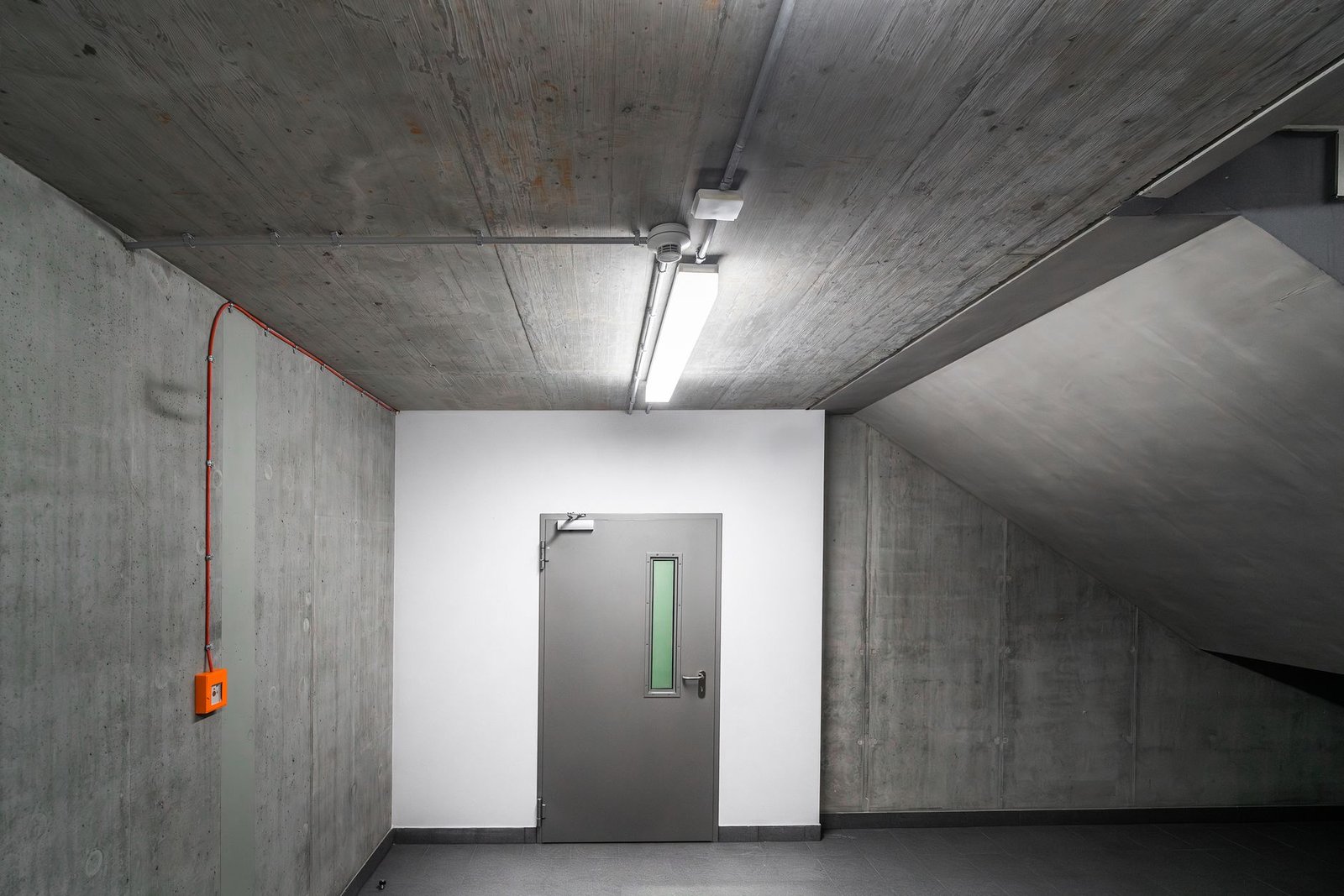
Why is my basement humid in summer when it was fine in March?
The ground around a basement sits at a steady, cool temperature through the year, so the walls and slab stay cool while the weather outside climbs. In summer the outdoor air carries far more water vapour. Let that air in and it touches surfaces colder than its dew point, and the vapour turns to liquid. Building Science Corporation describes this as the main summer problem for below-grade walls: warm, moist air meeting cold basement surfaces.
That is why the problem peaks in July and August, then fades on its own. Nothing has failed: the air is simply wetter than the walls can tolerate. I have not measured your wall temperatures, so treat your own hygrometer as the evidence. The EPA advises keeping indoor humidity below 60%, ideally between 30 and 50%.
Sweat or seep? Three checks before you call anyone
Condensation and a leak look alike and need opposite fixes.
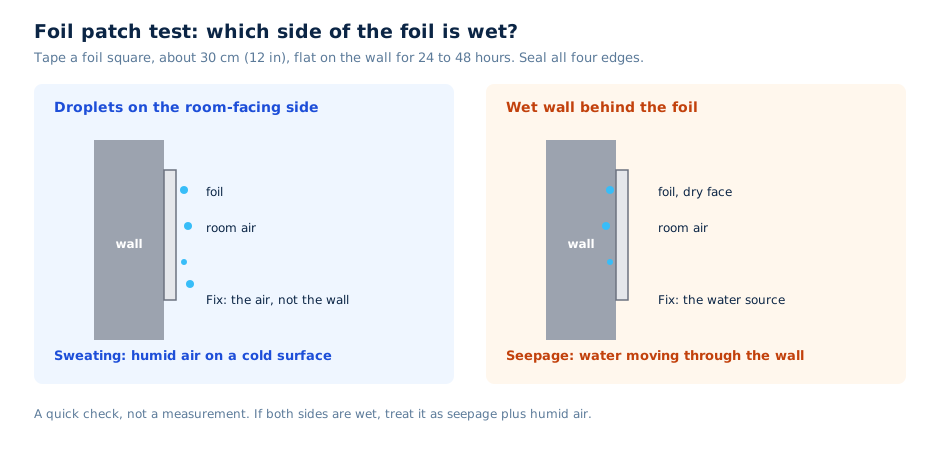
- Foil on the wall. Tape a 30 cm (12 in) square of kitchen foil flat to the wall, sealing all four edges, and leave it for a day or two. Droplets on the room-facing side mean humid air condensing. A wet wall behind the foil, or a damp back to it, means moisture is coming through.
- Rain against heat. Keep a note for a fortnight. If readings rise after rain and stay high, suspect water arriving from outside. If they rise on hot, muggy days with no rain, it is the air.
- What is wet. Sweating shows on the coldest things first: uninsulated cold-water pipes, the lower wall, the slab near the walls. Seepage tends to turn up in the same patch each time, often with white mineral crust on the masonry.
The foil test is a quick check, not a measurement, and the two problems can coexist. If both sides are wet, fix the water first.
Why opening the windows makes a summer basement worse
A damp room feels like it needs airing, but on a muggy day the outdoor air holds more moisture than the basement air does. Open a window and you are importing water, which then condenses on the cold concrete.

The same goes for gaps round a door, an old coal chute or a leaky vent. Sealing them in summer is a bigger win than most people expect. The cellar-specific detail is in how to reduce humidity in a cellar.
Ventilate by dew point, then let a dehumidifier do the heavy lifting
Opening up is not always wrong. It is right when the outdoor air is drier than the basement air in absolute terms, which means comparing dew points rather than temperature or the percentage. Your weather app shows the outdoor dew point; a cheap hygrometer plus a thermometer gives you the indoor one. If outdoors is lower, open up for an hour. If not, stay shut. I will not repeat the dew-point diagrams here, because the summer humidity guide already has them.
In practice that means dry spells and early mornings, not the humid afternoon.
For the rest of the summer the standard answer is a dehumidifier, because it removes water from the air whatever the weather is doing. Set it to about 50%, put it on a drain, and keep the windows shut while it runs. A machine that is too small for the space will run non-stop and still lose, so choosing a dehumidifier for a basement is worth reading before you buy.
Lag the cold pipes, then check the hygrometer
Cold-water pipes are the coldest surfaces in the room and the first to drip. The EPA’s moisture guide suggests covering cold surfaces such as water pipes with insulation to stop condensation. Foam sleeves are cheap. How to stop condensation on pipes covers the gaps people leave. Lagging stops the drips but will not bring the room down, because the walls and slab are still cold.
When it is a real leak
Suspect water, not air, if any of these hold:
- readings climb after rain and stay high even when the weather turns dry and cool;
- the foil is wet behind;
- the same patch is wet every time, with white crust, flaking paint or a tide line;
- you can see water at the floor-wall joint, a sump that fills, or a downpipe discharging next to the wall;
- a correctly sized dehumidifier runs flat out and the number still does not move.
Fix the outside first: gutters, downpipe extensions, ground sloping away from the wall. If it persists after that, a specialist is the right call. Mould that has already appeared is a separate job, covered in how to get rid of mould in a basement.
A sweating basement is an air problem, so fix the air
If your hygrometer climbs on hot days and the foil stays dry on the wall side, the answer to why is my basement humid in summer is a dull one: the weather is wetter than the walls. Keep the windows shut on muggy days, ventilate only when the outdoor dew point is lower, lag the cold pipes, and run a dehumidifier to hold about 50%. Keep the contractor’s number for the day the evidence points at water.
FAQ
Is a humid basement in summer normal?
Yes. Warm, damp air meeting cold below-ground surfaces is the usual cause, and it tends to fade as the weather cools. It is still worth controlling, because the EPA advises keeping indoor humidity below 60%.
Should I open basement windows in summer to dry it out?
Only when the outdoor dew point is lower than the basement’s. On a typical muggy afternoon it is higher, so opening up brings in more moisture than it removes.
What humidity should a basement be in summer?
The EPA suggests below 60% and ideally 30 to 50%. Setting the dehumidifier to about 50% is a sensible target.
How do I know if it is condensation or a leak?
Tape foil to the wall for a day or two. Droplets on the room side mean condensation; a wet wall behind it means water is coming through. Rain-linked spikes and a patch that is wet in the same place every time also point to a leak.
Will a dehumidifier fix a humid basement in summer?
It will fix humidity from warm air, provided it is sized for the space and drains continuously. It will not stop water entering from outside, so cure that first.
Does insulating pipes stop basement humidity?
It stops the pipes dripping, which helps, but it does not lower the humidity of the room. The walls and floor are still cold, so you still need a dehumidifier.

