
Last Updated on October 26, 2026 by Umar Farooq
Does radiator foil cause damp? Not by itself: foil does not make water, but fitted tight against a wall that is already wet or cold it can hide the problem and make the plaster behind the radiator colder. The risk is real but conditional, and nobody has published a test that measures it, so what follows is evidence plus reasoning, labelled as such.
I will say up front that I think radiator foil is a fine idea on a dry, uninsulated outside wall and a poor one on a wall you have not looked at. Most of the argument is about which of those you have.
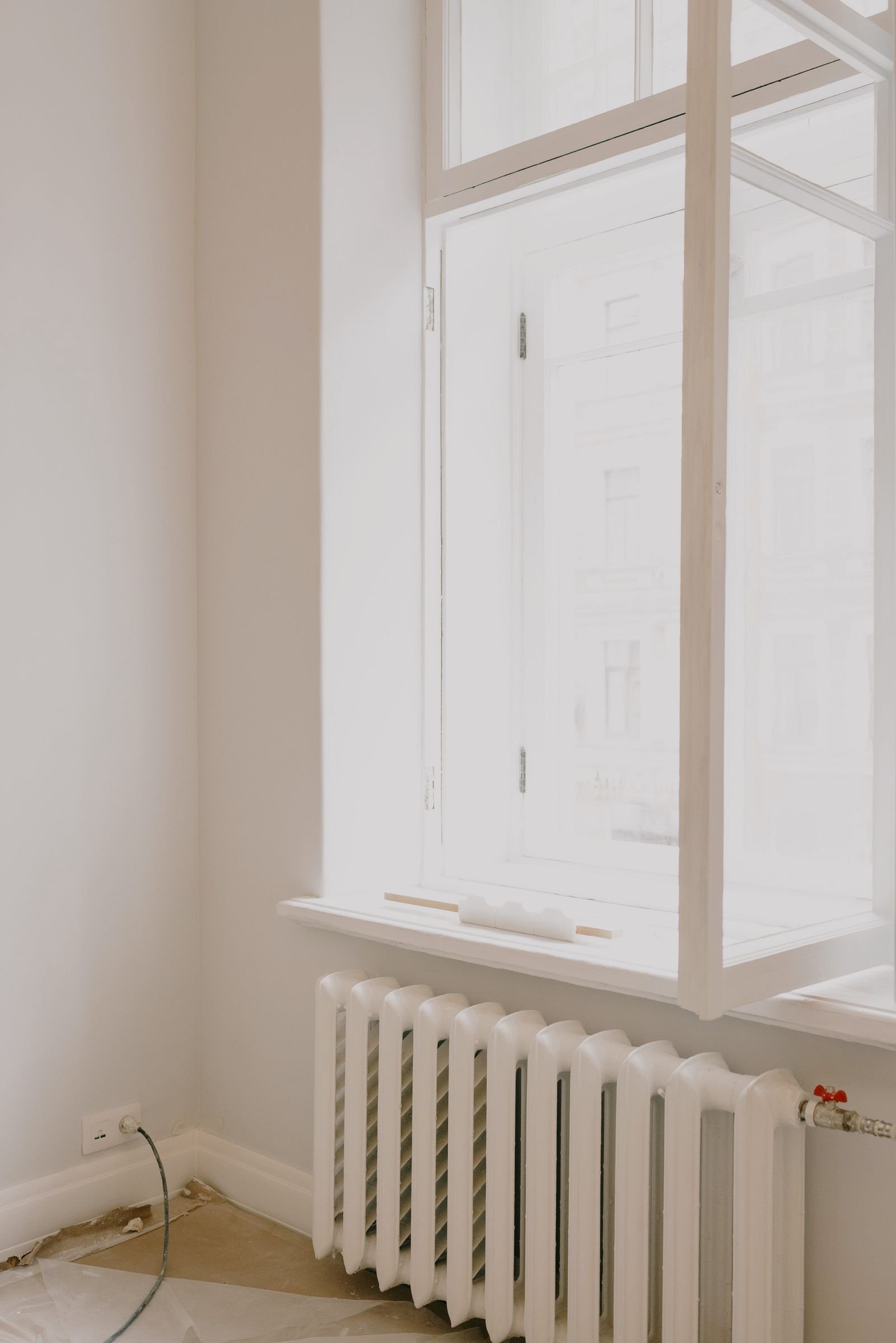
What the foil is for, and how much it really does
Radiator foil is thin reflective sheet, or foam with a reflective face, that sits between the radiator and the wall. The idea is to cut the heat that disappears into the wall behind. The benefit, however, is modest and depends on the wall.
The Wikipedia entry on radiator reflectors summarises the measurements it cites: whole-room energy use fell by up to about 6 per cent in one study, and the entry notes that foils have little effect on radiated heat because radiators give off mostly convective warmth, so most of the benefit is a thin insulating layer. It also says a thin layer of insulating foam can beat plain foil. A foil seller’s guide I read puts the saving at roughly £20 to £30 a year, mostly behind radiators on uninsulated external walls, and says the benefit is smaller on internal walls. Treat that as a vendor’s estimate.
Neither source I opened says anything about condensation or damp, which is the gap this page tries to fill.
Does radiator foil cause damp? Three ways it could
Foil itself never produces water, so any damp has to come from a change in where existing moisture goes. Here are three ways that can happen. These are my reasoning from how walls and moisture behave, not findings from a study.
1. It makes the wall behind colder. Without foil, the radiator warms the wall surface behind it a little. With foil, that heat is turned back into the room, so the plaster behind the foil sits closer to the outside temperature. Indoor air that finds its way behind the sheet meets a colder surface than before, and moist air condenses on cold surfaces. How to find cold spots on walls explains the mechanism.
2. It is a barrier over a wall that needs to dry. A wall with some penetrating or condensation moisture dries a little towards the room. Stick an impermeable sheet over it and that route is closed. The moisture is still there; you have just stopped looking at it. Fixing the water source first matters for this reason: the EPA’s mould guide says to fix leaks and other water problems as soon as possible, and to dry wet materials within 24 to 48 hours.
3. Gaps let humid air in. If the foil is glued flush to the wall with open edges or crumples, warm room air can slip behind it and meet the cold plaster in a sealed pocket that never gets airflow. One manufacturer’s page for a foam-backed foil, tesa’s, says the sheet should not sit directly against the wall and that leaving a small gap allows air circulation to help prevent mould. That is the manufacturer’s own advice, and it is worth following if you buy any foil, but it is a product page, not an independent test.
Check the wall before you stick anything to it
Never use kitchen foil or foil with exposed edges near a radiator valve or electrical sockets, and never cover a radiator that is switched on with the foil resting on hot pipework. Use a product rated for radiator temperatures.
Spend five minutes on the wall behind the radiator first:
- Is it dry? Look for stains, flaking paint, a salty white deposit or black spotting. A damp meter will give you a reading, and how to tell if a wall is damp explains what the numbers mean.
- Is it an external wall? Internal walls lose heat into the next room, not the weather, so foil gains little there.
- Does the room already get condensation? If the windows stream and the corners go black, foil will not help, and condensation on walls is the first problem to solve.
If the wall is damp or showing mould, do not fit foil. Fix the water, let the wall dry, and clean any small mould patch of under about 10 square feet by the EPA’s guidance, then decide.
Three easy ways to fit foil without trapping damp
- Choose the right wall. Fit it only on a dry external wall with no history of damp. Skip internal walls, where the gain is tiny.
- Leave an air path. Use a product made for the job, fit it so the radiator’s own convection can still move air, and avoid sealing the edges tightly against the plaster. Foam-backed foil of about 3 mm gives you a little insulation as well as reflection.
- Inspect it each autumn. Peel back a corner, look at the plaster, and check for dampness or mould behind. If you find any, remove the foil.
If you want a lower-risk way to cut heat loss, the better answer is usually to insulate the wall itself or to fix draughts and ventilation, rather than add another layer behind the radiator.
Foil is low-risk on a dry wall and a bad cover-up on a damp one
On its own, radiator foil does not cause damp. It can make the plaster behind a radiator colder, and it can shield a wet wall from view, so the sensible rule is dry wall first, breathable gap second, annual check third. If you see mould behind the radiator now, the foil is not the cure and not the cause: it is the cold, damp wall. Mould behind furniture covers the same cold-wall problem.
FAQ
Is tin foil behind a radiator safe?
Kitchen foil is thinner and less durable than a purpose-made reflector, and a foil seller’s guide says it is less effective. It can also tear, crease and oxidise. Use a product designed for radiators, kept away from valves and sockets.
Does foil behind a radiator cause condensation?
It can, if humid room air gets behind it and meets cold plaster. A tight, gap-free fit against a cold external wall is the worst case. Leaving an air gap, as one manufacturer recommends, reduces the risk.
Does radiator foil work on internal walls?
Very little. Heat lost into an internal wall mostly warms the room next door, so the saving is small. It is most useful on uninsulated external walls.
Should I put foil behind a radiator that has mould behind it?
No. Deal with the damp and mould first. Foil would hide the wall and could slow its drying.
Do radiator reflector panels cause damp?
I found no study that links them to damp. The same cautions apply: dry wall, an air path, and a yearly look behind.

