
Last Updated on October 26, 2026 by Umar Farooq
Can mold grow on metal? Not on clean, bare metal, because there is nothing in it to eat, but it readily grows on the dust, grease and rust that collect on metal while condensation keeps the surface wet. So the metal is rarely the culprit; it is the coldest, wettest thing in the room, and mould simply moves in on whatever has settled on it.
I find this one oddly reassuring. A steel shelf can’t go mouldy the way a wardrobe can. It can only hold a damp film long enough for something else to do the damage.

Three things that make mould on metal possible
Mould needs moisture and something organic to feed on. Bare metal supplies neither, so on metal it nearly always comes down to three things:
- A film of grime. Dust, cooking grease, soap scum, hand oils and old paint are all organic. A cooker hood, a bathroom towel rail or a garage shelf collects them steadily.
- Rust. Rusted metal is rough and flaky, so it holds water longer than a smooth surface and gives dust somewhere to lodge. That is my reading of the mechanism rather than a measured result.
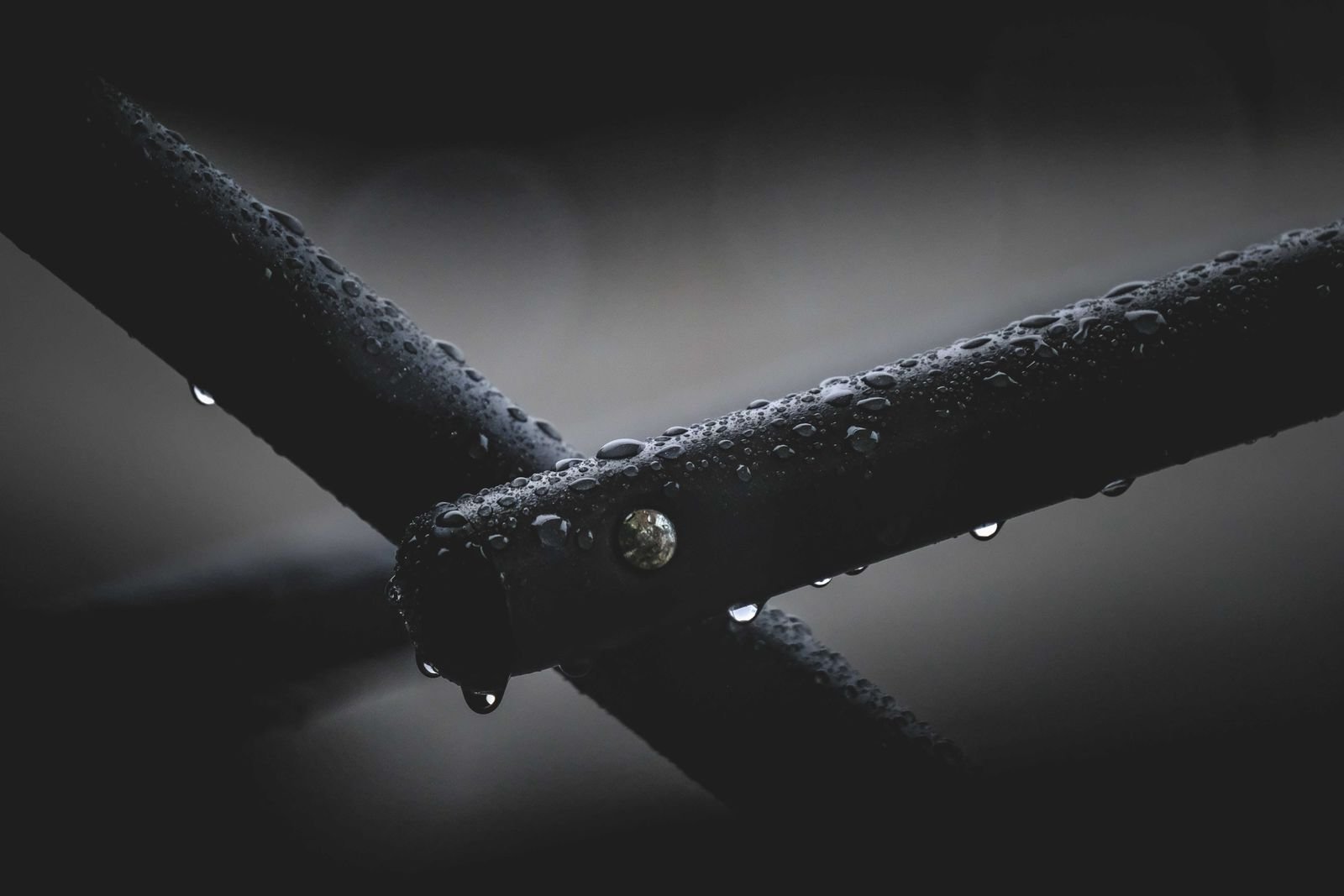
- Condensation. Metal conducts heat away quickly, so it often sits colder than the air around it. Warm, humid air that touches it leaves water behind. How to stop condensation in a metal shed goes through why steel drips while wood merely feels damp.
Take away any one of the three and the odds drop sharply. Take away the water and you have taken away the one the other two depend on.
Can mold grow on metal around the home? Where it usually turns up
- Aluminium and steel window frames, sitting in the wet corner of a condensing window
- Steel garage doors, metal shelving and shed walls
- Pipes that sweat in a cold room (see how to stop condensation on pipes)
- Tools and tins stored in a damp garage or cellar
- Cooker hoods and anything greasy
The same logic holds for other hard, non-porous materials. I explain the plastic version, with the shower curtain as exhibit A, in can mold grow on plastic.
How to clean mould off metal
Wear gloves, eye protection and a dust mask, and ventilate the room. Never mix bleach with ammonia-based cleaners. I would not mix any two cleaners at all.
Metal is a hard, non-porous surface, so cleaning genuinely works, which is more than you can say for plasterboard. The EPA’s method for hard surfaces is short: scrub mold off with detergent and water, and dry completely. Use a non-ammonia detergent, work in small sections, rinse, and dry. Wiping the film off with a damp cloth first, rather than dry-brushing it, keeps the dust down.
Two metal-specific points. Dry it properly with a cloth or a fan, because water left on steel invites rust, and rust invites everything else. And if the surface is already flaking with rust, clean off the loose material, but accept that rough, pitted metal will always hold more dirt than smooth metal.
Stop the sweat, not just the spores
Cleaning removes mould; it doesn’t stop it coming back. What does:
- Cut the humidity. The EPA says the key to mold control is moisture control, and advises indoor humidity below 60%, ideally 30-50%. My page on what indoor humidity should be explains how to measure and hold it.
- Warm or insulate the cold surface where you can, so it stops being the condensation target.
- Wipe the film off regularly. If the grime is the food, a damp cloth every few weeks beats any spray.
- Give stored metal some air. A tool chest jammed against an outside wall is a condensation trap.
My opinion, and I’ll defend it: don’t reach for an anti-mould spray on metal. If the surface is wet every morning, the spray is a distraction from the real fault, which is the damp air.
Clean metal that stays dry is the one surface mould gives up on
So, can mold grow on metal? Only on what lands on it, and only while the damp lasts. Wipe the film off, dry the surface, and fix the humidity or the cold spot, and a steel shelf will outlast most of the other things in your garage.
FAQ
Can mold grow on stainless steel?
The same logic applies: smooth stainless offers nothing to eat, so any growth is on grime sitting on it. I haven’t found a reliable source that treats stainless differently from other bare metal, so I would clean the film and dry the surface.
Can mold grow on rust?
It can be a better foothold than clean metal, because rust is rough and holds water. That is my own reasoning rather than a measured finding. Clean off any growth, dry the area, and deal with whatever is keeping it wet.
Can mold grow on aluminium window frames?
Yes, on the dirt and condensation that collect in the frame’s channel, especially at the bottom corners. The metal is the cold surface that collects the water; the film of dust is what gets mouldy.
Will wiping metal with detergent stop mould coming back?
Not on its own. It removes what is there, and the EPA says moisture control is the key to mold control, so unless the condensation or leak is fixed the film returns and so can the mould.
Is mould on metal a sign of a bigger damp problem?
Often it is a pointer. Metal is usually the first surface to collect condensation, so growth on it can mean the room’s humidity is too high for the other surfaces too.

