
Last Updated on October 25, 2026 by Umar Farooq
Should mouldy plasterboard be replaced? If it is swollen, soft, split at the seams or has been wet for days, yes; if it is firm, dry and only speckled on the surface, it can usually be cleaned. The mould itself is rarely the deciding factor, the condition of the board underneath is.
That is the honest answer, and it is less dramatic than the “rip it all out” and “just bleach it” camps would like. Plasterboard is cheap enough that replacing a damaged patch is rarely a tragedy, and expensive enough in time and mess that you should not do it needlessly.
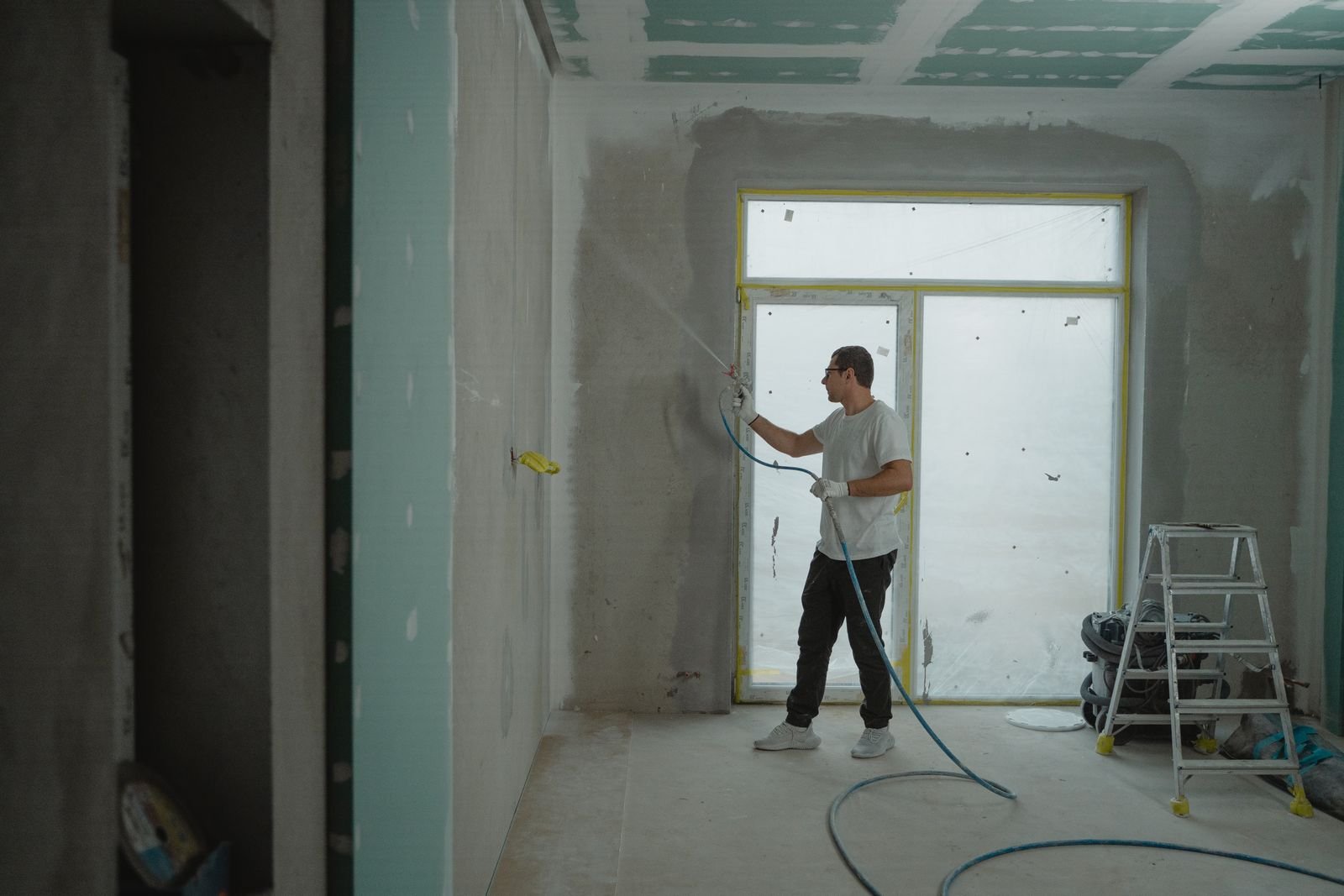
What the EPA says about wet plasterboard
The most useful single rule comes from the EPA’s guidance for water-damaged buildings. For wallboard, its table says the board may be dried in place if there is no obvious swelling and the seams are intact; if not, remove, discard and replace. It also says to ventilate the wall cavity, if possible.
That guide is written for schools and commercial buildings, so treat it as a sound benchmark rather than a rule for your hallway. But it sets the right two questions: has the board swollen, and are the seams still tight? Those are things you can check in a minute.
Five tests: clean it or cut it out
Run through these before you pick up a cloth or a saw.
- Press it. Firm board that does not give is a good sign. Soft, crumbly or spongy board has lost its structure.
- Look at the surface. Bulging, bowing, cracked or peeling paper face means the paper has delaminated from the core.
- Check the seams. Open joints, lifting tape and dark lines along the joint suggest moisture has been sitting in the seam.
- Ask how long it was wet. The EPA advises drying water-damaged areas within 24-48 hours, and that is the window in which materials are easiest to save. Board that stayed wet for days or weeks is a poorer bet.
- Measure the patch. The EPA’s cleanup page says to consult its remediation guidance if mould growth covers more than 10 square feet (about 1 square metre).
Fail one test and the board is on probation. Fail two or three and I would cut it out.
Should mouldy plasterboard be replaced? Match the damage to the action
| What you find | Likely action | Why |
|---|---|---|
| Speckles on firm, dry, painted board | Clean and dry | Growth is on the surface, structure is sound |
| Mould plus a tide mark, board still firm | Find the leak, dry it, then re-check | The stain shows water got in, the board may recover |
| Swollen or bowed board | Replace | The EPA table says remove if swollen |
| Open or dark seams | Replace the affected panel, or at least open and inspect | Paper tape stays wet in the joint |
| Soft, crumbling or sagging | Replace | Core and paper have failed |
| Mould on both faces | Replace | Growth is inside the wall, not on it |
This table is my own summary of the EPA rule and the tests above. It is a guide for common cases, not a survey of your wall.
Mould on the surface only: a cleaning job
If the board passes every test, treat it as a surface problem. How to get mould off walls walks through the method, and the EPA’s cleanup advice is to scrub mould off hard surfaces with detergent and water and dry completely.
Wear gloves and a respirator-type mask, and keep the room ventilated. Do not dry-scrub or sand mould, because that throws spores into the air. If the patch is larger than about 10 square feet (1 square metre), or you suspect sewage or contaminated water, stop and read the EPA guidance. This page gives no medical advice; speak to a doctor if you have health concerns.
When replacement is the cheaper decision
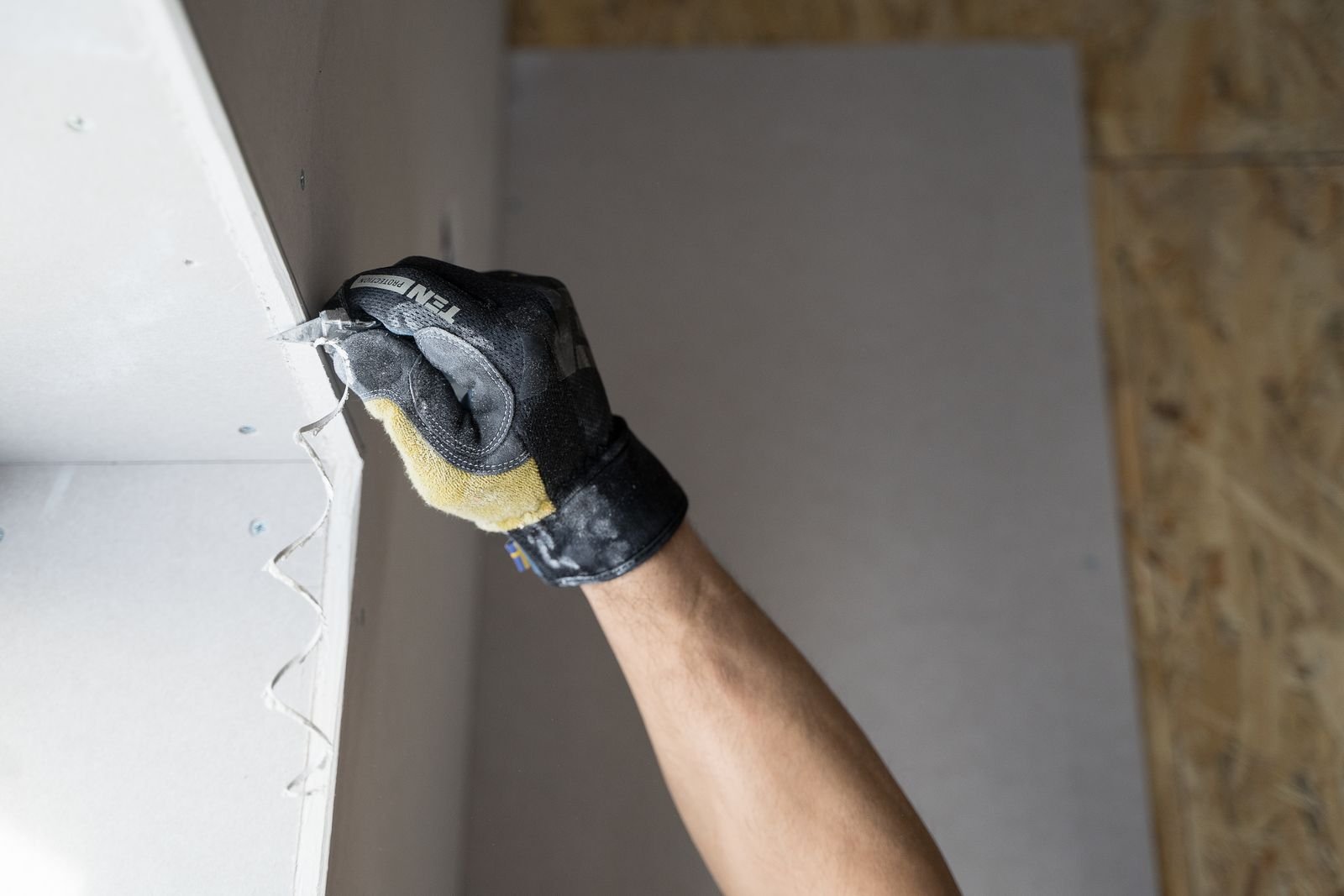
I would replace rather than clean when the same patch has been cleaned twice and has returned. By then you are paying in repeated work for a board that is staying damp inside. Cutting out a section and checking the cavity is cheaper than a third clean, and it lets you see what is behind: wet insulation, a weeping pipe, a cold bridge.
Replace the damp source first. A mould patch that keeps coming back is nearly always a moisture problem still running.
Dry the wall cavity before you close it up
New board over a damp cavity just grows mould on the new paper. After removing the old board, let the studs and any insulation dry. A dehumidifier in the room and open windows when the weather is dry outdoors help, and a damp meter shows when timber and masonry have dried. Only then fit new board and paint.
Judge the board, not the mould
The deciding question is whether the plasterboard is still doing its job. Firm, dry, intact board with surface mould is a clean-and-monitor repair. Swollen, soft or split board is a replace. Most of the time the answer is visible in under a minute, and whichever you choose, the water has to be fixed first or the new board is just a fresh meal.
FAQ
Can you clean mould off plasterboard instead of replacing it?
Yes, if the board is firm, dry and the growth is on the surface only. Scrub with detergent and water, dry completely, and watch for it returning.
How do you tell if plasterboard is too damaged to save?
Swelling, bowing, soft or crumbling board, delaminating paper and open seams are the signs. The EPA table says to remove and replace wallboard that is swollen or has failed seams.
Does mould go through plasterboard?
Mould can grow on both faces and within the paper layers if the board stays wet. Growth visible on one side is a reason to check the other side and the cavity.
How much mouldy plasterboard can you remove yourself?
The EPA suggests small areas, under about 10 square feet (1 square metre), are generally manageable by the householder, with the right protection. Larger areas and any sewage-contaminated water call for a professional.
Can you paint over mouldy plasterboard?
No. The EPA says not to paint or caulk mouldy surfaces, because the paint is likely to peel. Clean, dry, then paint.

