
Last Updated on October 24, 2026 by Umar Farooq
Can a humidifier cause mold? Yes, indirectly: it adds water to the air, and if that pushes indoor humidity above about 60% or leaves surfaces wet, mold gets what it needs. A humidifier does not make mold out of nothing, but it is very good at supplying the moisture.
I get asked this by people who own a dehumidifier as well, which tells you something. If your house is already damp, a humidifier is the wrong machine, and this page explains why.
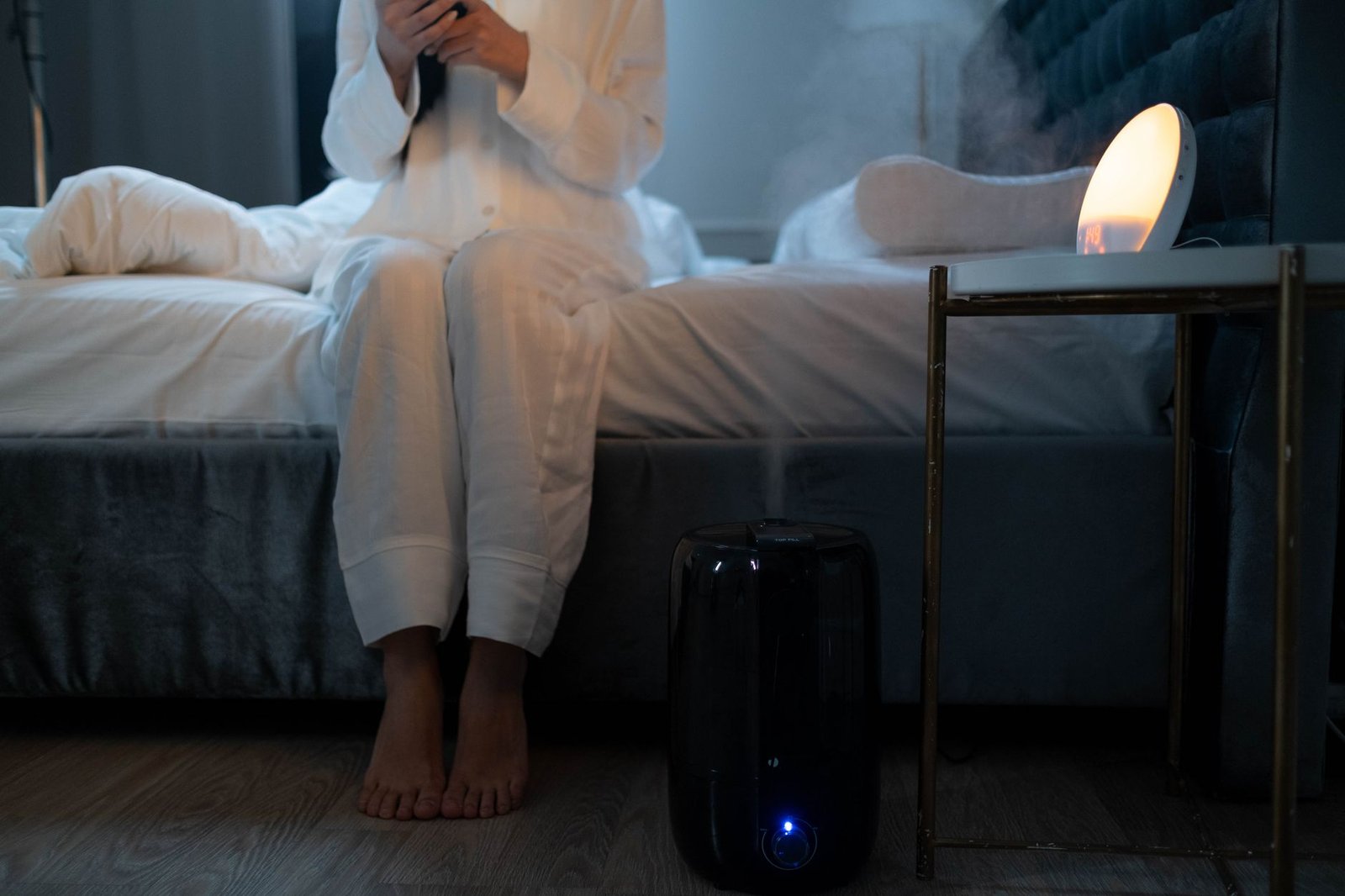
Why a humidifier is not a mould machine on its own
Mold needs moisture, a food source and time. A house has the food (dust, paint, wallpaper paste, timber) by default. The variable you control is moisture, and a humidifier is a moisture source by design.
The EPA’s mold guidance is blunt about the target. In its mold course chapter on moisture and ventilation it says to keep indoor relative humidity below 60%, ideally 30 to 50%, and that humidifiers “should be set to produce less than 60 percent relative humidity in the building”. It also says relative humidity above 60% is likely to cause condensation, which can lead to mold. The EPA’s page on using and caring for home humidifiers is stricter: keep it at or below 50%.
Those two figures differ. I would work to the lower one. Do not read 60% as a switch that starts mold overnight: it is a ceiling to stay under, and visible growth in measured studies takes days to weeks.
Four ways a humidifier ends up feeding mold
- Humidity creeps past the line. A small unit in a small room with the door shut can keep adding moisture with nothing taking it away. Without a hygrometer you will not know until the windows tell you.
- Water condenses on cold surfaces. Moist air meets a cold window, an external wall or the back of a wardrobe and turns to liquid. The EPA’s humidifier page says that if water condenses on windows, walls or pictures, you should move the humidifier, turn the humidistat down or use it less.
- The mist wets things. The EPA advises not letting the area around a humidifier become damp, and keeping absorbent materials such as carpets, curtains and tablecloths dry. If the output cannot be reduced, it suggests running the unit intermittently.
- The unit itself goes dirty. The EPA says filters in a humidifier can become moldy, and it advises against letting water sit in the tank for long periods. A dirty tank is a separate problem from room humidity, but the machine then puts the mess into the air.
Can a humidifier cause mold in a damp house? More easily than in a dry one
Here is my opinion, and I will stand behind it: if you can see condensation on your windows in the morning, do not own a humidifier for that house, however dry your throat feels.
A humidifier suits a house that is genuinely dry, typically a heated one in deep winter. Damp houses are the opposite problem, and a dehumidifier is the tool that lowers the number. Putting a humidifier in a damp room is working against yourself. The difference between a humidifier and a dehumidifier is worth reading if you are not sure which problem you have. And if you are weighing up one machine that does both, I covered why that rarely works in the humidifier dehumidifier combo guide.
If the air really is dry, what humidity is too low in a house tells you where the floor is, so you do not overshoot in the other direction.
Use a humidifier without growing mold
Unplug the humidifier before you empty, move or clean it. Follow the manufacturer’s manual for cleaning agents and never mix cleaning products.
This is the routine the EPA and most manufacturer manuals converge on. I have not tested any particular model, so check yours.
- Buy a hygrometer first. They are cheap, and the EPA notes a relatively inexpensive meter can measure humidity. Put it away from the humidifier, at the other side of the room, so it reads the room and not the mist.
- Aim for 30 to 50%. Stay at or below 50% if you can. Turn the unit down or off when the reading climbs.
- Use the water your manual specifies. The EPA recommends low-mineral water, specifically bottled water labelled distilled, for portable units. Some manuals allow tap water with a demineralisation cartridge. Read yours.
- Empty, wipe and refill daily. The EPA says to empty the tank, wipe surfaces dry and refill with fresh water every day for portable units.
- Clean on schedule. The EPA suggests every third day for portable units, scrubbing the tank to remove scale or film, and rinsing well. Manufacturers vary, so your manual wins where it is more specific.
- Dry it before storage. Clean it at the end of the season and make sure every part is dry before it goes in a cupboard.
- Do not run it in a room that is already damp. If the hygrometer is reading over 60% without the humidifier, stop and fix the damp first.
| What you see | Likely cause | First move |
|---|---|---|
| Streaming windows or wet sills | Humidity too high or surfaces too cold | Lower the setting, check with a hygrometer |
| Damp curtains or carpet near the unit | Mist landing on fabric | Move it, reduce output, run it intermittently |
| Slimy film or dark specks in the tank | Dirty tank | Unplug, clean per the manual, change the water |
| Musty smell near the unit | Dirty filter or tank | Clean or replace the filter per the manual |
When mold shows up near a humidifier
Turn the humidifier off and unplug it. Find out whether the growth is on the machine, or on a wall, window frame or fabric near it.
For the machine, follow the manufacturer’s cleaning instructions, and replace a filter that is visibly moldy. If the growth is on a hard surface, how to get mould off walls walks through the safe method. The EPA’s brief guide to mold and moisture says that if the area is less than about 10 square feet (roughly 3 by 3 feet) you can generally handle the cleanup yourself, and that the moisture problem has to be fixed or the mold returns. Here that source is the humidifier, so that is the first thing to change.
Do not restart the machine until the room has dried out, the unit is clean and the settings are back in range. For the number to watch, what humidity mold grows at explains where the line really sits.
Keep it under 50% and the mold has nothing to work with
A humidifier causes mold when it is left to run unchecked, wets surfaces, or is not cleaned. Used with a hygrometer, a 30 to 50% target and the cleaning routine in your manual, it is not much of a risk. And in a house that is already damp, the honest answer is that you do not need one.
FAQ
Do humidifiers cause mold in your house?
They can, but not on their own. Mold appears when humidity stays high, surfaces get wet or the tank and filter are dirty. Keeping the room at 30 to 50% with a hygrometer and cleaning the unit regularly removes most of the risk.
Can a humidifier grow mold inside it?
Yes. The EPA says humidifier filters can become moldy and warns against leaving water in the tank for long periods. Emptying and wiping it daily and cleaning it as the manual says is the standard defence.
What humidity level is too high when using a humidifier?
The EPA gives two figures: stay below 60%, and for portable humidifiers at or below 50%. The EPA’s ideal range is 30 to 50%, so I would aim there.
Is it safe to sleep with a humidifier on?
I cannot give medical advice. Practically, check the bedroom reading with a hygrometer, keep the mist away from bedding and curtains, and use the humidistat setting rather than leaving it on at full output all night.
Cool mist or warm mist: which is less likely to cause mold?
I have not found a primary source that ranks one above the other for mold, so I will not claim one. Both put water in the air, and both need the cleaning schedule in their manual.

