
Last Updated on October 25, 2026 by Umar Farooq
Why is wallpaper peeling off the wall? Because the bond between paste and wall has failed, and the usual culprits are moisture (condensation, a leak or damp from the ground) or a wall that was dusty, glossy or too absorbent when the paper went up. The job is to work out which, because re-pasting fixes only one of them.
I like to think of peeling wallpaper as the wall filing a complaint. Seams that lift politely are one kind of complaint. A whole corner sliding off with a damp smell is another.

Five reasons wallpaper lets go of a wall
| Cause | What it does to the paper | Typical clue |
|---|---|---|
| Condensation | Wets the paste on a cold surface, so it weakens | Outside walls, corners, behind furniture; worse in winter |
| A leak or penetrating damp | Soaks the plaster from outside or from a pipe | A local patch, stains, can grow after rain |
| Rising damp | Wets the paper from the base of the wall | Low-level lifting with a tide-mark |
| Poor preparation or paste | Paste dries before it bonds, or has nothing to grip | Seams or edges only; dry, odour-free wall |
| Painted-over or glossy wall | Paste grips the paint, not the wall, and the paint lets go | Paper comes away with a skin of paint |
The first three are water problems. The last two are decorating problems. Wallpaper and paint makers agree on the second pair: Asian Paints, a paint and wallpaper manufacturer, lists dusty, uneven, overly absorbent or damp walls, and too little or the wrong adhesive among the main reasons for peeling. The wallpaper printer meinewand adds that a wall should be clean, dry, smooth and slightly absorbent, and that a very absorbent wall needs a diluted paste primer or sealer, otherwise the paste can dry too quickly and lose its grip before the paper bonds.
On the water side, UK government guidance calls condensation the most common form of damp, where moisture made inside the home condenses on colder parts of the building. That is why I suspect condensation first when the peeling is on an outside wall in winter. That ranking is my judgement, not a finding.
Why is wallpaper peeling off the wall in one spot and not another?
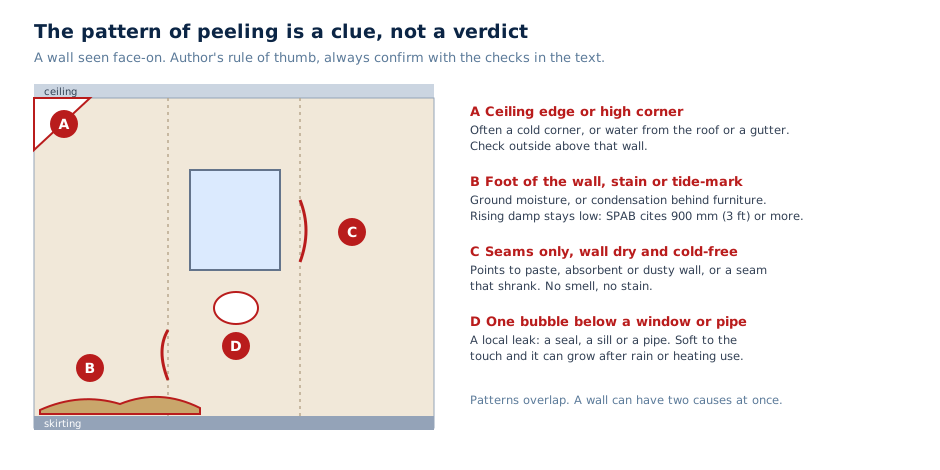
The pattern narrows it down, though it never proves anything on its own:
- Top of the wall or a high corner. Often a cold corner where room air cools against the wall, or water arriving from the roof line or a blocked gutter. Look outside above that wall.
- Foot of the wall with a stain. Ground moisture, or condensation behind a wardrobe. Rising damp stays low on the wall, so a patch up near the ceiling is not rising damp.
- Seams and edges only. The classic paste or preparation fault. If the wall behind is dry and smells of nothing, I would bet on adhesion.
- One bubble below a window or pipe. A local leak is likelier than anything general.
Steamy rooms are their own case: a bathroom or kitchen asks the paper to cope with repeated wetting. I treat ordinary paper in those rooms as high risk.
Damp or poor adhesion? Run these checks before touching the paste
Neither a smell nor a stain is a diagnosis, but together they separate the two. Work through these in order:
- Smell. A musty, earthy smell near one wall points to damp, not paste.
- Colour. Yellow-brown tide-marks, or grey and dark patches showing through the paper, mean water has been there. Dry peeling with no marking leans towards adhesion.
- Feel. Press a flat palm on the wall. Cold and slightly clammy compared with the wall next to it, or soft plaster, is a water clue. How to find cold spots on walls explains how to compare surfaces properly.
- Peel back one flap. Lift a loose corner. If the back of the paper and the wall are dry, with a thin paste film, it is adhesion. If both are damp, stained or speckled, stop and read the warning below.
- Does it follow the weather? Peeling that worsens in cold spells and eases in summer suggests condensation. Peeling that follows rain suggests a leak. Rising, penetrating and condensation damp lays out the three side by side.
- Read the room. Put a hygrometer in the room for a few days. Indoor humidity is commonly advised to sit below 60 percent, ideally 30 to 50 percent; a room that lives above that gives condensation plenty to work with. I have no measured threshold for when paste fails, so treat this as context, not a pass mark.
If a flap shows dark speckled growth on the back of the paper or the wall, do not pull the paper off in large sheets. Disturbing it can throw spores into the air. Close the flap, ventilate the room, and read mould behind wallpaper for the safe checks. This page gives no medical advice.
When peeling is the symptom and mould is the next stage
I will not repeat the mould checks here. The short version: peeling and bubbling are what you see when water has been behind the paper for a while, and mould is what can follow in the same gap. If you already have both, the question is whether the water came from a leak or from condensation, which is mould on walls from a leak or condensation answers by where the growth sits and how it follows the weather.
Fix the cause, then the paper
Re-hanging paper onto a damp wall will fail again, and Asian Paints says as much: fix leaks before hanging, and replace the section if peeling recurs or damp is behind it. The order I would follow:
- Stop the water. Repair the gutter, seal, pipe or render. Removing the water source matters more than wiping the surface, and UK government guidance stresses tackling underlying causes, not just surface mould.
- Cut condensation. Ventilate, heat evenly and keep furniture off cold outside walls. Condensation on walls and ceilings gives the order.
- Let the wall dry fully. Wait until the wall feels the same as its neighbours and stays that way for a week or two. How long is my judgement, because it depends on the wall and the season.
- Prepare it. Strip loose paper and old paste residue, wash off dust, fill and sand, and abrade any gloss paint so paste has something to grip. For a very absorbent wall, use the paste primer or sealer the maker recommends.
- Re-paper, or re-stick just the seam. If only a seam lifted on a dry wall, seam adhesive and a gentle roller is reasonable. meinewand advises rolling seams gently so the paste is not squeezed out.
If you cannot tell which kind of damp you have, an independent surveyor is a better first call than anyone selling a treatment.
Wallpaper peeling off the wall usually means water, so check the wall before the paste
If the wall is dry, the paper was badly hung or the wall badly prepared, and a decent job fixes it. If the wall is cold, marked or smells, the paper is only reporting the problem, and no amount of paste will make the report go away.
FAQ
Why is my wallpaper peeling at the seams?
Seams lift when paste was thin, dried too fast on an absorbent wall, or was squeezed out when the seam was pressed. Paper can also shrink slightly as it dries and open the join. If the wall is dry and odour-free, it is usually adhesion rather than damp.
Can damp make wallpaper peel off?
Yes. Moisture in or on the wall weakens the paste and lets the paper expand and lift. Stains, a musty smell and a cold or soft wall point to damp rather than a paste fault.
Why is wallpaper bubbling on the wall?
Bubbles appear where air or water sits between paper and wall. A single bubble below a window or pipe suggests a local leak. Bubbles across a cold outside wall suggest condensation or poor paste coverage, so peel back a flap and look.
Can I wallpaper over a wall that has peeled before?
Only after you know why it peeled. If the cause was damp, fix it and let the wall dry first. If it was preparation, remove loose paper and old paste, sand gloss and use a primer before hanging.
Should I use a dehumidifier if the wallpaper is peeling?
It can help if condensation is the cause, because it lowers the room’s humidity. It will not fix a leak or ground damp, so find the water source first.

