
Last Updated on October 26, 2026 by Umar Farooq
How to store photos to prevent mold: keep them in a cool, dry interior room at 30 to 50% relative humidity, in lidded boxes on a shelf, and never in the loft, cellar or garage. The room matters more than the box, because mould follows the damp.
The shoebox in the wardrobe is the traditional family archive. It is also a box of paper and coatings, stored in the least ventilated corner of the house, which is a thoughtful way to feed mould.

Why do stored photos go mouldy?
Prints are paper and a coating, and mould will grow on both when conditions allow. Those conditions are moisture plus time, and the moisture comes from the air: a damp loft, a cellar, a garage, or a cold external wall that sweats. The Library of Congress calls relative humidity the most important single factor in preserving most photographic prints, and warns against storage with a high risk of condensation, leaks and extreme swings (Library of Congress, care of photographs).
A sealed box does not help if the air inside is already damp. It just keeps that air in.
How to store photos to prevent mold: pick the room first
The best spot is an interior room of the main living space, on a shelf or in a wardrobe on an inside wall, away from anything that leaks or radiates heat.
The Library of Congress says to avoid attics, basements, exterior walls, and spots near vents, fireplaces and radiators. The US National Archives agrees on the problem places, naming damp basements, garages and hot attics, and adds keeping photos away from pipes, windows and roof leaks, and on a shelf so they stay dry (National Archives, storing family papers and photographs).
In a British house that usually means: a bedroom wardrobe on an inside wall, a landing cupboard, or a high shelf in a heated room. Not under the stairs if it is cold, not in the garage, and not against the outside wall of the box room.
What humidity should photos be kept at?
Two authorities give different numbers, which is worth being clear about:
| Source | Relative humidity | Temperature |
|---|---|---|
| Library of Congress | 30 to 50% | 21°C (70°F) or below for general prints |
| National Archives | Below 65% (and avoid below 15%) | Below 24°C (75°F) |
The NARA figure is a ceiling for mould and insects, and the LoC figure is the range for good preservation. My opinion is to aim for the LoC range and treat 65% as the line you must never cross. The Library of Congress also wants humidity to stay steady, with swings of less than 5% in 24 hours, which is a good reason to avoid a room with a radiator on one side and an outside wall on the other.
A hygrometer in the room where the box lives tells you where you stand, and where to put a hygrometer covers placing it so the reading means something. For why a number above 60% matters, see what humidity mould grows at.
Which boxes, sleeves and albums should you use?
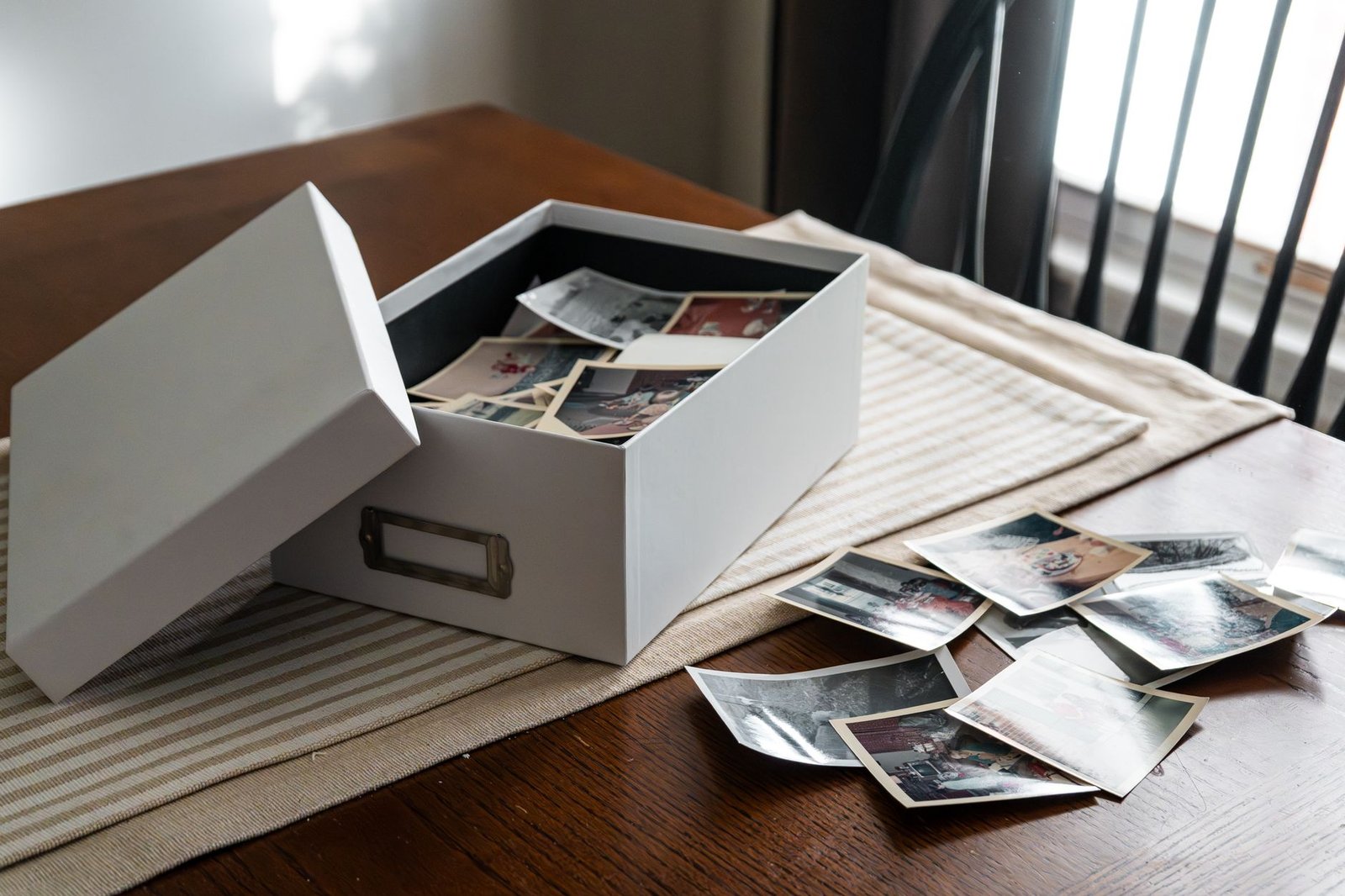
Use proper storage: lidded boxes, folders or sleeves made for archival use, kept on a shelf. The National Archives page covers boxes, folders, rolls, sleeves and albums, plus a list of materials to avoid, so read it before choosing. My practical rules, from mechanism rather than a standard:
- Do not stack the box on the floor. Floors are the coldest, dampest surface.
- Do not pack so tightly that prints are squeezed together. Gaps give air a way through.
- Do not store loose prints in plastic bags, which can hold moisture in against the print.
- Label the box with the date you last checked it.
Digital copies are the real insurance. Scan the ones that matter and keep the scans somewhere else, because even a well-stored print ages.
How often should you check, and what if one is already mouldy?
Look through the box once a year. A musty smell, white or grey fuzzy patches, or prints stuck together are the warning signs.
If you find mould, do not wipe or wash the prints. Wear a mask and gloves, handle the box outdoors or by an open window, and separate the affected prints from the rest. If you have health concerns about mould, speak to a doctor.
For prints that matter, the EPA advises asking a specialist, because mould in porous materials can be difficult or impossible to remove completely and an item may not return to its original appearance (EPA, brief guide to mold, moisture and your home). Fix the damp that caused it before anything goes back in the room: how to stop mold on books explains the same logic for paper, and how to prevent mold in a storage unit covers the case where the box lives off-site.
Dry air, an inside wall and a yearly look: the whole method
Photographs survive in dull, stable, dry conditions. Choose an interior room, aim for 30 to 50% humidity, use lidded archival boxes on a shelf, scan what matters, and check once a year. That is less glamorous than an attic trunk, and a lot more likely to leave you with faces rather than fuzz.
FAQ
What is the best place to store old photographs?
An interior room in the heated part of the house, on a shelf or in a wardrobe against an inside wall. Avoid lofts, basements, garages and outside walls, which both the Library of Congress and the National Archives flag as risky.
Can I store photos in plastic boxes?
You can, but the box must be dry inside and the room dry outside. A sealed plastic box traps any moisture already there. Archival-grade containers made for photographs are a better choice than a general tub.
Does a dehumidifier help protect photographs?
It can, in a room that stays above the safe humidity range, such as a damp spare room or cellar. It is better to move the photos to a drier room if you can, and to use a hygrometer to see whether the room needs help at all.
Can I fix photos that are already mouldy?
Do not try to clean valuable prints yourself. Isolate them, wear a mask and gloves, and ask a conservator or specialist, as the EPA suggests for valuable or sentimental items.
How often should I check stored photos?
Once a year is a sensible habit, with an extra look after any leak, flood or very damp spell.

