
Last Updated on October 23, 2026 by Umar Farooq
How to reduce humidity in a kitchen: put lids on pans, run a cooker hood that vents outside (not a recirculating one), keep the kitchen door shut while you cook, then open a window wide once the steam has stopped. Do those four things and most kitchens stop streaming without any gadget being bought.
If your kitchen window mists up every time pasta is on, that is not bad luck. It is water that used to be in a pan and is now in your air, looking for the coldest surface in the house.

Where the water in a kitchen actually comes from
Boiling and simmering are the big one. Every bit of steam is water leaving the pan, and the kitchen air takes it. The kettle does the same in smaller doses, many times a day. Cooking with gas adds a little water vapour of its own as well, because burning gas produces water.
The dishwasher is the quiet one. It is sealed while it runs, but when it finishes and you open the door, hot wet dishes and a hot wet tub release their moisture into the room. Air-drying dishes on the rack, a heated airer in the corner, or a tumble dryer that is not vented outside are all the same thing: wet stuff drying in the room you are trying to dry.
I have not measured how much each contributes in a typical kitchen, and I would distrust any article that gives you a confident percentage. The order of attack matters more: stop the steam leaving the pan, remove what escapes, stop it spreading, and only then treat the air. The rest of the house is covered in how to lower humidity in a house.
Put a lid on it, and stop boiling things for longer than they need
This is the cheapest fix in the article and the one most people skip. Water that stays in the pan does not need extracting. The GOV.UK guidance on damp and mould lists cooking with pan lids on as one of the small steps that reduce moisture, alongside covering pans generally.
My opinion, and I will stand by it: a lid is a better humidity control than most things you can plug in. It costs nothing, it stops the vapour at the source, and it also brings the pan to the boil sooner. Turn the heat down to a simmer once it boils, because a rolling boil past that point is just steam production for its own sake.
Boil only the water the pot needs, fill the kettle with only what you will use, and drain the pasta under the hood with the fan on.
Check whether your cooker hood actually goes anywhere
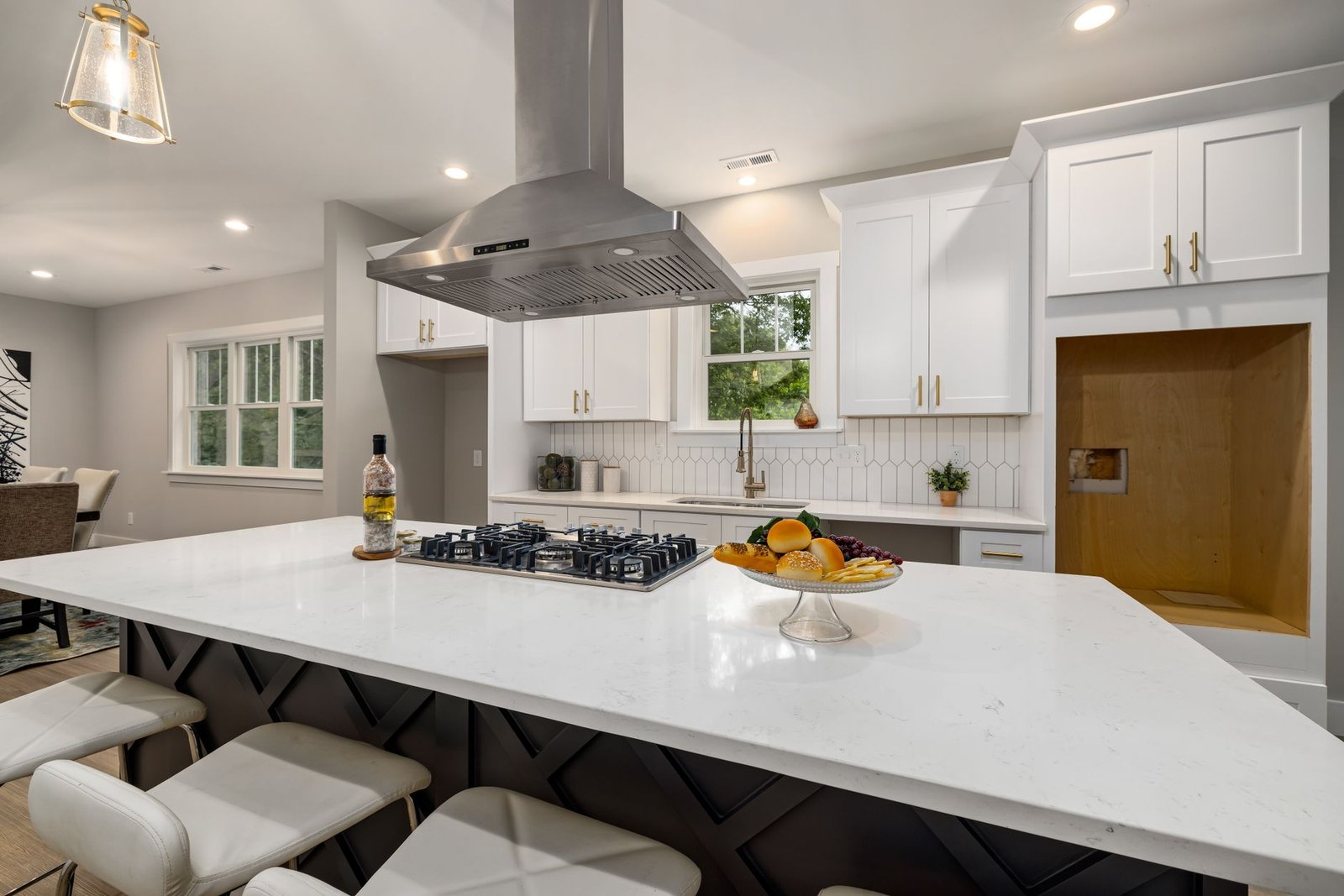
A ducted hood pulls the steam up and carries it through a pipe to the outside. A recirculating hood pulls the air through a grease filter and a carbon filter and puts it straight back into the kitchen. Look at the top: if there is a pipe running to an outside wall or through the ceiling, it is ducted. If it is a box with vents on top and no pipe, it is recirculating.
Here is what a recirculating hood does, and what it does not. The filters catch grease and smell. They do not catch water vapour. Cata, a hood manufacturer, says it plainly: carbon filters do not remove water vapour, so humidity stays elevated during and after cooking, and over time that can cause condensation on windows and walls.
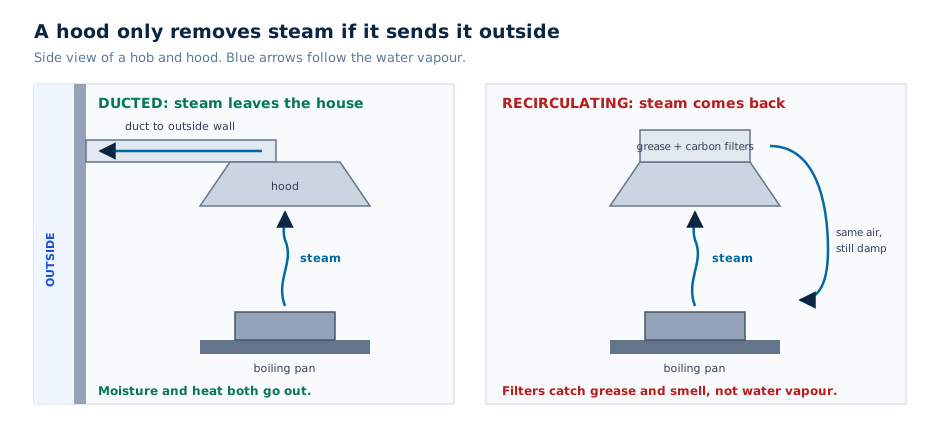
So if you have a recirculating hood, do not rely on it for moisture. Run it for the grease and the smell, and treat the window and the door (below) as your actual humidity controls. If you are renovating, a ducted hood is worth the pipework. If you rent, the same GOV.UK guidance asks whether a kitchen extractor is powerful enough to remove cooking moisture and linked to the outside, so it is a fair thing to raise with a landlord, and our apartment guide covers how.
Two habits make any hood work better. Switch it on before the pan heats, not when the window is already misting, and leave it running for a few minutes after you turn the hob off. The steam keeps coming off a hot pan for a while.
How to reduce humidity in a kitchen with the door and the window
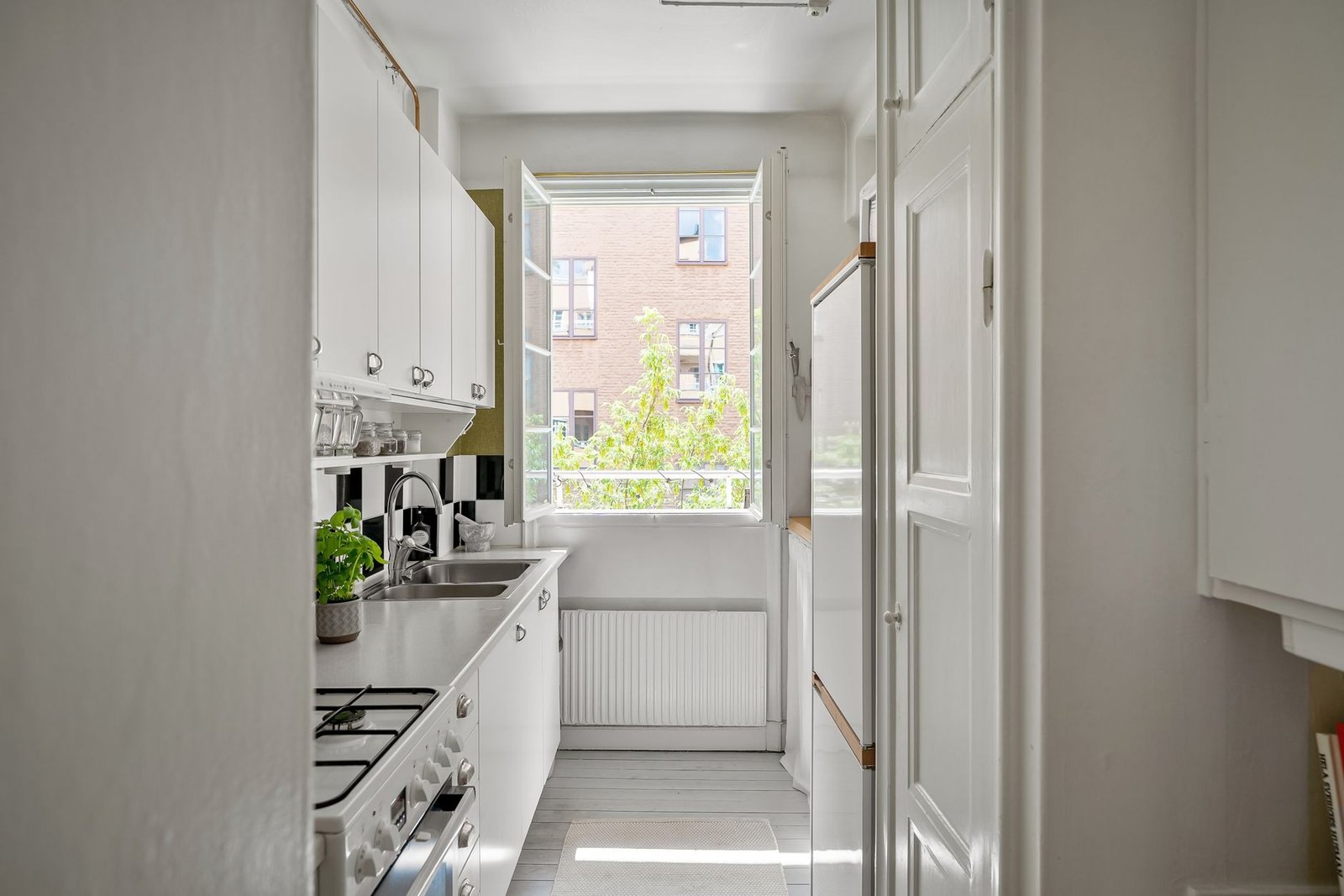
Steam travels. A kitchen with its door open shares its moisture with the hallway, the stairs and the bedrooms above, where it ends up condensing on the cold bedroom window. The GOV.UK guidance suggests keeping internal doors shut while cooking and bathing, and opening a window wide for a while afterwards. I agree on both.
The timing matters, and this part is my own judgement rather than a quoted rule. While you are cooking, the hood should be doing the extracting and the window can stay shut or just ajar, so you do not pull the steam through the rest of the house. Once the hob is off and the steam has stopped climbing, open the window wide for ten to fifteen minutes, then close it. A wide window for a short time swaps the air much faster than a crack left open all afternoon, and it does not chill the whole house.
One caveat: it only helps if the air outside is drier than the air inside. On a muggy evening you may be swapping damp for damper, and a cheap hygrometer settles it. The EPA brief guide to mould and moisture advises keeping indoor relative humidity below 60 percent, ideally between 30 and 50 percent, and says to use exhaust fans or open windows during cooking and dishwashing.
Treat the dishwasher and the drying rack as moisture sources
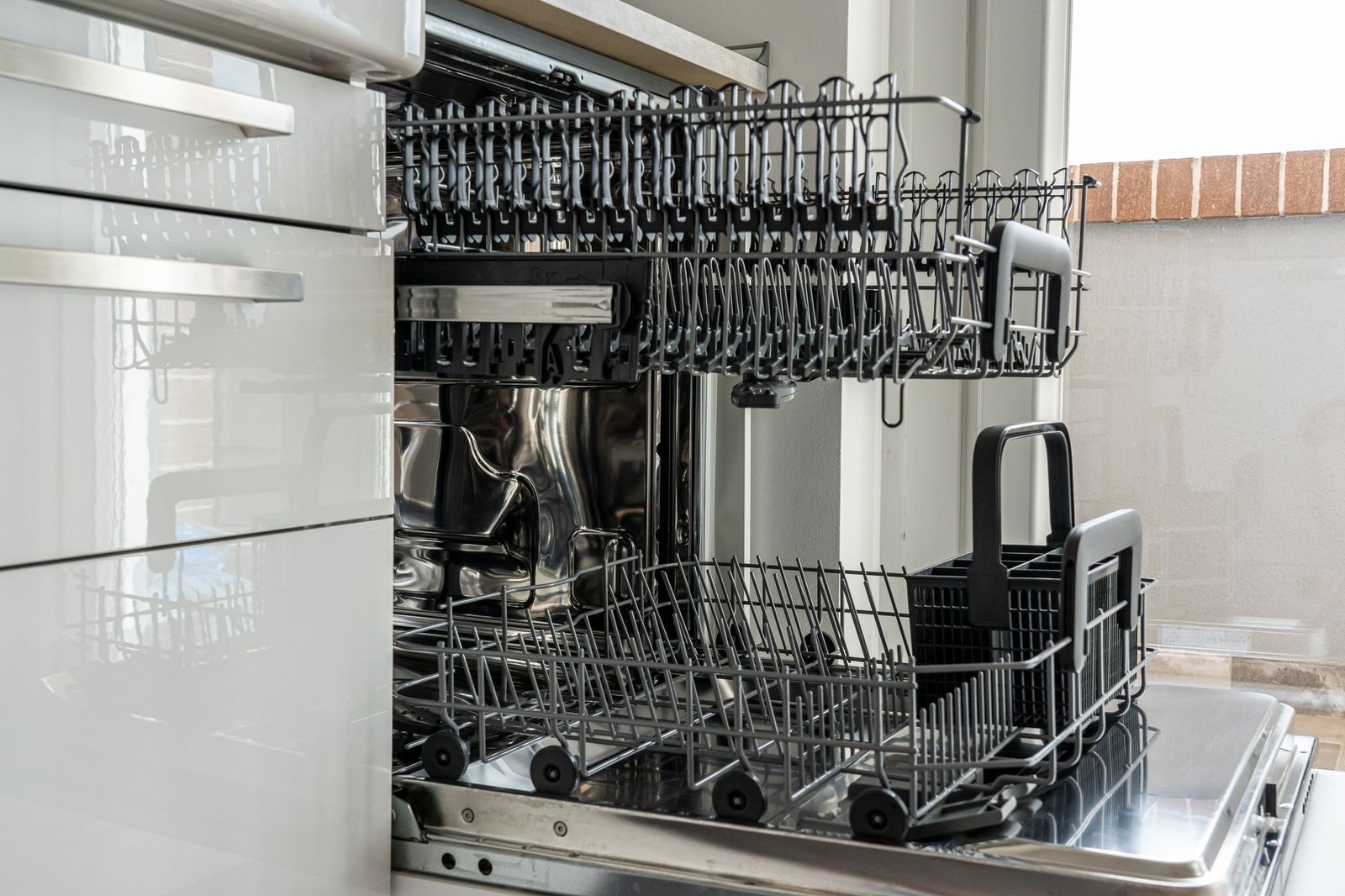
Open the dishwasher with the hood on or a window open, or run it in the evening and open it the next morning once everything has cooled. Dry hand-washed dishes with a towel or on a rack by an open window rather than in a closed-up corner. A tumble dryer should vent outside, and clothes on a heated airer in a small kitchen will undo every other thing on this page.
And look under the sink. A slow leak from a trap or a dishwasher hose adds moisture all day, and no lid discipline will beat it. Run a dry tissue along the cupboard floor.
Where a dehumidifier fits in a kitchen
A dehumidifier is the last step, not the first. It treats the air that is already humid, which is useful when the weather is damp, when you cannot ventilate, or when the kitchen shares a space with a laundry corner. It does nothing to stop the steam being made, and it does not replace a hood that vents outside.
If you have done the lids, the door and the window and the glass still mists, a small compressor model on a humidistat setting can hold the room steady. Keep it clear of the hob and the sink splash zone, give it room to breathe, and keep its lead off any wet worktop. The what size dehumidifier do I need guide covers capacity, and a small unit is plenty for most kitchens.
Fix the steam at the pan first, the air second, and buy a machine last
How to reduce humidity in a kitchen comes down to an order of operations. Lids and a simmer stop most of the vapour at the source, a hood that vents outside removes what escapes, a shut door keeps the rest from visiting the bedrooms, and a short, wide window opening clears it when the outside air is drier. Only then does a dehumidifier earn its place, usually for a small job. The longer question of whether cooking causes damp is covered separately.
And if you have a recirculating hood and have been blaming the window, now you know where the water went.
FAQ
Why is my kitchen so humid?
Boiling water, kettles, a dishwasher and drying laundry all put water vapour into the air, and a kitchen is a small room with a lot of heat. Without a hood that vents outside or a window opened at the right time, that moisture has nowhere to go and condenses on the coldest surfaces.
Does a cooker hood reduce humidity?
Only a ducted hood does, because it sends steam outside. A recirculating hood filters grease and smell and returns the air, vapour included, to the kitchen, so it will not lower humidity in any useful way.
Should I open a window while cooking?
If you have a ducted hood, keep the window mostly shut so the hood pulls the steam out. If you only have a recirculating hood, a window open a little can help, and a wide opening for ten to fifteen minutes after cooking helps more, provided the air outside is drier than the air inside.
Will a dehumidifier help in a kitchen?
Yes, as a back-up. It dries the air after the steam has been made, so it helps on damp days or where you cannot ventilate well. It does not replace lids, a hood or a window, and it will not fix a leak.
What humidity should a kitchen be?
The same as the rest of the house: the EPA says to keep indoor relative humidity below 60 percent, and ideally between 30 and 50 percent. A kitchen will spike higher while you cook, so what matters is how quickly it falls back afterwards.

