
Last Updated on October 24, 2026 by Umar Farooq
Condensation on outside of windows is dew: the outer pane has cooled below the outdoor dew point, usually on a clear, still night, and the water clears once the sun or wind reaches the glass. It looks alarming and is almost always harmless.
I would go further and call it a mild compliment. Your glazing is holding the heat in so well that the outer pane gets cold enough to collect dew, exactly like your car roof or the lawn.

Why the outer pane gets colder than the air around it
Air holds water vapour, and the amount it can hold falls as the temperature falls. The temperature where it can hold no more is the dew point. Any surface colder than that collects water.
On a clear night the outer pane radiates heat to the sky, and nothing sends it back. Modern double glazing makes this worse in a useful way: the gap and any low-e coating slow heat from your room reaching the outer pane, so it cools further than the surrounding air.
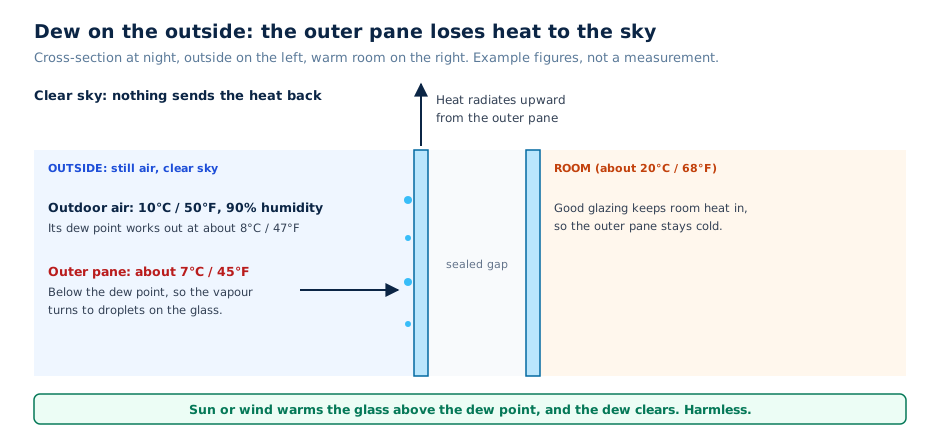
Here is an illustrative sum (my own, using the standard Magnus formula, so treat it as rounded). Outdoor air at 10°C / 50°F and 90% relative humidity has a dew point of about 8°C / 47°F. If the outer pane drops just a few degrees below the air, to 7°C / 45°F, it is already under the dew point and the glass mists. The pane temperature in that example is an assumption to show the principle, not a measurement.
It takes five conditions at once
Cardinal Glass, quoted by window maker Longlife, lists the same set, and it explains why you see it only some mornings:
- Glass below the dew point. The basic requirement.
- A clear night sky. Cloud acts as a blanket and reflects heat back down.
- Still air. Wind keeps mixing warmer air against the glass.
- Humid outdoor air. Damp autumn and spring mornings qualify.
- Well-insulating glazing. Less room heat reaches the outer pane.
Andersen notes it is most common in spring and autumn, when cool nights follow warm days, and may appear only a few times a year. Natural Resources Canada adds that it may form around sunrise and that low-e coatings can contribute.
Wipe the glass to find out which side is wet
Before you decide anything, check the side. It takes ten seconds and settles most worries.
- Wipe the inside face with a dry finger or cloth. If the droplets move, the water is on the room side, which is a different problem: damp indoor air. Start with the room-side guide, then how to stop it.
- If the inside is clear, wipe the outside. Water that wipes off the outer face is dew.
- If neither side wipes clean and you can see mist or droplets in the gap between the panes, the sealed unit has failed. Condensation inside double glazing is the one case where the window itself is at fault.
Condensation on outside of windows is not a dehumidifier job, and indoor humidity is not the cause
The moisture comes from outdoor air, so drying your rooms does nothing to it. If someone suggests a dehumidifier for water on the outside of the glass, politely decline.
The one link with indoors is air conditioning. In a humid summer, a cooled room can chill the glass enough for the outside face to mist. That is still outdoor humidity meeting a cold surface, and the cure is not a machine but warmer glass or a higher setpoint. If your real problem is a muggy house rather than a misty window, work out what size dehumidifier you need before you buy.
What makes it clear faster, and what makes it more likely
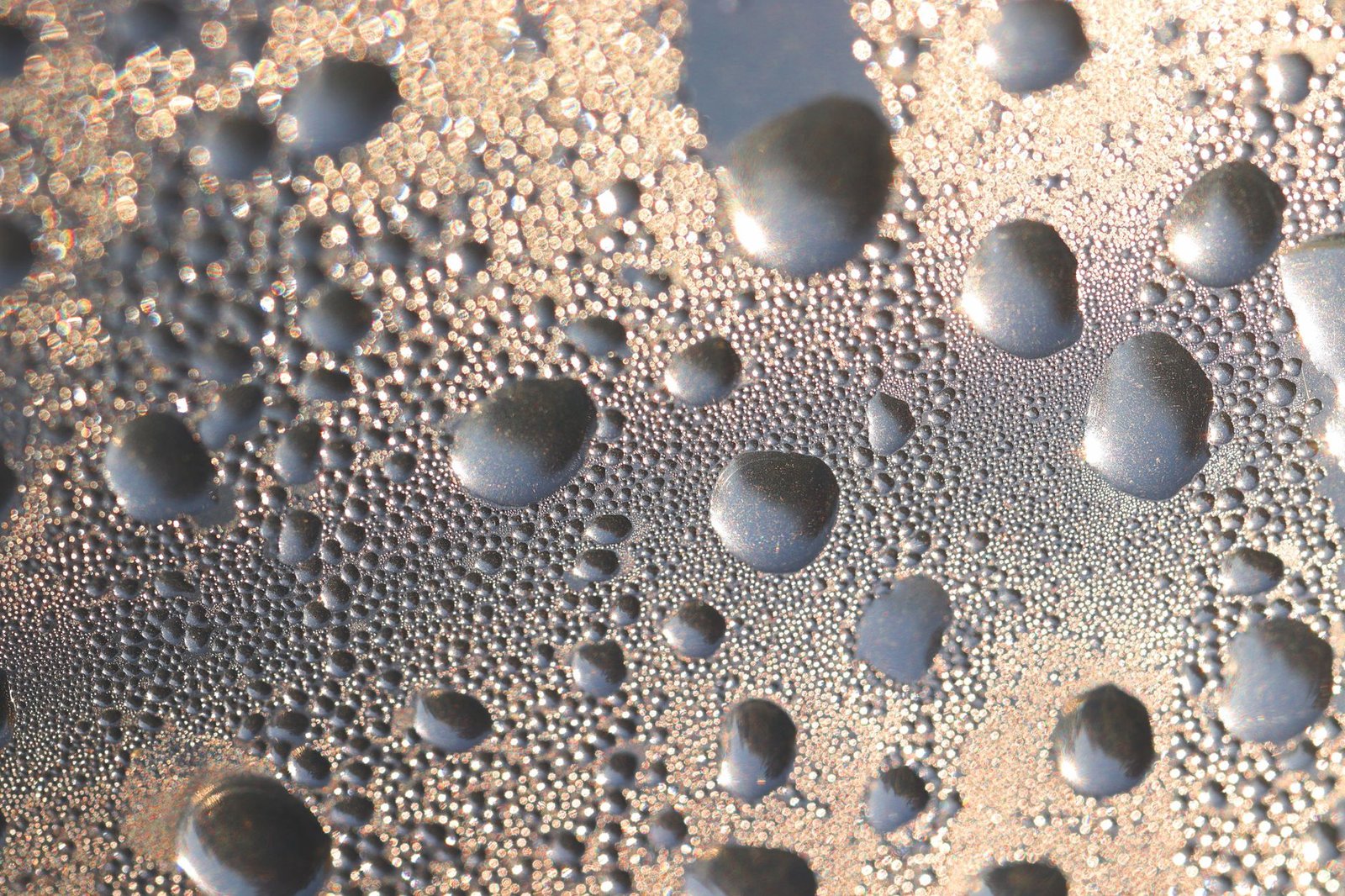
You can do very little, and you do not need to. Sun on the glass or a rising breeze normally clears it by mid-morning. Failing that, wipe it with a soft cloth.
Longlife’s tips are modest, and they are honest about it. Open your curtains so a little more heat reaches the glass. Trees or buildings that block the window’s view of the sky reduce it. Shrubs growing right against the glass add local humidity and can make it worse. Trimming a hedge is cheaper than changing a window.
Condensation on the outside of windows means the glazing is doing its job
Condensation on the outside of windows is the weather talking, not a fault. If the inside is dry and the gap is clear, leave it, wipe it if it bothers you, and save your attention for the damp you can actually fix, which is on the other face of the glass.
FAQ
Is condensation on the outside of windows bad?
No. It is dew and does not mean the window is defective. It usually clears when the sun hits the glass or the wind picks up.
Does outside condensation mean my windows are failing?
No. A failed seal shows up as mist or droplets between the panes, which you cannot wipe off from either side.
Why does it only happen on some mornings?
It needs a clear sky, still air and humid outdoor air together. Cloud or wind on the night prevents it, which is why it appears only occasionally, often in spring and autumn.
Can low-e glass cause condensation on the outside?
It can contribute. The coating helps keep room heat from reaching the outer pane, so that pane can run colder than the outdoor air on the right night.
Will a dehumidifier stop condensation on the outside of windows?
No. The water comes from the outdoor air, so drying the room has no effect on the outer face.

