
Last Updated on October 26, 2026 by Umar Farooq
Why is my porch damp? Most often because it is a small, cold, often glazed room next to a warm house, so condensation forms on it, or because rain water is reaching the wall through a gutter, downpipe or raised ground outside. Rising damp is possible, but it is the least likely of the lot.
A porch is the one room in the house that nobody heats, nobody ventilates on purpose and everybody dumps wet coats in. It would be surprising if it stayed dry.
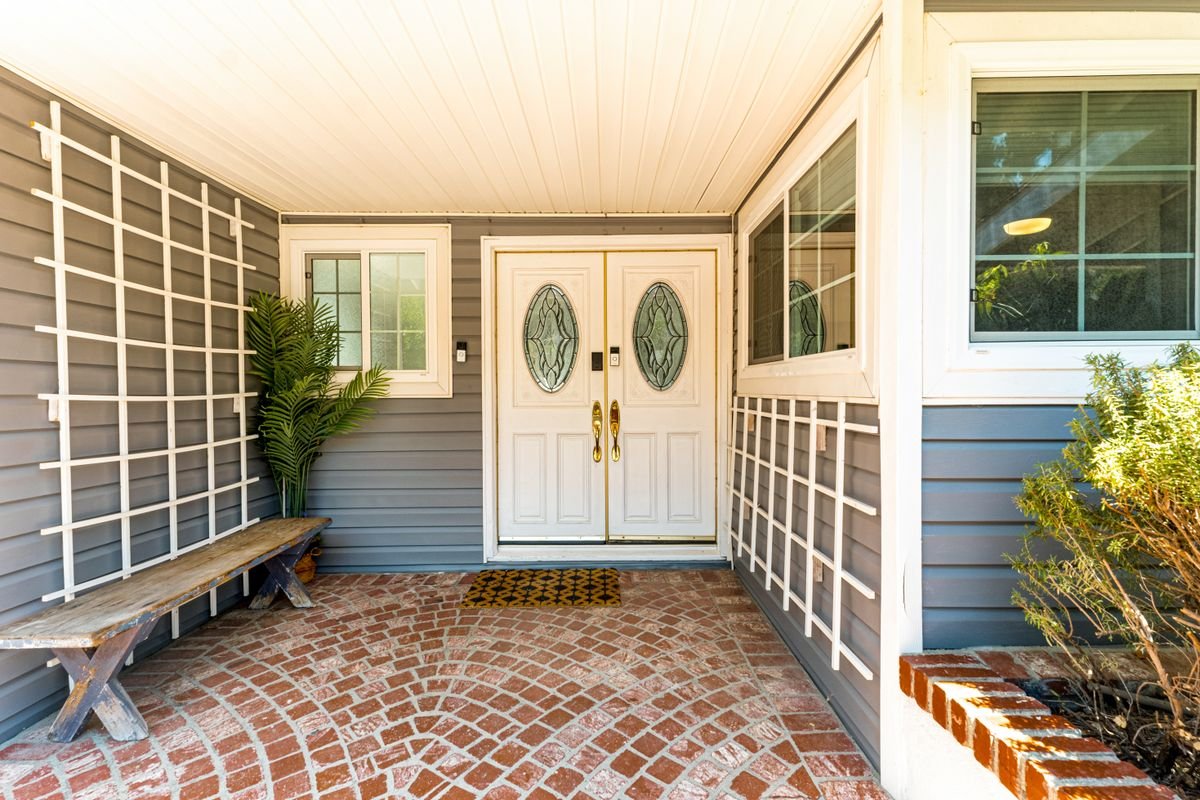
Why is my porch damp? Start with when it happens
Before you look at a single wall, answer two questions: when is it damp, and where?
| What you notice | Points towards | First check |
|---|---|---|
| Wet windows and wall surfaces on cold mornings, dry by afternoon | Condensation | Is the inner door left open? Is anything wet drying in there? |
| Damp patch under a downpipe or on the wall after heavy rain | Rain getting in | Gutter and downpipe, in the rain |
| Damp low on the wall with a tidemark | Rising or ground-level damp | Ground level and any paving against the wall |
| Wet around the door or window frame | Rain or a failed seal | Sill, sealant and any gap round the frame |
| Soft, dark or flaking timber | Long-term wetness | Where the water sits, then call a professional |
The RICS consumer guide on damp makes the same point: penetrating damp, rising damp and condensation are ways moisture moves, and the source of the moisture must be found first. Read the pattern before you reach for a product.
Condensation: the cold little room next to a warm house
This is my first suspect, and it is mine on reasoning rather than measurement: a porch is usually unheated, often has a lot of glass and is separated from the house by a door that people leave open.
Warm, moist air from the hall drifts in, meets cold glass and cold walls, and drops its water on them. Lambeth Council’s guide describes condensation damp as moisture generated inside the home cooling and condensing onto colder parts of the building, typically at window frames and corners.
The giveaway is timing. If the damp comes on cold mornings and fades as the day warms, and the wetness is on the surface of the glass and wall rather than soaking into them, it is condensation. The five-way test for a wet wall works well for the walls here, and the window condensation guide covers the glass.
Wet coats, boots and umbrellas make it worse. They are a steady source of water vapour in the coldest room you have.
Rain getting in: gutters, downpipes and the ground outside
If the damp is on one wall, worse after rain, or sits under a downpipe, think water from outside.
RICS lists leaking or blocked gutters and rainwater pipes as a possible cause, and also raised ground next to walls. It adds a warning I would underline: a new path or decking can raise ground levels and block air vents, so get advice before changing anything.
Check gutters and downpipes from the ground, in the rain, with a torch or binoculars. Do not climb a ladder in wet weather, or alone, and do not lean one against a gutter.
What to look for from the ground:
- Water spilling over the gutter edge or running down the wall instead of down the pipe.
- A downpipe that is stained, green or dripping at a joint.
- Soil, paving or a path that slopes towards the porch wall rather than away from it.
- Plants, soil or render piled up against the wall above the level of the floor inside.

Rising damp is the last suspect, not the first
Rising damp is the diagnosis people reach for first, and it is rarely the right one. The RICS guide says the term is often misused and often misdiagnosed, and that failure of an original damp-proof course is extremely rare.
SPAB, which cares for old buildings, is blunter about the evidence. It says rising damp is widely misdiagnosed on the basis of high electrical moisture meter readings alone, that a real case should show visible signs such as a tide-mark, and that rain penetration can give high readings from rainsplash. It also says rising damp can climb 900 mm or more in a wall, so the height of the damp is a clue worth recording.
For a porch, that means: if the damp is low, has a tide-mark and does not change with the weather, take it seriously. If it comes and goes with rain or cold mornings, look at gutters and condensation first.
Dry the porch out without heating the street
Fix the source, then dry the room. In that order.
- Keep the inner door shut when the porch is cold, so house air does not drift in. Open it to let the porch air out on a dry day, not to share the moisture.
- Move the wet things. Coats and boots drying in the porch are a moisture source in the coldest room. Dry them somewhere warm and ventilated.
- Ventilate the porch itself. A window left on the latch on a dry day does more than it looks. If there are air vents or air bricks, keep them clear.
- Wipe off surface condensation with a cloth so it does not sit on frames and sills overnight.
- Fix the water first if it is a gutter, downpipe, ground level or seal. A dehumidifier does nothing about a wall that is being rained on.
A dehumidifier is a poor fit for an unheated porch in winter. Compressor units lose output in the cold and spend more time defrosting, as the winter guide explains, and I would sooner fix the door and the gutter than buy a machine for the coldest room in the house.
Rising damp or rotting timber is a job for a surveyor, not a weekend. If the wall keeps getting wetter after you have fixed the obvious, ask for a proper inspection rather than an injection quote.
A damp porch is usually a cold room or a roof-water problem, so check those before paying for damp-proofing
Work down the list. Open door and wet coats, then gutter and downpipe, then ground level, then the frame seals. Only when all of those are clear, and the damp is low with a tide-mark, does it make sense to start asking about the damp-proof course.
FAQ
Why is my porch wall wet?
Look at when. A wall that is wet on cold mornings and drier by afternoon is condensation. A wall that is wet after rain, especially under a downpipe, points to a gutter, pipe or ground-level problem. A tidemark low on the wall suggests moisture from the ground.
Why is there condensation in my porch?
Because it is cold and it gets warm, moist air from the house. Keep the inner door closed in cold weather, move wet coats and shoes out, and open a window briefly on a dry day.
Is a damp porch rising damp?
Probably not. RICS says rising damp is often misdiagnosed and that a failed original damp-proof course is extremely rare, and SPAB says a meter reading alone is not enough to diagnose it.
Can a porch cause damp in the rest of the house?
It can be a path for it. A porch with a leak, a blocked gutter or raised ground against the wall can leave a wet wall that is shared with the house, so fix the cause outside rather than only drying the inside.
Should I put a dehumidifier in my porch?
Usually not. An unheated porch is too cold for most compressor dehumidifiers to work well, and the damp comes back unless the door, gutter or ground-level cause is fixed.

