
Last Updated on October 26, 2026 by Umar Farooq
Can mold grow in a cedar closet? Yes: cedar is still porous timber, so damp air, a cold outside wall or damp clothes can give mould what it needs, whatever the lining smells like. The cedar may make it less likely. It cannot make a damp closet dry.
People buy a cedar lining partly because they have heard it keeps mould away, and then act surprised when a closet on a cold wall smells of old socks. The wood is not at fault for that. The moisture is.

What cedar does and does not do against mould
Aromatic cedar is a timber, and timber is mostly cellulose, which is food for mould. A HomeSteady article on cedar and mould makes the same point: cedar’s cellulose content and porosity give mould what it needs to grow, and humidity is the main driver.
The oils are where the claims start. Product pages say cedar deters mould and mildew. I went looking for an independent test showing that a cedar lining keeps mould off in a damp closet, and I did not find one. The pages that make the claim are mostly selling the wood. So I treat the oils as a possible small help, unproven, and certainly not a substitute for a dry closet.
The thing that decides it is humidity. The University of Georgia’s extension service says mildew usually begins to grow when relative humidity stays at around 60 per cent, and can return whenever humidity climbs back there. The EPA’s version of the same rule: keep indoor humidity below 60 per cent, ideally between 30 and 50 per cent. Cedar is not in either sentence.
Can mold grow in a cedar closet? Four ways it gets damp anyway
| Cause | How it happens | What to look for |
|---|---|---|
| Cold outside wall | Warm room air reaches the cold back of the closet and condenses on it | Cool back panel, damp or marked boards behind clothes |
| Damp going in | Clothes, shoes or bags put away not quite dry | One item smells, the rest do not, at first |
| Packed shut | Tight rails and a closed door leave air nowhere to move | Smell is worse in the middle of the rail |
| A damp room | The whole room or floor runs humid, usually a ground floor or basement | A hygrometer in the room reads high, not only in the closet |
The first one is the most common cause I would expect in a lined closet, because the lining sits flush to the wall and hides the cold surface. The airflow side is covered in mould in the wardrobe, and the gap behind a unit makes more difference than any lining.
Check a cedar closet for mould in ten minutes
Do not mix cleaning products, and do not soak the wood. Wet boards take time to dry, and a lining that stays wet is a better home for mould than one you never cleaned.
- Empty the rail and shelves so you can see the back and the corners.
- Look and smell near the floor and back wall. Fuzzy, powdery or spotted patches that smear when wiped are not the same as the natural colour variation in the wood.
- Check the clothes. White or grey spots on fabric, or one item with a strong smell, point at damp stored items.
- Put a hygrometer inside the closet and one in the room for a day. If the closet reads higher than the room, the closet itself is the problem. If both read high, it is the room.
- Clean what you find. For hard surfaces the EPA says to scrub with detergent and water and dry completely. If the mouldy area is more than about 10 square feet, the EPA guide points to professional help, and either way the water source has to be fixed first.
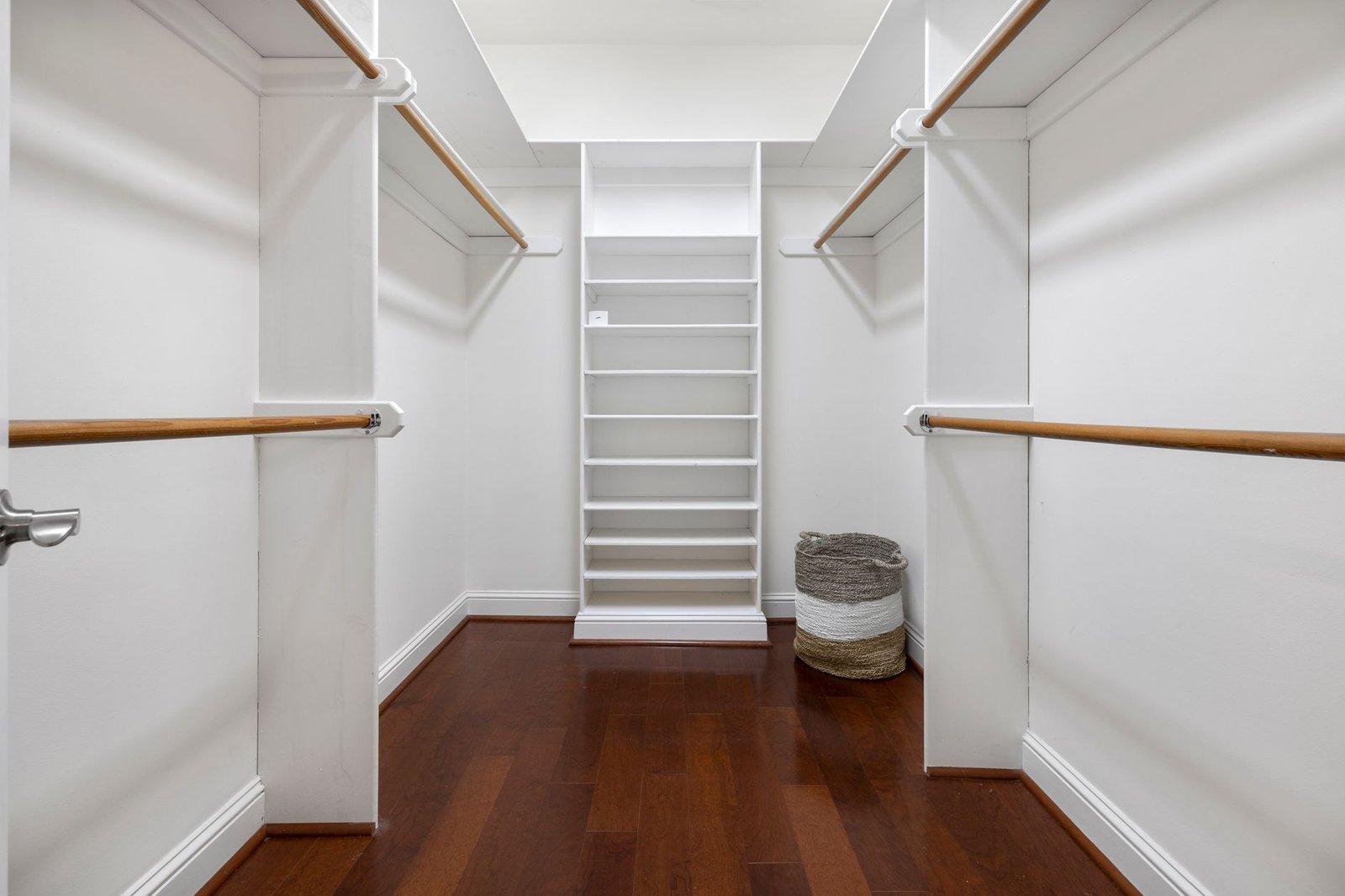
Keep a cedar closet under 60 per cent and it keeps its reputation
Once the closet is clean, the job is to hold the humidity down.
- Dry everything before it goes in. Fully, including seams and shoe soles.
- Leave air around the clothes. Do not push the rail so full that the garments touch the back wall.
- Crack the door open in damp weather, or leave it ajar for a few minutes a day.
- Treat the room, if it is the room. If your hygrometer says the whole room is humid, a dehumidifier for a closet or small room is a more honest fix than a lining. How to reduce humidity in a bedroom covers the common sources.
- Use absorbers sparingly. A tub on the shelf will manage a small dry space. Do moisture absorbers work? explains where the limit is.
Cedar blocks and balls are sold mainly for moths and scent. I found no independent test that they stop mould, so I would not rely on them for that.
Cedar is a pleasant lining, not a moisture control system
So, can mold grow in a cedar closet? Yes, and the wood tells you very little about whether it will. A cedar closet on a cold wall with damp clothes in it is a damp closet that smells nice. Measure the humidity, fix the water, and keep air moving, and the cedar is a bonus. Skip those and it is decoration.
FAQ
Does cedar repel mould?
Not reliably. Cedar is sold as mould resistant, but the claim mostly comes from sellers, and I found no independent test showing it keeps a damp closet mould free. Humidity is the deciding factor.
Can mould grow on cedar wood?
Yes. Cedar is porous timber made of cellulose, and mould can grow on it when it stays damp. Sources like HomeSteady say so directly.
Does a cedar closet prevent mildew smell?
The scent of cedar can mask a faint smell, but it does not stop the cause. A closet that smells musty under the cedar is damp somewhere, and the cedar scent fading over time is a separate thing.
Do cedar blocks or balls stop mould?
They are sold mainly for moths and scent. I did not find independent evidence that they stop mould, so keep the closet dry rather than relying on them.
How do I get mould off cedar?
Wipe hard surfaces with detergent and water on a damp cloth, then dry thoroughly, per the EPA. Do not soak the wood. If the patch is larger than about 10 square feet or keeps coming back, find the water source first or ask a specialist.

