
Last Updated on October 25, 2026 by Umar Farooq
How to increase bedroom humidity without a humidifier: first stop drying the air (turn the heating down, shut the door, close trickle vents on very cold nights), then add a little moisture with open water, a few plants or a door left open from a steamy bathroom, and check the result on a hygrometer. None of these is powerful, which is the point: they nudge a dry room, and they are hard to overdo.
I write about getting moisture out of houses, so I will say this plainly: a dry bedroom is a much smaller problem than a damp one, and the fixes below are deliberately gentle. If the room is already near or above 50 percent, stop reading and go to how to reduce humidity in a bedroom.

Measure before you add any water
Do this first. A cheap digital hygrometer tells you whether the room is actually dry, or just feels it. The EPA advises indoor relative humidity below 60 percent, ideally between 30 and 50 percent, so a reading in that band means you do not need to add anything. Our guide to what humidity is too low in a house covers the lower end.
If the reading is under 30 percent in the morning, carry on.
Why bedrooms dry out in winter
Cold outdoor air holds very little moisture, and once it is heated indoors, its relative humidity drops. Nebraska Extension notes that in winter, furnaces produce warm, dry air, and the same is true of a radiator or electric heater in a bedroom. Add a draught-proofed, closed room and nothing is putting moisture back.
That means the most effective step is often to stop taking moisture out, not to add it.
How to increase bedroom humidity without a humidifier: six ways, ranked
| Method | Effect | Catch |
|---|---|---|
| Turn the heating down a degree or two | Moderate | Cooler room, which many people prefer to sleep in |
| Keep the bedroom door closed at night | Moderate | Breath and sweat stay in, as long as the room has some ventilation |
| Leave the bathroom door open after a shower | Moderate | Steam goes where you did not plan, so only for rooms that are not prone to damp |
| A wide bowl of water near, not on, a radiator | Small | Needs topping up and cleaning |
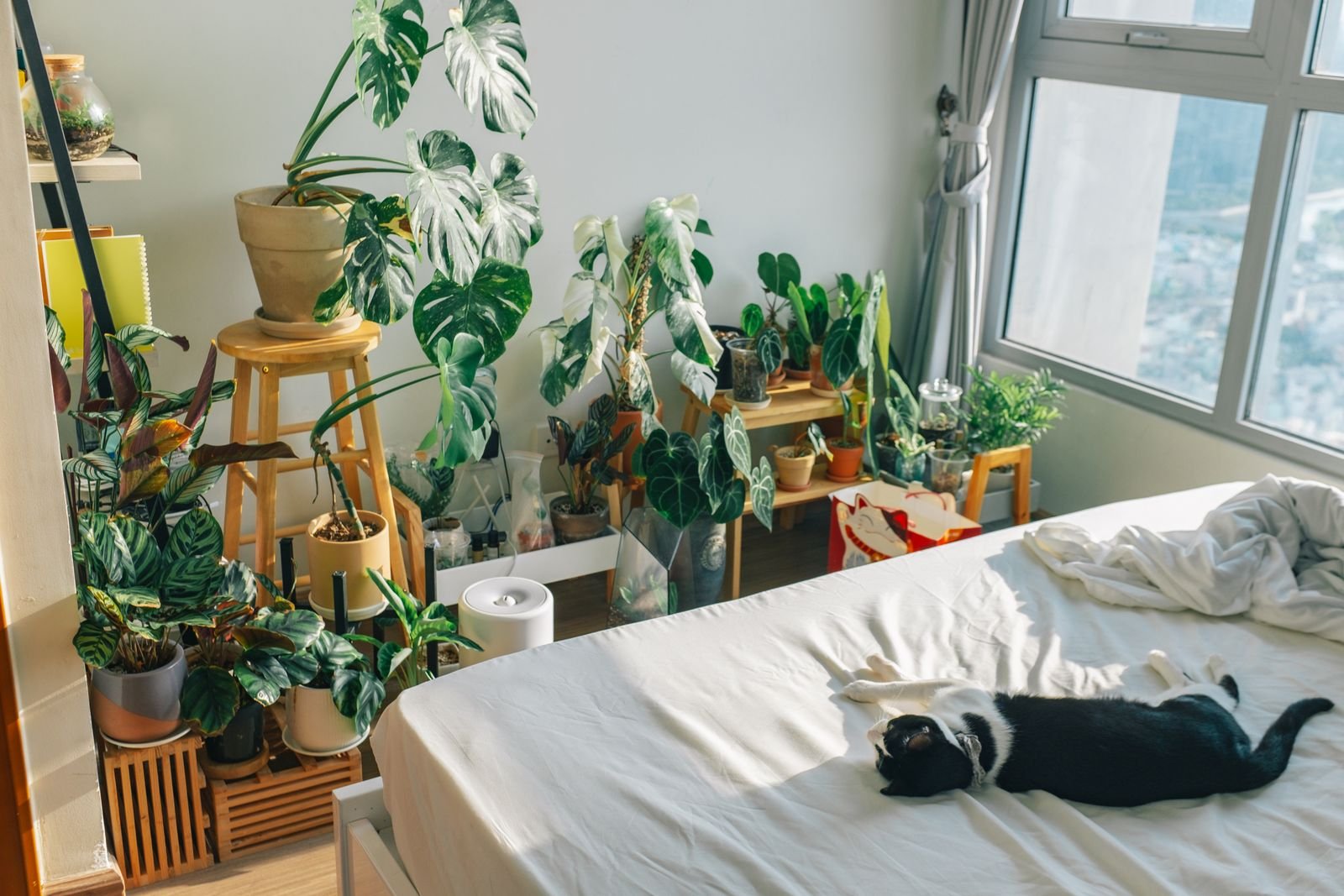
| A few houseplants, grouped | Small | Nebraska Extension says grouped plants create a pocket of slightly higher humidity; I would not expect a whole room to change |
| Damp towel on the radiator | Small to moderate | See the laundry trap below |
The effect column is my judgement from how the physics works, not measured data from a test. I have not found a trustworthy measurement for any of these in an ordinary bedroom, so treat them as ideas to try and check on your hygrometer.
Misting plants is on nobody’s list: Nebraska Extension says misting is not an effective solution.
Drying laundry in the bedroom is the trap
Wet washing is the strongest moisture source most bedrooms have, and it is where people go wrong. The EPA’s mould guidance lists dryers, stoves, humidifiers and steam radiators among things that raise indoor humidity, and an airer of wet clothes belongs on that list. Used in a bedroom, it can overshoot from “too dry” to “condensation on the glass” in one night.
If you do it, do it in the daytime, with the window cracked, and watch the hygrometer. Read whether it is bad to dry clothes in the bedroom before you make it a habit.
Keep the target at 40 to 50 percent, not higher
It is easy to overdo a fix you cannot dial. The EPA says to stay below 60 percent, and I would aim well inside that. Ideal bedroom humidity explains why 40 to 50 percent gives a margin before windows start to run with water on cold mornings.
Look at the window as a second instrument. If the glass or the wall behind the bed starts to run wet, you have added too much for the weather, so remove the bowl and the laundry and let the room settle.
Fix the cause: a very dry bedroom is usually a heating problem
If the room is persistently dry, ask why. Common causes are a radiator right under the window, a room that is overheated for the way it is used, and a very low-ventilation house with dry winter air. Lower the thermostat by a degree and see what the hygrometer does over a few days before adding anything.
For a single bedroom that is always dry, the honest answer may well be a humidifier after all, kept clean and set to a target, but you do not need one to take the edge off a dry winter.
Don’t add water until you have stopped drying the air
The order matters. Measure, stop things that dry the air, then add small amounts of moisture, and keep the target at 40 to 50 percent. Gentle methods that you can switch off beat clever ones that run away from you, and a bedroom that is a little dry is far easier to live with than one growing mould behind the wardrobe.
FAQ
How can I add humidity to my bedroom naturally?
Turn the heating down, keep the door shut at night, leave a wide bowl of water near a radiator, and group a few houseplants. Check a hygrometer to see whether any of it is working.
Does a bowl of water increase humidity in a room?
Slightly. Water evaporates faster from a wide bowl and faster still when it is warm, but the effect in a whole bedroom is small. It is a nudge, not a fix.
Does a wet towel increase humidity?
Yes, a damp towel evaporates into the room, and it can add more moisture than a bowl of water. It can also overshoot, so use it in the daytime and keep an eye on the glass for condensation.
What is the ideal humidity for a bedroom?
The EPA advises indoor humidity below 60 percent, ideally 30 to 50 percent. A target of 40 to 50 percent is a sensible aim for a bedroom.
Do houseplants raise bedroom humidity?
A little, mainly around the plants. Grouped plants create a small local effect, but a few pots will not noticeably change the humidity of a whole room.

