
Last Updated on October 25, 2026 by Umar Farooq
Why have a flap vent on an extractor fan? Because it is a one-way door: it swings open when the fan pushes air out and drops shut when the fan stops, so draughts, rain, insects and smells cannot wander back in. Without it, your duct is just a hole in the wall.
It is a small piece of plastic hung on gravity, which is exactly why it is both brilliant and the loudest thing on the fan when the wind gets up.
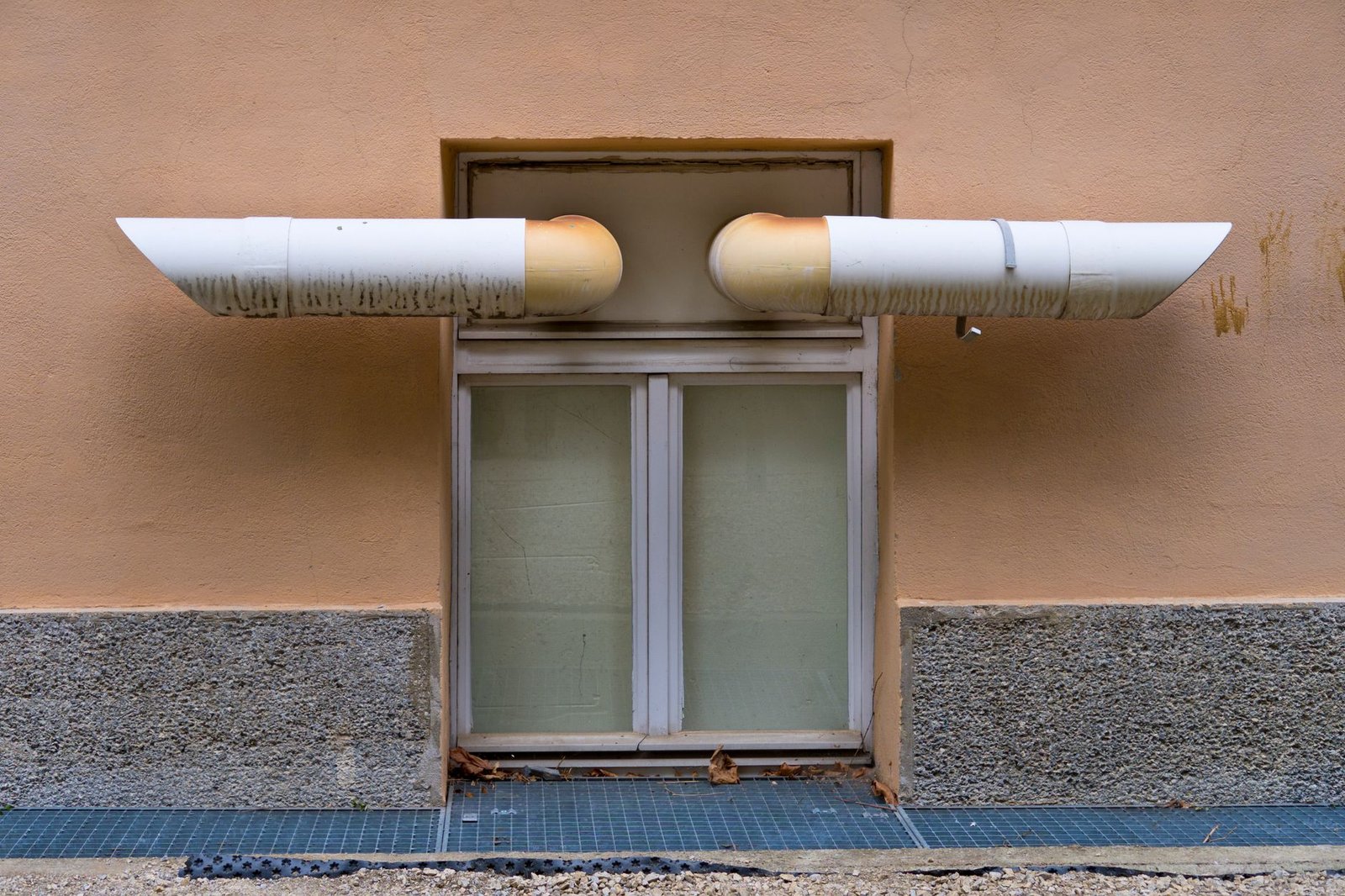
Why have a flap vent on an extractor fan? Four jobs in one hinge
The flap is a backdraught shutter. A supplier of ventilation accessories describes it plainly: it stops air, draughts and smells flowing back through an extractor fan. In practice that means four things.
- It stops cold air flowing in. A duct is an open pipe. With the fan off, wind pushing on the outside wall sends cold air straight down it and into the room, which you feel as a draught round the ceiling grille.
- It keeps rain and wind-driven water out. An installer’s guide to leaking fans notes that a missing or poorly fitted outside cover lets rainwater into the ducting. The flap, closed, is the last line of defence.
- It makes it harder for insects and small animals to get in. A closed flap is a door they have to find a gap in. A mesh alone will not stop air coming back, and a flap alone will not always stop a determined cluster fly, so the two do different jobs.
- It stops smells and unwanted air movement. The air that brings a draught can also carry smells back in from outside, and a closed flap shuts that route.
The Pacific Northwest National Laboratory’s Building America guide puts the principle into one line: the wall cap should include a damper that closes when the fan is not exhausting, and it lists gravity-operated and motorised versions among the options.
How the flap knows when to open
There is no electronics in a basic one. It is hinged at the top, or hung from a pair of arms, and light enough that air from the fan lifts it. When the fan stops, gravity closes it. That is also why it only works properly when the vent is mounted the right way up and the flaps hang freely.
Some fans have a second shutter built into the fan unit itself, and some ducts add a third in the middle. Two in a row is not wasted effort: the outside one handles weather, the inside one handles draught, and either can stick without you noticing the other doing the job.
Rattling, tapping and sticking: the price you pay
A flap light enough to open on the fan’s breeze is light enough for a gust to rattle. Common complaints are:
- Tapping in wind. The flap lifts and falls as gusts push on it. A small foam pad on the stop where it lands is a common cure for this; the flap should still open freely.
- Flap stuck shut. Paint, grease, cobwebs or a bent hinge can hold it closed. The fan runs but the air has nowhere to go, so steam condenses in the duct. If the fan is dripping, this guide to a dripping extractor fan shows what to check.
- Flap stuck open. Debris wedges it, or a hinge breaks, and you lose the draught protection and let in insects.
- Whistling or humming. Often airflow squeezing past a partly open flap, not a motor fault.
None of these is a reason to remove the flap. Fix or replace it.
Flap, cowl or louvre: which outside cover is right?

Not every outlet is a flap vent, and you may see three styles:
| Cover type | Best for | Watch out for |
|---|---|---|
| Single or twin flap | Most walls, light duty | Rattles in exposed spots |
| Multi-flap or louvre | Wind-exposed walls | Slightly more resistance to airflow |
| Cowl or hooded grille | Sheltered, quiet spots | May need a separate shutter behind it |
If your wall is very exposed, a multi-flap vent usually behaves better than a single one; in a sheltered spot a hooded cowl can be quieter. Keep the flap if the fan has no shutter of its own.
Do you need a flap at all?
For a duct that goes outside, yes, one way or another. The question is where it lives: in the fan, in the duct, or in the wall cap. If your fan has an internal shutter and the outside cover is a plain mesh grille, you have a shutter, but the insect and rain protection is thinner. If neither exists, add one.
Two points on the other side: a flap does nothing for a fan that vents into a loft (and that is a bigger problem than the flap), and a flap does not replace insulating a duct that is dripping.
A flap vent is cheap draught, rain and insect protection, so keep it working
The flap is not a design flaw and not a noise gimmick. It is the cheapest way to make a one-way duct, and it does four jobs at once. The only maintenance it asks for is that you check, once or twice a year, that it swings freely, closes fully, and is not clogged with paint, fluff or a nest.
FAQ
What is the flap on the outside of an extractor fan for?
It is a one-way door. It opens when the fan blows air out and closes under its own weight when the fan stops, which keeps cold air, rain and insects out of the duct.
Why does my extractor fan vent flap rattle in the wind?
Because it is light and hangs loose. A gust lifts and drops it against its stop, so it taps. A small foam pad on the stop often cures it, as long as the flap still opens fully.
Can I remove the flap from my extractor fan vent?
You can, but you then lose the draught, rain and insect protection, and you may end up with a colder room and a damp duct. Replace a damaged flap rather than removing it, or choose a quieter cover type.
Why is my extractor fan flap not opening?
Paint, grease, dirt or a bent hinge may be holding it, or the fan may be too weak to lift it. Clean and free the hinge and check the fan is moving air. A blocked flap can leave moist air stuck in the duct.
Do all extractor fans need a backdraught shutter?
A fan venting outside needs one somewhere, in the fan, the duct or the wall cap. Many bathroom fans have one built in, and a kitchen or inline fan may need one added.

