
Last Updated on October 25, 2026 by Umar Farooq
Can dehumidifiers be repaired? Yes: most faults are cheap and fixable, and the exception is the sealed refrigeration system (compressor, coils and refrigerant), which is where repair usually stops making sense. Which side of that line your fault falls on decides everything else.
I will say up front that I think more dehumidifiers get binned than die. A full bucket switch, an iced coil or a filter the colour of a doormat looks exactly like a dead machine, and it costs nothing to fix.
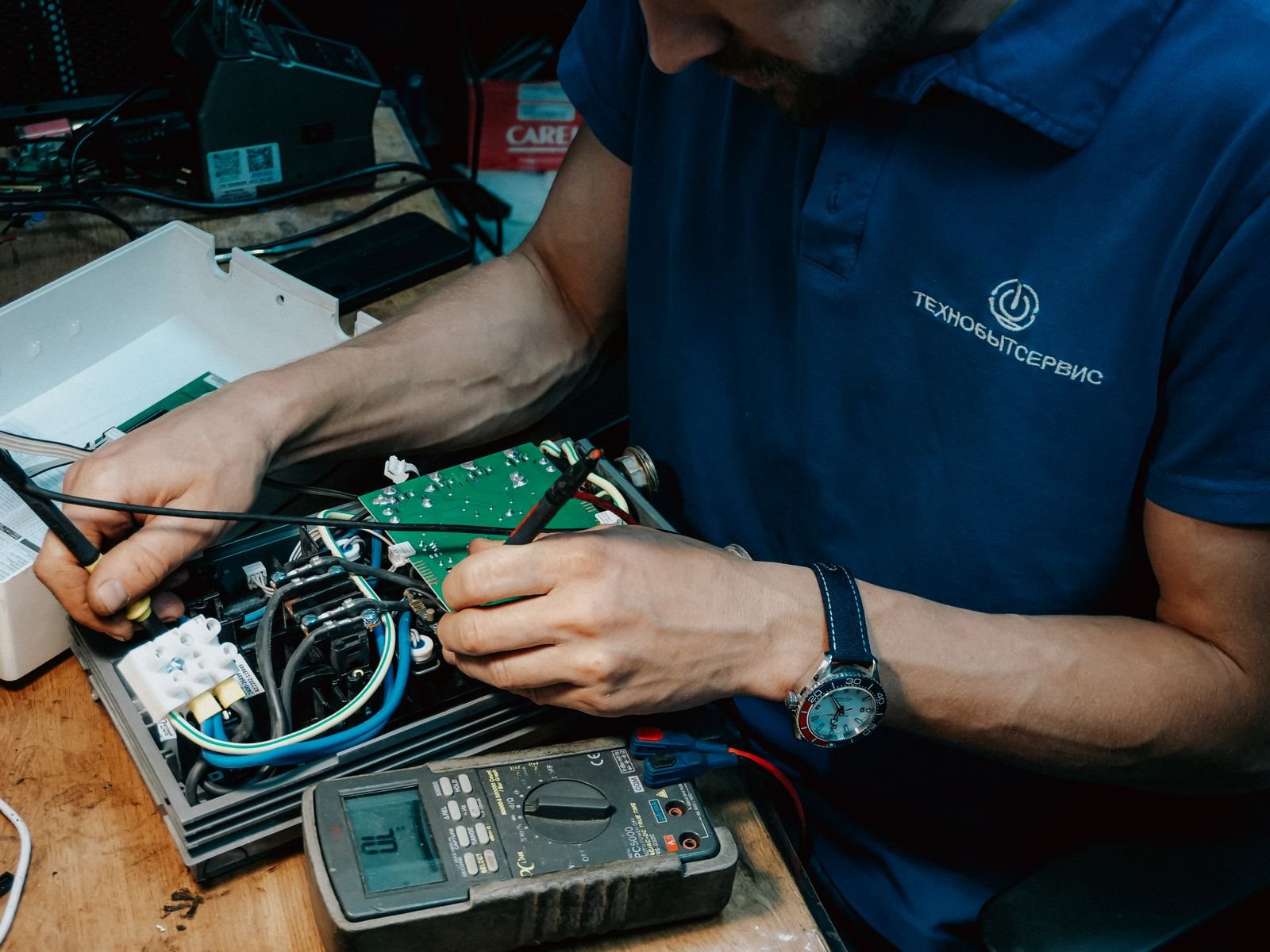
Three kinds of fault, three different answers
| Tier | Typical faults | Repairable? |
|---|---|---|
| 1. Free | Dirty filter, bucket not seated, iced coil, kinked hose, room too cold, tripped reset plug | Yes, at home, no parts |
| 2. Cheap part | Fan motor, humidity sensor, control board, float switch, capacitor | Often, if you can get the exact part and are comfortable with mains electrics |
| 3. Sealed system | Compressor, refrigerant leak, blocked refrigerant line | Rarely worth it, and not a DIY job |
That table is my own grouping, not a published classification, and nobody publishes failure-rate data by tier, so I won’t pretend to give percentages. What I can say is that tier 1 is the first place to look every time.
Start with the free fixes
Before anything else, rule out the causes that are not faults. A dehumidifier that is not collecting water is frequently in a room that is too cold or too dry, or has a clogged filter. A dehumidifier freezing up usually clears itself once the coil thaws and the room warms. And if it will not switch on, the plug reset button is worth a press before you do anything drastic.
Replacing a cheap part: do it safely
Unplug the machine at the wall and leave it for a while before opening it. Capacitors can hold a charge after the power is off, and a refrigerant circuit must never be cut, bent or punctured. If you are not confident with mains electrics, stop here.
Tier 2 parts are usually fixable because they are separate components with a model number on them. Search the make, model and the word “parts”, and match the part number exactly rather than by appearance. A control board that is off by one revision will not behave.
The honest limit: parts availability varies by brand, and no source I opened publishes a typical repair cost. Get a price for the part before you open the case, and compare it against what a new machine of the same capacity costs.
Why the sealed system is different
The compressor, condenser, evaporator and pipework form one sealed loop of refrigerant. Repairing it means recovering the refrigerant, fixing or replacing the part, evacuating and recharging. That needs equipment you will not have in a shed.
In the US, EPA’s Section 608 rules prohibit intentionally venting refrigerants during servicing or disposal, so this is regulated work rather than a weekend project. Newer machines using propane (R290) add a flammability concern, which I cover in the R290 refrigerant guide.
That is why a dehumidifier that runs, makes noise, and never gets cold or collects water is usually a replacement job, unless it is still under warranty.
Check the warranty before you open the case
Warranties often treat the sealed system separately. As an example, Frigidaire’s owner’s guide for a dehumidifier gives a full one-year warranty, then a limited second-to-fifth-year warranty on the sealed refrigeration system (compressor, condenser, evaporator and tubing), where the owner still pays diagnostic, removal and reinstallation costs.
That is one model from one brand. Yours may differ, so find your own paperwork. The practical point holds anyway: if the fault is in the sealed system and you are within the sealed-system period, you want the manufacturer to do it, and opening the case yourself is a bad idea until you have asked.
When is repair worth it?
My rule: always do tier 1. Do tier 2 if the part is cheap, easy to identify and you are confident. For tier 3, repair only if it is under warranty, because a paid sealed-system repair is rarely sensible on a household unit.
I can’t give you a cut-off price, because there is no published one and prices differ by country and capacity. Ask for a written quote, and decide against the cost of a new unit. If it is not worth fixing, how to dispose of a dehumidifier covers where it goes next.
So, can dehumidifiers be repaired? Mostly, until the refrigerant is involved
Most dead dehumidifiers are tier 1 or tier 2 faults. The ones that are not tend to be clear: it runs, the fan blows, nothing gets cold, and nothing collects. At that point it is warranty or replacement.
FAQ
Is it worth repairing a dehumidifier?
Free fixes, always. A cheap part, if you can identify it and fit it safely. A sealed-system failure, rarely, unless the warranty covers it. No source I found publishes a standard cut-off cost.
Can a dehumidifier compressor be replaced?
Technically yes, but it means recovering refrigerant and recharging the system, which needs specialist kit. On a household unit that is often uneconomic, so check the warranty first.
Why is my dehumidifier running but not removing water?
Common causes include a cold room, an iced coil, a dirty filter or a very low humidity setting. If none of those apply and the coil never gets cold, it may be a sealed-system fault.
Can I fix a dehumidifier myself?
You can do the free fixes and, if you are confident with mains electrics, swap a simple part. Do not open the refrigerant circuit.
How long should a dehumidifier last before I expect faults?
There is no guarantee, and failure depends on use. Our guide to how long dehumidifiers last covers it, but treat any quoted lifespan as an estimate.

