
Last Updated on September 1, 2026 by Umar Farooq
If you’re working out how to dehumidify a room, the fastest route is to stop putting water into it, then get what’s already there outside. Everything else — bowls of salt, silica sachets, buying a machine — comes after those two, and most of it removes far less water than people expect.
Here’s the honest framing that this list is built on. One load of laundry dried indoors releases somewhere between 1.5 and 2.2 litres of water into your air. A bowl of desiccant salt might pull 50 or 100 millilitres out over several days. Those are not the same order of magnitude, and no amount of enthusiasm closes the gap.
So the methods below are ranked by how much water they actually move, not by how satisfying they are.
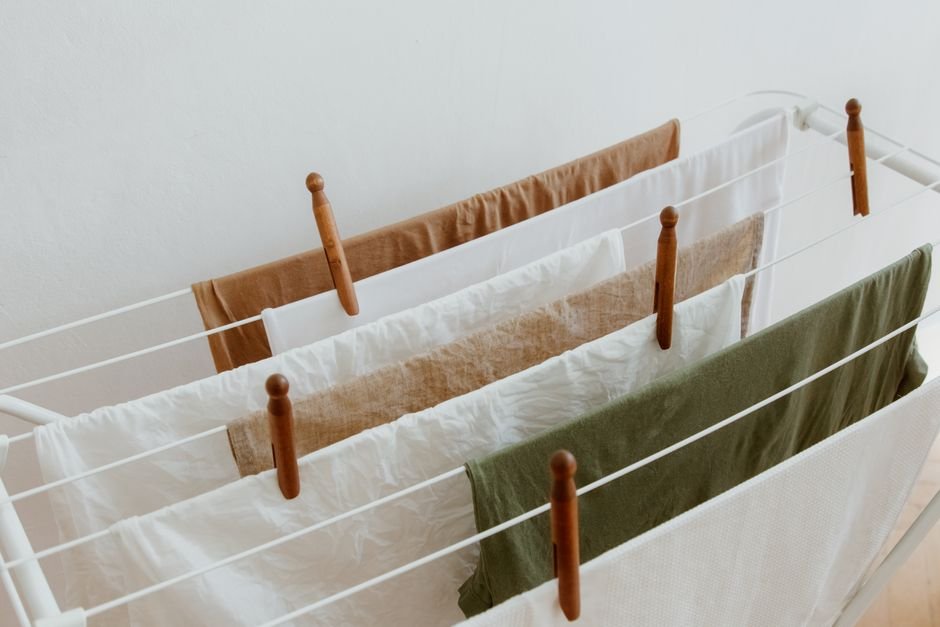
1. Stop generating the moisture
Biggest effect, costs nothing, and almost every guide puts it fifth.
- Dry laundry outside, or in a tumble dryer that vents outside. If you genuinely can’t, put it in one room with the door shut and a window cracked, and accept that room will need help.
- Lids on saucepans. An uncovered pan boiling for twenty minutes puts a startling amount of water into a kitchen.
- Shorter showers, and shut the bathroom door while you shower and for a while afterwards. An open door distributes the steam through the house instead of letting the extractor deal with it.
- Don’t dry firewood indoors, and don’t store damp things in a closed room.
If you’re doing five or six loads of washing a week indoors, that’s ten to twelve litres of water going into your home. Fixing that is the single highest-value change available to you.
2. Get the extractor fans working properly
An extractor fan removes moist air at the source, before it can reach a cold wall somewhere else. Two things to check:
- Does it actually vent outside? A surprising number terminate in a loft, which just relocates the problem to your roof timbers. If yours goes into a roof space, that’s the job to do first.
- Does it run long enough? Most need to keep going for 15–20 minutes after the shower, not switch off with the light.
Cheap, effective, and it deals with the moisture where it’s most concentrated.
3. Ventilate — but only when the outside air is drier
Opening a window works by exchanging your humid air for outdoor air. That’s a win when the outdoor air is drier, and a loss when it isn’t.
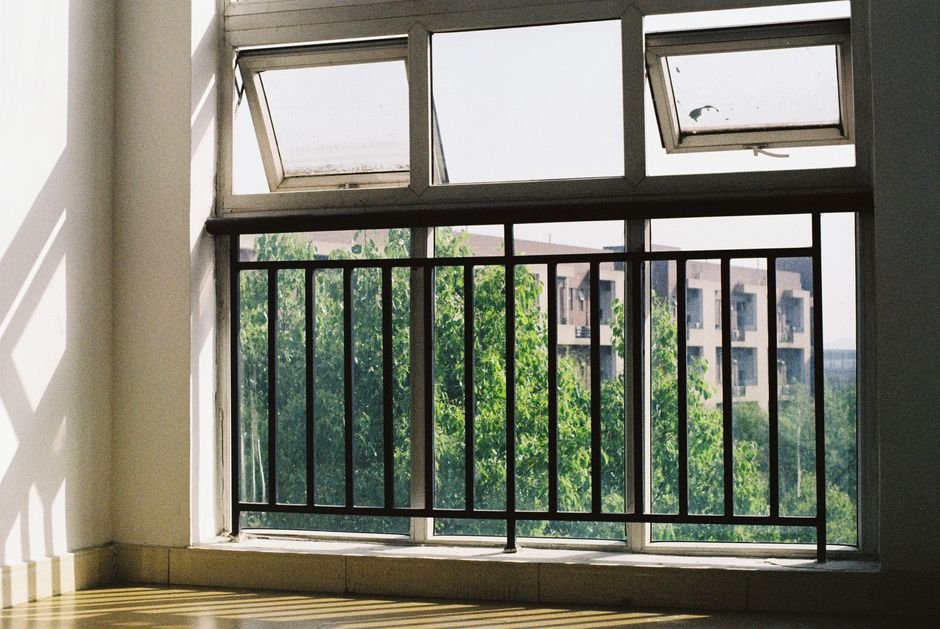
The rule of thumb: cold, crisp days are good ventilating weather, because cold air holds very little water and warms up dry indoors. Muggy summer days are not — you’ll be importing humidity.
Fifteen or twenty minutes of proper cross-ventilation, windows open on two sides, does more than leaving one window ajar all day.
4. Keep the room warmer
This one sounds backwards until you look at the mechanism.
Mould and condensation don’t respond to the humidity in the middle of your room; they respond to the humidity at the surface they’re sitting on. Warm the surface and its local humidity drops, even with the same amount of water in the air.
That’s why the corner behind a wardrobe on an external wall grows mould while the rest of the room is fine — I’ve explained the arithmetic in the mould guide. Heating a room a little and letting air reach the walls is genuinely effective.
5. Move furniture off external walls
Free, takes ten minutes, and works for exactly the reason above. A 5–10 cm gap behind wardrobes and sofas on outside walls lets air circulate, keeps the wall surface closer to room temperature, and stops the pocket of stagnant damp air that forms behind them.
6. Find and fix the actual water
If the humidity is high in one room and normal everywhere else, something is putting water in. A failed window seal, a leaking overflow, a slipped tile, a gutter discharging against a wall, a bathroom with no extractor.
No amount of dehumidifying — natural or mechanical — beats a source that keeps replenishing. The EPA’s position is that moisture control is the whole game, and that means the source first.
7. Desiccants — useful, but know the scale
Calcium chloride tubs (the ones sold as moisture traps) genuinely absorb water. Silica gel works. Rock salt works a bit. Baking soda works barely at all.
The catch is capacity. A tub might collect a few hundred millilitres before it’s saturated — which is useful in a wardrobe, a caravan, a boat, a safe, a cupboard, where the volume of air is tiny and there’s no power. In an actual room, against a couple of litres a day of laundry, it’s a rounding error.
Use them for what they’re good at. Don’t expect one to dehumidify a room.
What doesn’t work: houseplants
This one is worth stating plainly because it appears in a lot of “natural dehumidifier” lists, and it’s backwards.
Houseplants increase indoor humidity. They draw water up through their roots and release it through their leaves — that’s transpiration, and university horticultural guidance is clear that plants add moisture to the air rather than removing it. Plants release the large majority of the water you give them straight back into the room.
There are a handful of air plants that absorb atmospheric moisture, and their capacity is microscopic. If you have a damp room with twenty pot plants in it, moving some of them out is a dehumidifying strategy. Adding more is not.
I’d rather say that clearly than repeat something that sounds pleasant.
How to dehumidify a room when none of that is enough
Natural methods have a ceiling, and it’s lower than most lists admit. Buy a machine when:
- The room reads above 60% for weeks despite the above.
- It’s a basement or cellar — opening a window rarely brings drier air in below ground.
- The outdoor air is humid most of the year, so ventilation is off the table.
- You must dry laundry indoors and can’t change that.
Aim for 30–50% relative humidity, the band ENERGY STAR recommends. If you get to that point, work out the size properly rather than guessing — it’s the difference between a machine that cycles gently and one that runs permanently.
Frequently asked questions
How to dehumidify a room without a dehumidifier?
Cut the moisture at source first — laundry, cooking, showers. Then run extractor fans properly, cross-ventilate when the outdoor air is drier than yours, warm the room, and pull furniture off external walls. Desiccant tubs help in small enclosed spaces but not in a whole room.
How long does it take to dehumidify a room?
Air humidity drops within hours. Damp plaster, timber and soft furnishings take days to weeks to reach equilibrium. Judge any method over a fortnight, not overnight.
Does baking soda dehumidify a room?
Barely. It absorbs a little moisture and it’s fine in a small sealed container, but its capacity is far too low to change the humidity of a room. Calcium chloride tubs are considerably more effective if you want a passive option.
Do salt or charcoal really work as dehumidifiers?
Rock salt and charcoal absorb some moisture, and in a wardrobe or a caravan that can be enough to matter. In a room they’re a rounding error against everyday sources like cooking and laundry.
Is opening a window enough to dehumidify a room?
Often, in cool dry weather. Cold outdoor air holds very little water, so it warms up dry indoors. On a warm humid day you’ll be bringing moisture in, and closing up and running a machine is the better move.
Will a fan dehumidify a room?
Not on its own — a fan moves air rather than removing water. What it does do is prevent stagnant damp pockets and help surfaces dry, which is worth having. Paired with an open window it makes ventilation much more effective.
Does an air conditioner dehumidify a room?
Yes, as a side effect. It cools air across a cold coil and condenses water out, the same mechanism a compressor dehumidifier uses. It’s less efficient at it, and it cools the room whether you wanted that or not.
Related guides: Does a dehumidifier help with mold? · What size dehumidifier do I need? · Dehumidifier drain hose setup
Sources
- Nebraska Extension — Success with Houseplants: Humidity — plants raise indoor humidity through transpiration.
- US EPA — Mold Course, Chapter 2 — moisture control at source as the basis of damp control.
- ENERGY STAR — Dehumidifiers — the 30–50% relative humidity target band.
And if you’ve got a bowl of salt on the windowsill and a full airer in the same room — the airer is winning. It isn’t close.

