
Last Updated on October 25, 2026 by Umar Farooq
Should a dehumidifier be upstairs or downstairs? On the floor where a hygrometer reads highest over a week: usually downstairs for a damp ground floor or cellar, and on the upstairs landing when bedrooms, bathrooms or washing are what is making the damp. One portable machine will not reliably dry both.
People ask this as if the house has a right answer and the machine has a preference. It is the other way round: the damp is somewhere specific, and the machine should be there too.

Should a dehumidifier be upstairs or downstairs? Start with how damp moves
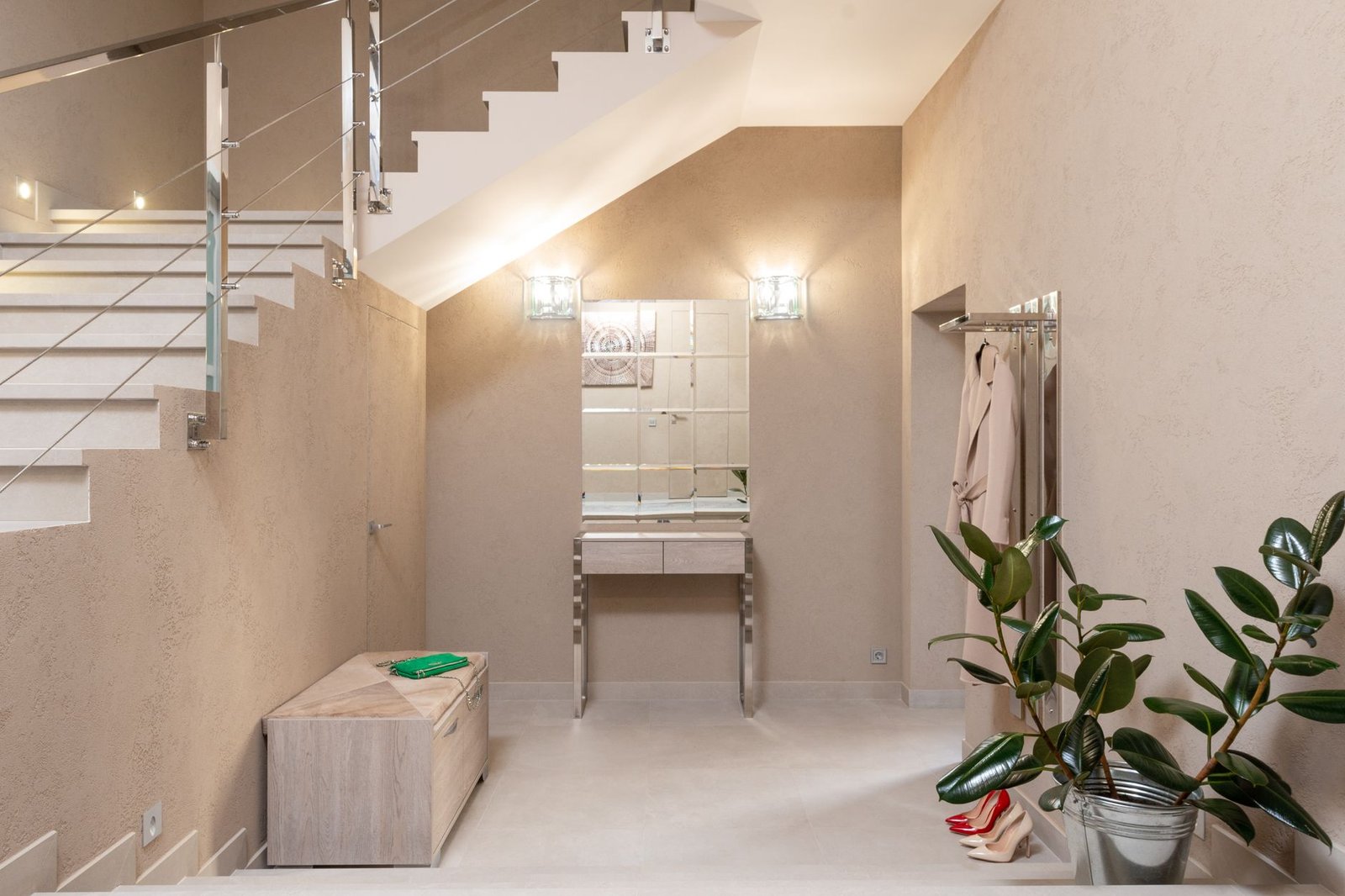
Buildings breathe in a particular direction. Warm indoor air is less dense and rises, which pulls cooler outside air in through lower openings and pushes warm air out through upper ones, and the effect grows with the difference between indoor and outdoor temperature. Wikipedia’s article on the stack effect describes it for houses as cold air infiltrating at ground level and warm air leaving through the upper openings.
For damp, that has two consequences. Cold, damp air from the ground and cellar is drawn into the lowest level in winter, so downstairs can stay clammy. And warm, moist air made by showers, cooking and washing drifts upwards and meets the coldest surfaces at the top of the house, which is why bedroom windows and loft hatches fog up. Both are real, and they are two different jobs.
Five cases, and where the machine goes
| Your situation | Put it | Why |
|---|---|---|
| Musty basement, cellar or damp ground floor | Downstairs, central, off any wet floor | The moisture source and cold surfaces are down there |
| Bedroom condensation, steamy bathroom, or washing drying upstairs | Upstairs, on the landing, internal doors open | That is where the water vapour is being made |
| Both levels read high | One machine per level, or run one in each place in turn | Dry air does not travel far up the stairs against warm damp air going the other way |
| A normal two-storey house with a mild general problem | The level with the highest readings, ideally on a landing or hall | A central spot with doors open treats several rooms |
| Clothes drying indoors | In or beside the room where the washing is | Catch the moisture before it spreads |
Meaco’s advice on a house is to position the dehumidifier on the landing, with internal doors open so moisture from elsewhere can reach it, which fits the second and fourth rows. For the full set of placement rules, see where to put a dehumidifier.
How to decide in a week
Guessing is the expensive way. A hygrometer (a humidity meter) on each level tells you in a few days.
- Put one in the lowest damp room and one upstairs, at about head height, away from windows and radiators.
- Read both morning and evening for about a week. Note which sits highest and when. How to log humidity at home shows a simple way to keep the record.
- Put the machine where the readings are high and stay high. A level that is high only after showers needs a fan or a different habit, not a dehumidifier.
The target to work towards is the EPA one: keep indoor humidity below 60 percent, ideally between 30 and 50 percent. If you want more on sizing across a whole house, how many dehumidifiers you need covers it.
Temperature can overrule the floor
A cold downstairs room can make the “obvious” answer the wrong one. Compressor dehumidifiers collect less water as the room gets colder, and below a certain point they spend time defrosting instead of drying. If the basement is the cold, damp place and the machine keeps stopping, it is worth knowing what defrost mode is doing before concluding that the machine is broken or in the wrong place. A slightly warmer spot near the stairs, or a model designed for low temperatures, may suit better than the coldest corner.
When one machine moves between floors
If the problems are seasonal, the machine can be too. Many houses have a damp ground floor in autumn and winter and a steamy upstairs when the laundry is on the airer. Carry the unit to wherever the readings are climbing, and put it on a floor that is dry, with space around it. Emptying a full tank on the stairs is its own hazard, so a drain hose or a smaller walk to a sink is worth thinking about.
A dehumidifier belongs on the floor where the damp is, not the floor you prefer
Measure for a week, then put the machine where the readings are highest: downstairs for a cellar or damp ground floor, upstairs on the landing for bedrooms and bathrooms, and one per level if both read high. If a hygrometer says neither level is damp, you may not need a dehumidifier at all.
FAQ
Is it better to put a dehumidifier upstairs or downstairs?
Put it on the level where a hygrometer reads highest. That is usually downstairs for a damp basement or ground floor and upstairs for condensation in bedrooms or bathrooms.
Can one dehumidifier dry a whole two-storey house?
A single portable machine can treat a floor with the doors open, but it rarely dries two floors well, particularly if both are damp. Use one per level, or move it to where the problem is.
Does damp air rise or sink in a house?
Warm, moist air tends to rise and leave through upper openings, while cold air is drawn in at the bottom. So damp air made upstairs stays up, and cold damp ground air enters low down.
Where is the best place for a dehumidifier in a house?
Usually central, on the floor with the readings highest, with space round it and internal doors open. A landing or hallway works well in many homes.
Should I put a dehumidifier in the basement or the bedroom?
Follow the damp. If the basement reads high and the bedroom is fine, the basement. If the bedroom has condensation on the windows and the basement is dry, the landing or bedroom.

